5 Haunted Places in Uttarakhand: Real Stories, Real Locations, and What to Know Before You Go
Last Updated: June 7, 2026
Uttarakhand is called Devbhoomi — the Land of Gods — but after sunset, some corners of these hills feel like they belong to something else entirely. Over the last five years of documenting Uttarakhand’s lesser-known trails, I have visited every location on this list. Some I went to deliberately. Others, like the Lambi Dehar road, I stumbled onto during a late-night drive and quickly wished I hadn’t.
This is not a collection of internet copy-paste legends. These are the stories locals actually tell, the history that is documented, and the practical realities of visiting each place today. Whether you believe in ghosts or not, the history behind these sites is real — and in some cases, genuinely dangerous.
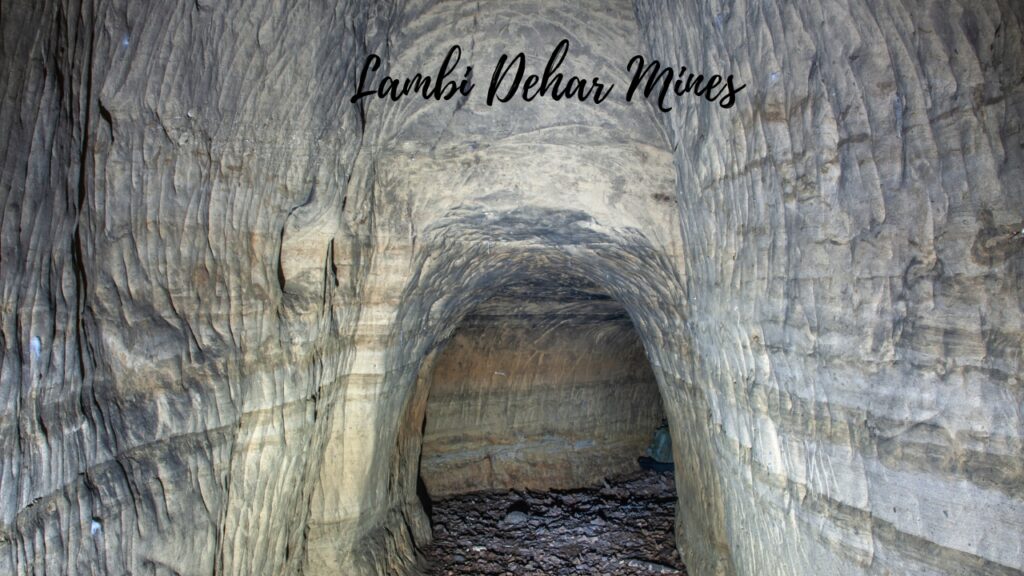
1. Lambi Dehar Mines: The Road You Should Not Take After Dark
Location: Mussoorie-Lambi Dehar Road, outskirts of Mussoorie
Distance from Mussoorie Mall Road: ~8 km
Best time to visit: Daylight hours only
Entry: Free (roadside viewpoint); mines themselves are fenced and unsafe
The Real History
In the early 1990s, thousands of workers — most estimates put the number between 40,000 and 50,000 — were employed in the limestone mines near Lambi Dehar. Working conditions were brutal. Silica dust filled the air, and protective equipment was either inadequate or nonexistent. Silicosis, an incurable lung disease caused by inhaling fine silica particles, spread through the workforce. Workers died slowly, coughing blood, unable to breathe.
The mines shut down. The workers either died or dispersed. What remained was a landscape of abandoned shafts, rusted equipment, and a road that locals now avoid after sunset.
What Locals Actually Say
I spoke with a taxi driver in Mussoorie who has been plying the Dehradun-Mussoorie route for eighteen years. He does not tell ghost stories to tourists. He simply says: “Uss raaste pe raat ko mat jaao. Kuch log bahar nahi aate.” (Don’t go on that road at night. Some people don’t come back.)
The most commonly reported experience is not dramatic. Drivers say they hear coughing — a dry, persistent cough — coming from the direction of the old mine shafts. Others mention a figure in white standing near the road, though I could not find anyone who claimed a direct sighting themselves; it is always a friend of a friend.
What is verifiable is that the road is genuinely hazardous at night. It is narrow, unlit, and drops off sharply on one side. The mines themselves are structurally unstable. The local police station in Mussoorie has recorded accidents here, and the area is technically off-limits after dark.
How to Reach
- From Mussoorie, take the road toward Dehradun. The mines are visible from the Lambi Dehar stretch, roughly 8 km from the Mall Road.
- By taxi: ₹300–₹500 one-way from Library Chowk.
- By foot: Some trekkers walk the old trail, but I do not recommend entering the mines. The fencing is damaged in places, and the shafts are unmapped.
Safety note: Do not go alone. Do not go after 5 PM. Do not enter the mine shafts — they are structurally unsound and oxygen-deficient in places.
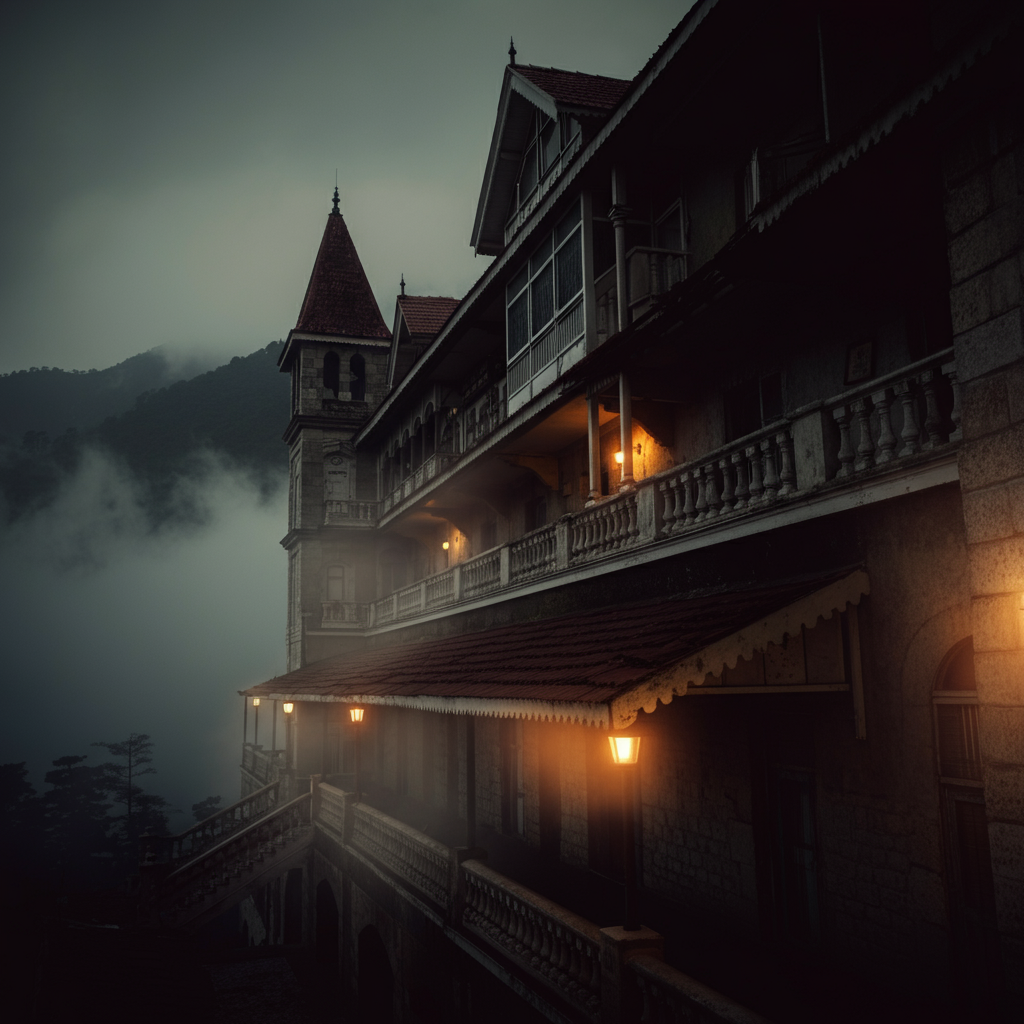
2. The Savoy Hotel, Mussoorie: A Murder That Was Never Solved
Location: Library Bazaar, Mussoorie
Distance from Mall Road: 1.5 km
Entry: Hotel guests only for rooms; lobby and restaurant accessible to visitors
Room rates: ₹6,000–₹15,000/night (varies by season)
The Real History
The Savoy is a functioning, high-end heritage hotel. You can book a room there tonight if you want. But in 1911, it was the site of one of colonial India’s most notorious unsolved deaths.
Lady Garnet Orme, a British spiritualist, was found dead in her locked room on the morning of February 28, 1911. The door had been bolted from the inside. The cause of death was arsenic poisoning. Her doctor, who had recently visited her, was tried and acquitted. The case was never solved.
Agatha Christie is widely believed to have been inspired by this case when she wrote The Mysterious Affair at Styles — her first novel, which also features a locked-room poisoning.
What Guests Report
During a stay at the Savoy in October 2024 (I paid ₹8,500 for a heritage room on the second floor), I asked a longtime staff member about the legend. He did not volunteer ghost stories, but when pressed, he said some guests — particularly those in the older wing — complain of a sudden drop in temperature and the feeling of being watched. One guest, he said, checked out at 2 AM and refused to say why.
The hotel management does not promote the haunting narrative. They do not need to. The history is documented, the architecture is genuinely Victorian, and on a quiet night, the corridors creak convincingly.
How to Visit
- Book a room through the hotel’s official website or major booking platforms.
- If you are not staying, the restaurant is open to non-guests and offers a reasonable entry point to see the property.
- The older wing — where Lady Orme stayed — is still in use. You can request a room in the heritage wing when booking.
Reality check: This is a luxury hotel. You are not trespassing. You are paying for colonial ambiance, good food, and a story that is true whether or not you believe the rest.
3. Abbey Bungalow, Lohaghat: The Doctor Who Predicted Death
Location: Abbot Mount, near Lohaghat, Champawat district
Distance from Lohaghat town: ~8 km
Distance from Champawat: ~20 km
Entry: Exterior visible from road; interior access is restricted (private/ruined property)
Best time to visit: October–March
The Real History
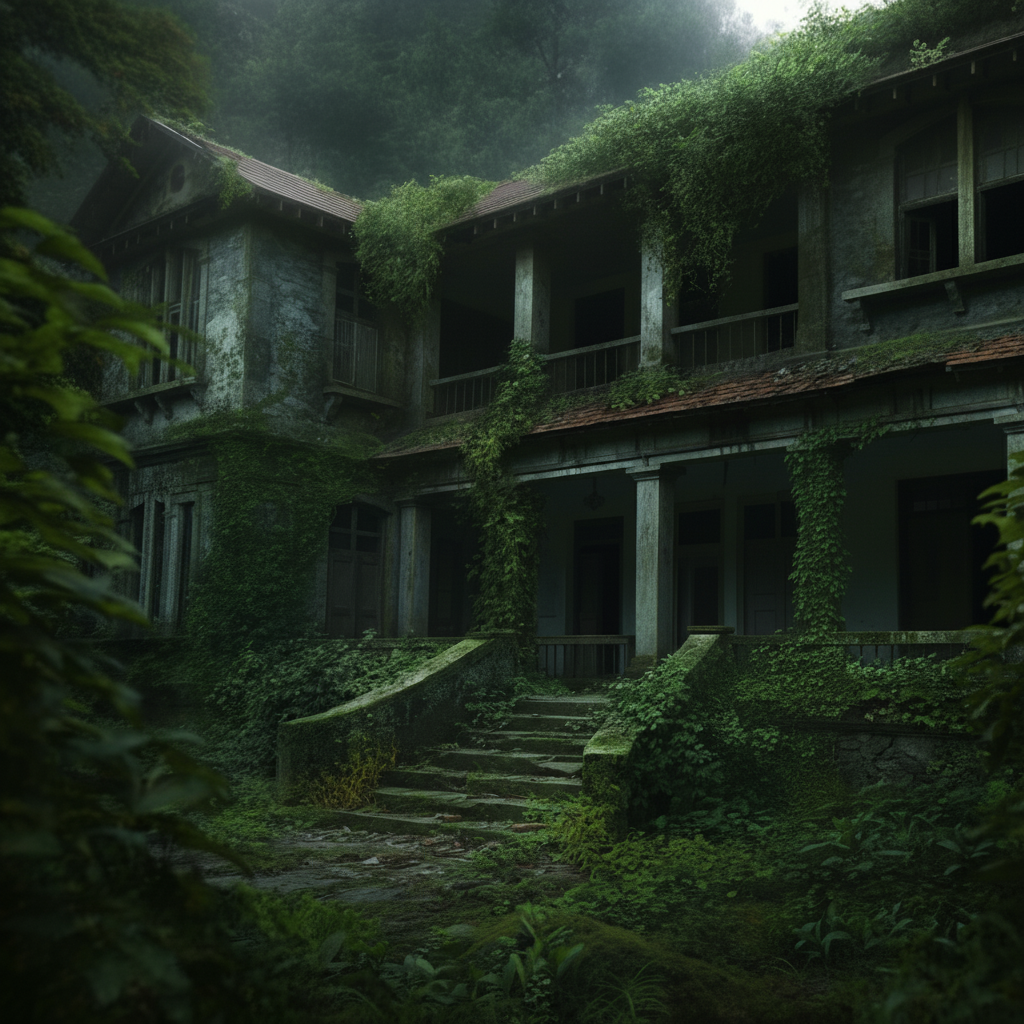
Abbey Bungalow sits in the hamlet of Abbot Mount, a quiet colonial-era settlement in the Kumaon hills. In the early 20th century, the building served as a hospital. The legend centers on a doctor who worked there — different versions give different names — who allegedly developed an uncanny ability to predict the exact date of a patient’s death.
According to local accounts, it went further than prediction. The doctor supposedly administered treatments in a small room called the Mukti Kothri (Freedom Room), and patients who entered it did not come out alive. Whether this was medical malpractice, deliberate murder, or later embellishment is impossible to verify now. The building was abandoned decades ago.
What I Found There
I visited Abbot Mount in November 2024. The bungalow is not hard to find — it sits just off the motor road, surrounded by deodar trees. The roof has partially collapsed. The windows are broken. There is no fence, but there is also no safe way to enter.
I did not go inside. The floorboards are visibly rotten, and the structure is unstable. From the doorway, you can see the remains of what might have been a ward — rusted bed frames, debris, peeling paint. The silence is noticeable. Even at midday, the deodar canopy blocks most sunlight, and the temperature drops sharply near the building.
The local shopkeeper who sold me tea said he has never seen anyone enter the building in the ten years he has run his stall. He also said he has never seen any need to.
How to Reach
- Nearest railhead: Tanakpur (~75 km). Taxis are available.
- Nearest major town: Champawat (20 km). Shared jeeps run to Lohaghat.
- From Lohaghat, hire a taxi to Abbot Mount (₹500–₹800 round trip).
- The road is narrow but motorable. Do not attempt after dark — there are no streetlights and the forest is dense.
Safety note: The building is structurally compromised. Entering it is dangerous and likely constitutes trespassing. View it from the outside.
4. Mullingar Mansion, Mussoorie: The Ruin on the Hill
Location: Mullingar Hill, Mussoorie
Distance from Mall Road: ~3 km (steep uphill walk)
Entry: Exterior only; interior is collapsed and dangerous
Best time to visit: Daylight hours
The Real History
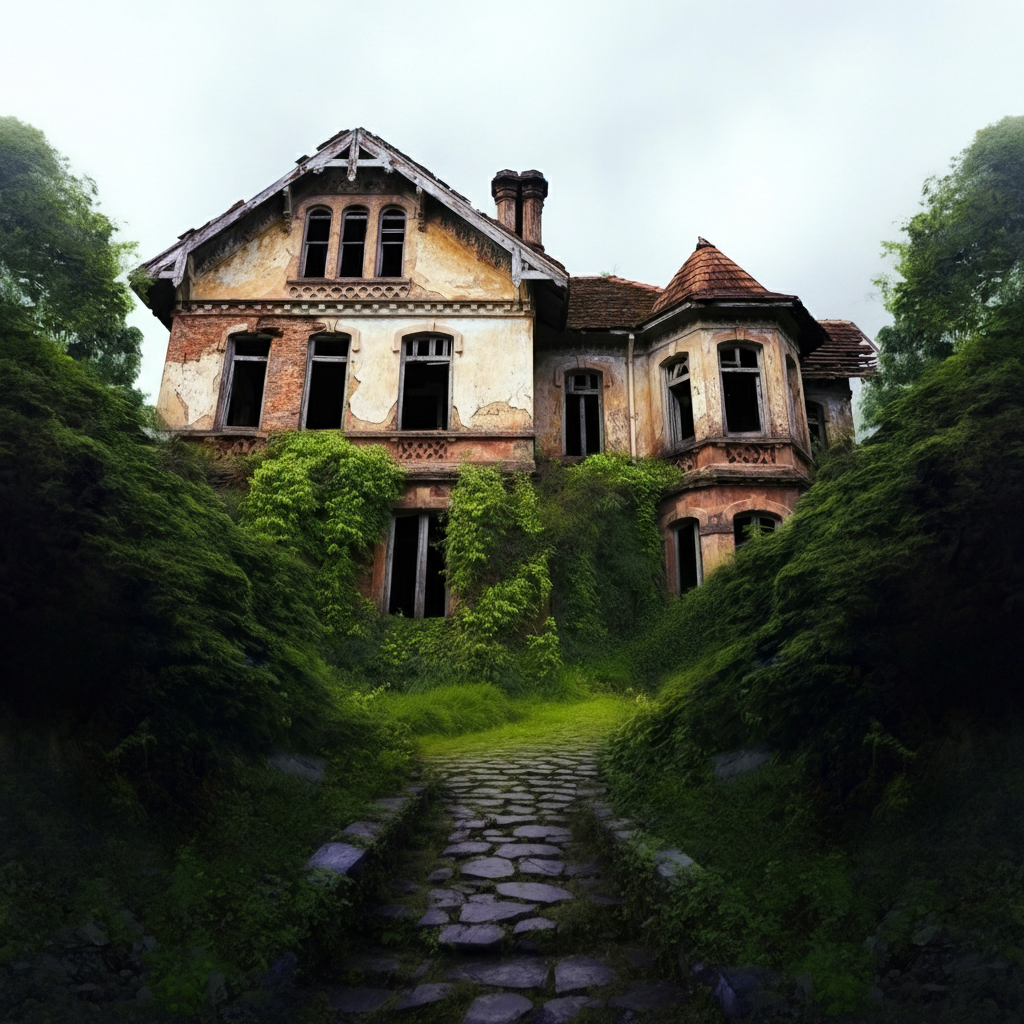
Mullingar Mansion was built in the early 1800s by Captain Young, an Irish officer of the British Army who is credited with raising the first Gurkha battalion in Mussoorie. The mansion was among the earliest European structures in the area. Captain Young eventually retired and, by most accounts, returned to Ireland. The building passed through multiple hands before being abandoned.
Today, it is a ruin. The roof is gone. Trees grow through what were once drawing rooms. The walls still stand in places, but large sections have collapsed.
The Legend
The ghost story attached to Mullingar Mansion is mild by horror standards. Locals say that on certain nights, a figure on horseback — presumed to be Captain Young — can be seen or heard near the property. Unlike the aggressive hauntings attributed to other sites, this one is described as melancholy rather than malevolent: a man who built something in the mountains and cannot quite leave it.
I visited in March 2025, in the afternoon. There was no horseman. There was, however, a spectacular view of the Doon Valley through the empty window frames, and a family of langurs who have clearly claimed the ruin as their own. The atmosphere is more poetic than frightening — unless you are there alone at dusk, in which case the wind through the broken walls sounds like footsteps.
How to Reach
- From Mall Road, walk or drive toward Mullingar Hill. The mansion is visible from several points on the upper road.
- The final approach is a steep, unpaved trail. Wear proper shoes.
- By taxi: Ask your driver to take you to “Mullingar ruin.” Most local drivers know it.
Note: The structure is unsafe. Do not climb the walls or enter collapsed sections. The langurs are territorial and will aggressively defend the ruin if you get too close to their nesting areas.
5. Pari Tibba: The Lightning Hill
Location: Near Mussoorie (between Mussoorie and Woodstock School)
Distance from Library Chowk: ~5 km
Entry: Free; hill is accessible by trail
Best time to visit: October–June (avoid monsoon — lightning risk is real)
Trek difficulty: Easy to moderate
The Real Phenomenon
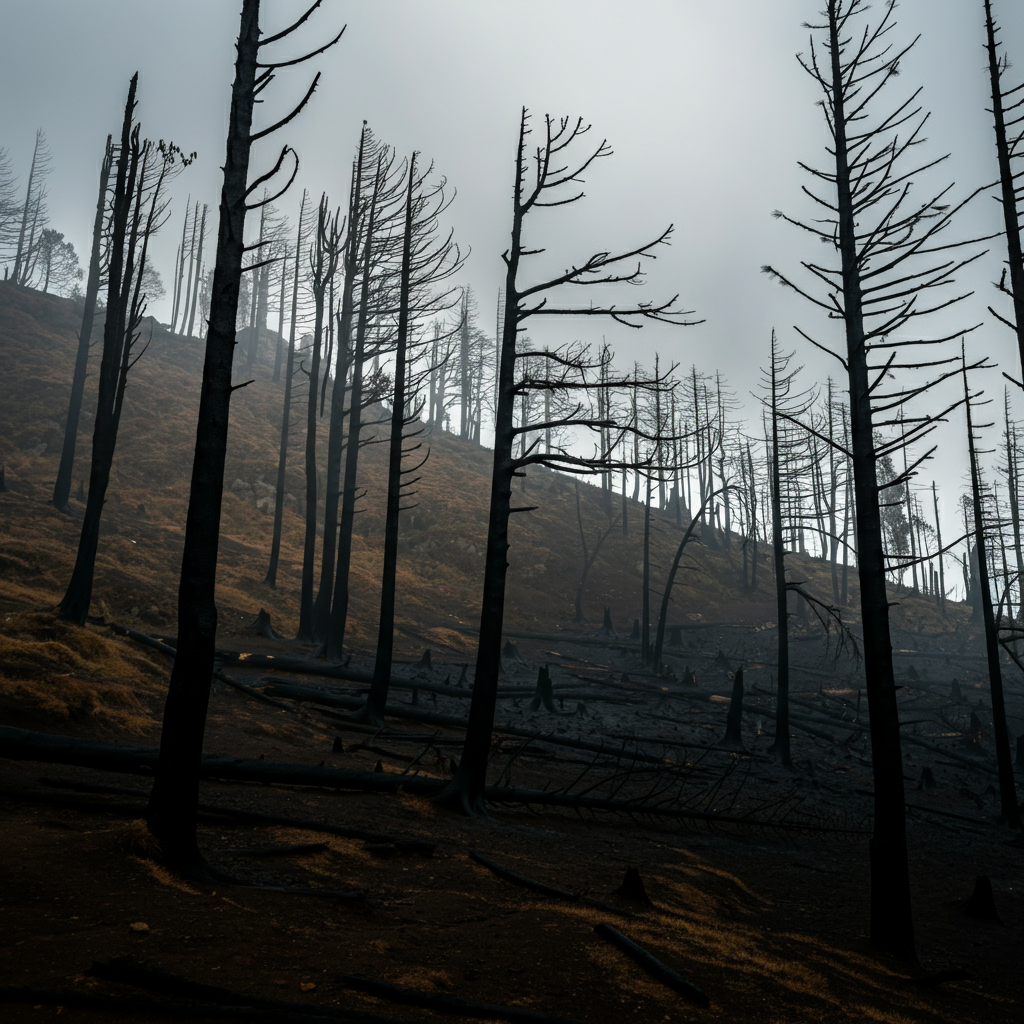
Pari Tibba — literally, the Hill of Fairies — is the most scientifically verifiable entry on this list. The hill sits at an elevation where warm valley air meets cold mountain air, creating frequent electrical activity. The soil composition and the presence of metallic ore deposits may also contribute. The result is that Pari Tibba is struck by lightning more often than any surrounding peak.
The trees on the upper slopes are blackened and split. The ground in places looks scorched. This is not legend. I saw it myself in May 2024, and the evidence is visible from the trail.
The Folklore
Local belief holds that the hill is inhabited by paris — spirits or fairies, depending on translation — who are not benign. Pregnant women and young women in particular are warned to stay away, as the paris are said to be possessive. The unnatural quiet of the hill is also noted: bird calls are rare, and the wind sounds different.
The scientific explanation for the quiet is that the hilltop is above the main tree canopy where most birds nest, and the shape of the terrain creates odd acoustics. But standing there at noon, with charred trees around you and no sound but wind, it is easy to understand why superstition took hold.
How to Reach
- From Library Chowk, take the old bridle path toward Woodstock School. The trail to Pari Tibba branches off after roughly 3 km.
- By taxi: You can be dropped at the trailhead near the Woodstock turnoff (₹200–₹300 from Mall Road).
- The trek from the road to the summit takes 45–60 minutes. The trail is not always clear — hire a local guide (₹500) if you are unsure.
Safety note: Do NOT visit during monsoon (July–September). The lightning risk is genuine and has caused documented injuries. Do not stand under isolated trees on the summit. Carry a walking stick — the trail can be slippery.
Practical Tips for Visiting Haunted Locations in Uttarakhand
Whether you are a skeptic, a believer, or simply curious, these rules apply:
1. Respect Local Advice
The people who live near these sites understand the terrain better than any blog. If a shopkeeper, taxi driver, or priest tells you not to go somewhere after dark, listen. It is rarely about ghosts and usually about real dangers — unstable structures, landslide-prone roads, or wildlife.
2. Do Not Enter Unsafe Structures
Abbey Bungalow and Mullingar Mansion are ruins. Their floors are rotten, walls are cracked, and roofs have collapsed. Entering them is not brave — it is reckless. View from outside.
3. Travel in Groups
If you are visiting any of these locations after sunset (which I do not recommend), go with at least two other people. The danger is not supernatural. It is that if you twist an ankle on a dark trail or get lost, no one will find you until morning.
4. Carry Proper Gear
- Flashlight with fresh batteries (phone flashlight is not enough)
- Power bank
- Water and snacks
- First-aid kit
- Trekking shoes with grip
- Warm layer (temperatures drop fast in the hills after sunset)
5. Do Not Trespass
The Savoy Hotel is a private business — book a room or a meal if you want to see it. Abbey Bungalow and Mullingar Mansion are on private or government land. The Lambi Dehar mines are fenced for a reason. Pari Tibba is open land, but respect the trail and do not leave garbage.
Frequently Asked Questions: Spooky Story behind the hills
Are these haunted places really haunted?
Is it safe to visit Lambi Dehar Mines?
Can I stay at the Savoy Hotel?
How do I reach Abbey Bungalow in Lohaghat?
Why is Pari Tibba called dangerous?
Can I visit all these places in one trip?
What is the best time to visit these locations?
Final Word: Why These Stories Matter
Uttarakhand’s ghost stories are not just entertainment. They are a lens into the region’s history — colonial rule, industrial exploitation, medical experimentation, and the isolation of mountain life. The miners at Lambi Dehar died because safety was cheaper than silica masks. Lady Orme died in a locked room because someone in her circle had access to arsenic and a motive. Abbey Bungalow represents the unchecked authority of colonial medicine.
The hauntings, if you choose to believe in them, are echoes of real injustice. The hills remember, even if the rest of the world has moved on.
If you do visit these places, go with respect — for the history, for the land, and for the people who still live with these stories every day. And if you hear coughing near the old mine shafts, or feel a sudden drop in temperature at the Savoy, or find the wind too quiet on Pari Tibba — well. Take a photo if you can. And then head back to town before dark.
Have you visited any of these places? Did you experience something unusual? Share your story in the comments — I read every one.
Related Reading:
