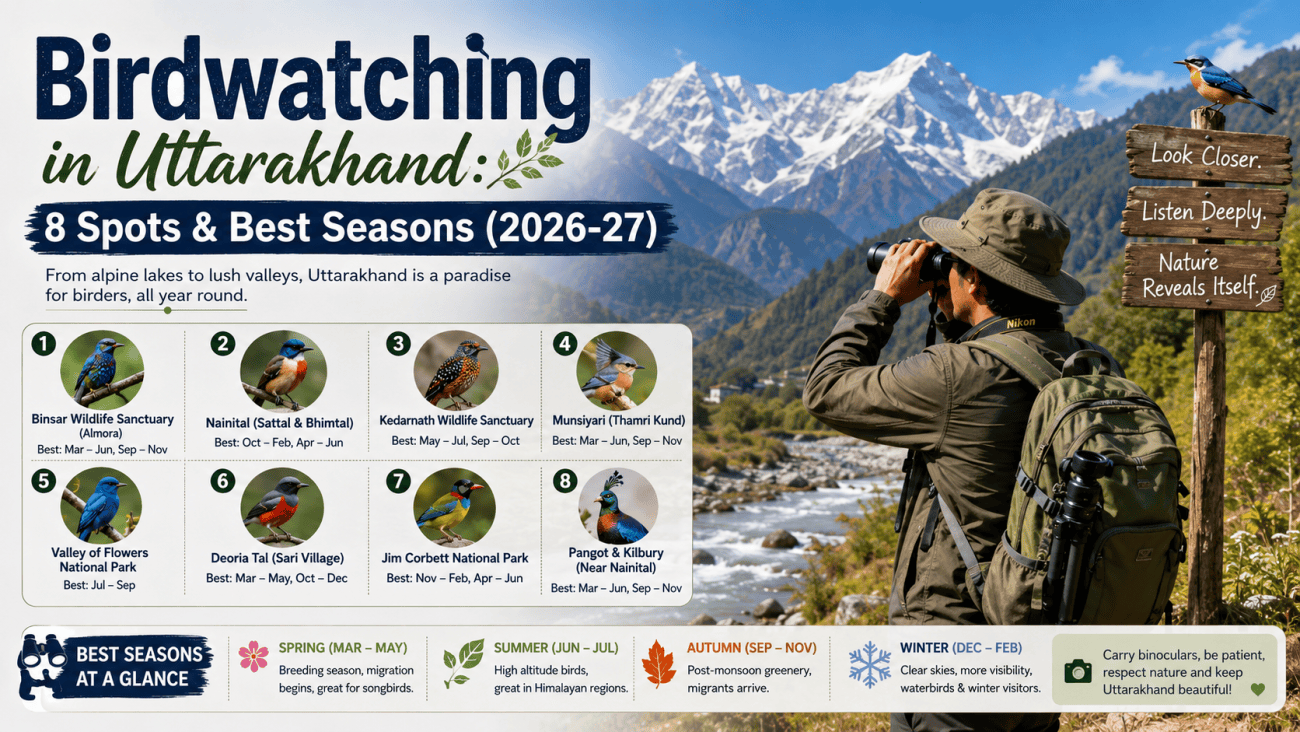
The First Time a Himalayan Monal Called Back to Me — Birdwatching in Uttarakhand
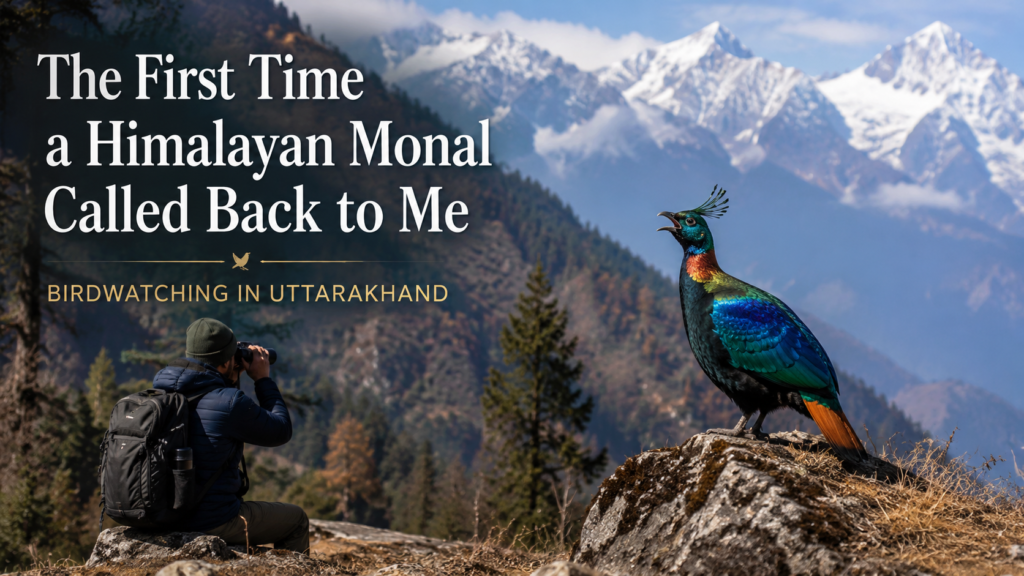
Birdwatching in Uttarakhand:- The first time you lock eyes with a male Himalayan Monal — that iridescent blue-green neck catching the morning light like spilled petrol on water — something shifts. You forget the cold. You forget your fingers are numb from gripping binoculars at 8,000 ft. You just stand there, breathing fog into the pine-scented air, while the state bird of Uttarakhand cocks its head and decides you’re not a threat. That moment? That’s why you came.
Uttarakhand isn’t just about Char Dham treks or Nainital’s crowded Mall Road. Between its riverine forests, alpine meadows, and snow-draped peaks, the state packs over 600 bird species into a landscape that changes every 50 km. I’ve birded here in four seasons now — freezing winters in Auli, monsoon-drenched mornings in Sattal, spring’s breeding frenzy in Pangot — and each trip rewired my expectations. This isn’t a generic listicle. This is the exact blueprint I wish I’d had when I started.
Why Uttarakhand Feels Like India’s Best Kept Birding Secret
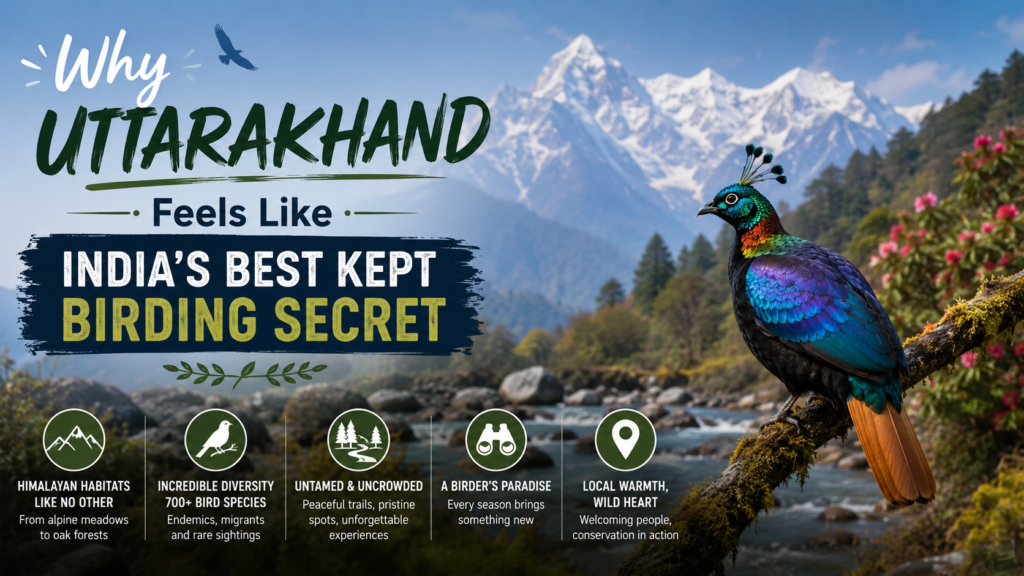
The state’s magic lies in altitudinal diversity. You can spot a Crested Kingfisher at 1,000 ft near Haridwar’s Ganga banks in the morning, and by afternoon, be scanning for Snow Partridges at 12,000 ft near Joshimath. The Kumaon hills roll with oak and rhododendron forests where laughingthrushes hide. The Garhwal Himalayas thrust up into alpine zones where raptors ride thermals. And the rivers — Ramganga, Ganga, Alaknanda — carve corridors for migratory ducks, herons, and dippers.
Nearest major hub? Delhi, roughly 250 km to Haridwar. Dehradun’s Jolly Grant Airport is closer — just 60 km to Rishikesh. The state tourism board (UTDB) has been improving eco-tourism infrastructure, but you’ll still need local knowledge for the good stuff.
Best Birdwatching in Uttarakhand‘s Spots: Mainstream vs. The Real Gems
Pangot — The Birding Capital That Delivers

Pangot is where I saw 72 species in one day. Seventy-two. It’s just 15 km uphill from Nainimal, but the deodar forest here is dense, quiet, and alive with calls.
What you’ll experience: The kreep-kreep of a Long-tailed Broadbill echoing through moss-covered oaks. The flash of a Rufous-bellied Niltava at eye level. The distant drumming of a Himalayan Woodpecker.
Best time: Sunrise, 5:30–7:30 AM. Birds are most vocal then. Afternoons are dead quiet.
Entry fee: ₹50 per person at the forest check post. No camera fee for still photography (as of April 2026).
Insider tip: Skip the main village trail. Take the Kilbury Road — the 3 km stretch past the forest rest house is where the Koklass Pheasants cross. I waited 40 minutes. Worth it.
Sattal & Bhimtal — For Water Birds & Forest Edge Species
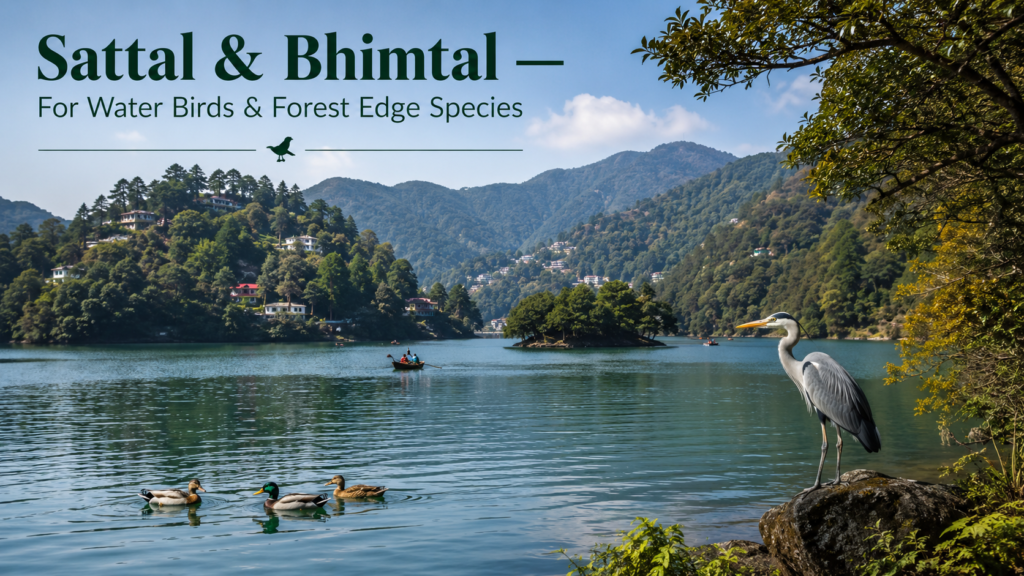
Seven interconnected lakes. Mist rising off the water at dawn. The smell of damp earth and pine needles. Sattal is prettier than Nainital, period.
What you’ll experience: Brown Dippers bobbing in the outflow streams. Crested Kingfishers perched on dead snags. Verditer Flycatchers hunting from low branches.
Best time: October–March for migratory ducks like the Northern Pintail and Garganey.
Entry: Free. Parking ₹100 near the lake cluster.
Insider tip: The Subhash Dhara trail (starting behind the Methodist Ashram) is a hidden 2 km loop through broadleaf forest. I found a pair of Red-billed Leiothrix here. Most tourists miss it.
Corbett Tiger Reserve — Not Just Tigers, I Promise

Everyone comes for the big cat. But Corbett’s Bijrani and Dhikala zones are birding goldmines. The Ramganga River attracts over 200 species.
What you’ll experience: The guttural call of a Pallas’s Fish Eagle. A line of Pied Kingfishers hovering over the river. The electric blue of an Indian Roller against dry sal forest.
Best time: November–March. Migratory waders arrive. Tigers are easier to spot, but so are birds.
Entry: ₹1,500 per jeep (up to 6 people) + ₹200 guide fee. Permits via corbettonline.uk.gov.in (book 30 days ahead).
Insider tip: Request a “nature guide” instead of a “tiger tracker.” They’ll actually stop for birds. Radheyshyam in Bijrani? He knows his stuff.
Chopta — The Mini Switzerland with Maxi Birds
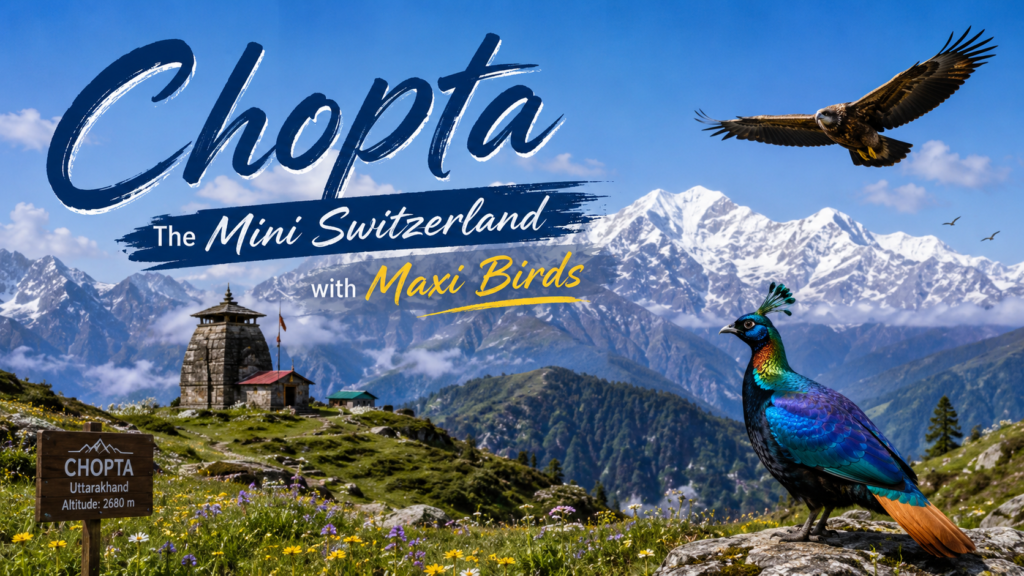
Chopta’s bugyals (meadows) at 8,500 ft are where you go for high-altitude species without killing yourself on a trek.
What you’ll experience: Himalayan Monals crossing the meadow at dawn. Snow Partridges calling from rocky outcrops. The mechanical trill of a Dark-sided Flycatcher.
Best time: March–June (breeding) and December–February (Monal descends).
Entry: Free. No permits needed (unlike the Tungnath trek further up).
Insider tip: Stay at Mohan’s Guesthouse (not the big camps). His backyard apple orchard faces the meadow. I photographed a Koklass from the window. True story.
Binsar Wildlife Sanctuary — The Silent Forest
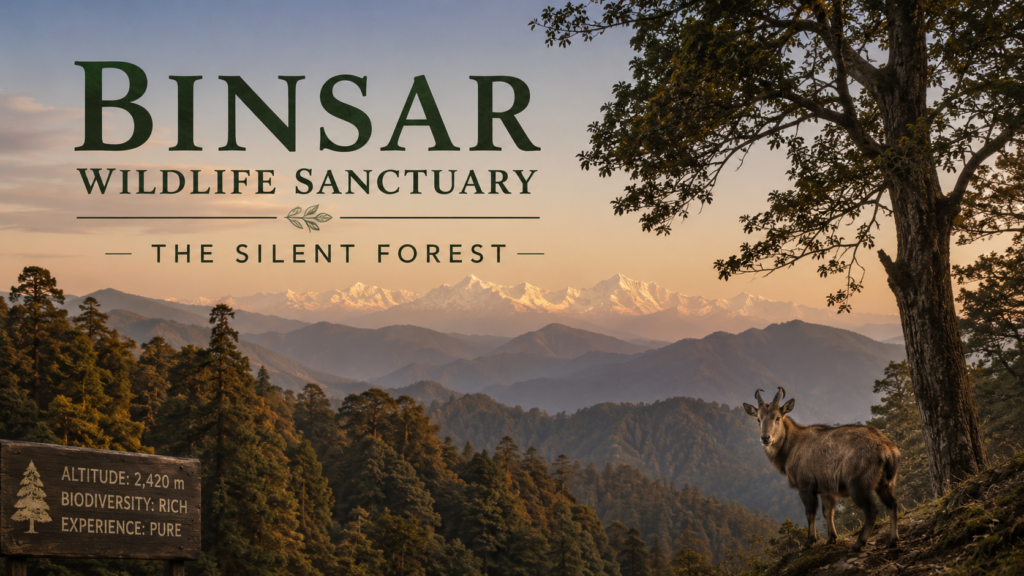
Binsar is underrated. The 45 km sanctuary road from Almora is terrible — potholes the size of small cars. But inside? Total silence, broken only by bird calls.
What you’ll experience: The whoop-whoop of a Hill Partridge. A Grey-winged Blackbird flicking leaves. The rare sighting of a Cheer Pheasant (I got lucky in March 2025).
Best time: October–April. Avoid monsoon — leeches own the trails then.
Entry: ₹150 per person + ₹250 vehicle fee. Camera ₹500.
Insider tip: The Zero Point trail (3 km from the sanctuary gate) has a hidden waterhole. Wait there post-monsoon. Everything comes to drink.
Valley of Flowers — When Birds Meet Bloom
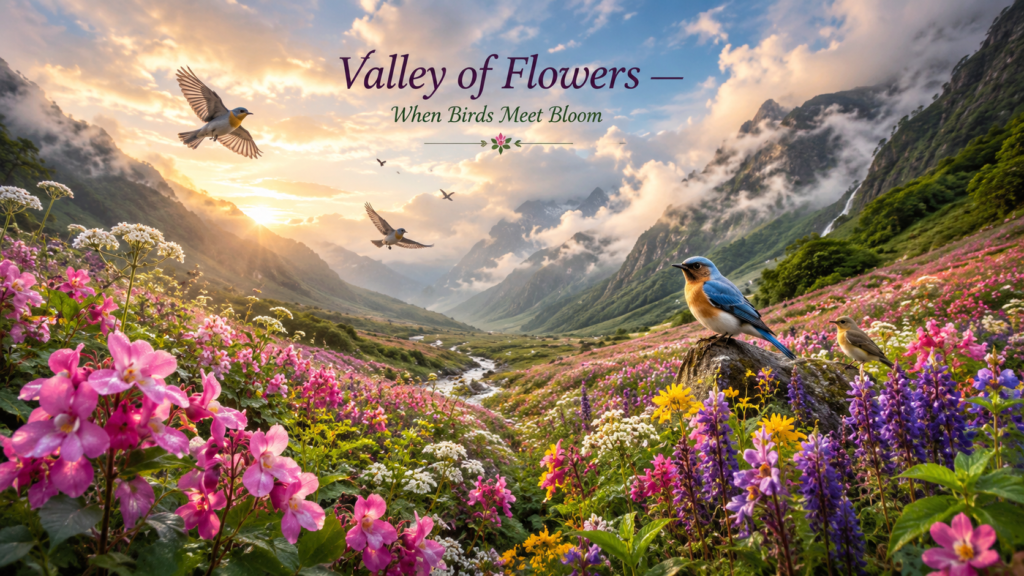
This one’s tricky. The valley is open July–September, which isn’t peak birding season. But the insect boom during bloom attracts insectivores you won’t see elsewhere.
What you’ll experience: Yellow-rumped Honeyguides near rhododendron bushes. Brown-fronted Woodpeckers on dead conifers. The constant chime of Blue-fronted Redstarts.
Best time: Late July–mid-August. The flowers peak, and so do the birds.
Entry: ₹150 per person. Permit from Forest Department at Ghangaria.
Insider tip: The Hemkund Sahib trail before the pilgrim rush (July 1–10) is quieter. Birds are less spooked. The 6 AM start is non-negotiable.
Things to Do That Aren’t Just Birding (But Help Your Birding)

1. Pre-dawn Tea at a Local Dhaba
Before you hit the trails, warm up with adrak chai at a roadside shack. The one near Pangot’s forest gate opens at 5 AM. ₹20 per cup. The warmth in your hands? Essential when it’s 4°C outside.
2. Hire a Local Bird Guide
Don’t be a hero. Local guides know calls you don’t. Rohit Singh in Pangot (₹1,500/day) can mimic 30+ calls. In Corbett, certified guides charge ₹800–₹1,000 per safari. Worth every rupee.
3. Photography Hide Sessions
Some homestays in Sattal have built hides near waterholes. ₹500 per session (dawn or dusk). You get eye-level shots of thrushes and flycatchers without disturbing them.
4. Attend a Local Festival
If you’re here in October, catch the Nanda Devi Raj Jat (held every 12 years) or smaller village festivals. Birds are quieter during festivities, but the cultural payoff is massive.
5. Combine with Light Trekking
The Deoria Tal trek (near Chopta) is 2.5 km one way. Easy. At the lake, you get water birds plus reflections of Chaukhamba peaks. Win-win.
6. Record Calls for Later ID
Use the Merlin Bird ID app. It works offline if you download the India pack. Data is patchy above 6,000 ft — BSNL only. Seriously.
7. Visit a Temple at Dawn
The Tungnath temple (if you’re fit) opens at 4 AM in summer. The walk up is dark, silent, and full of nightjars and owls calling. Spiritual and birdy.
8. Night Birding
Yes, it’s a thing. In Corbett’s Dhikala zone, night drives (₹3,000 extra) can yield Brown Fish Owls and Nightjars. Eerie. Unforgettable.
Best Time to Visit: The Seasonal Breakdown (This Table Will Save You)
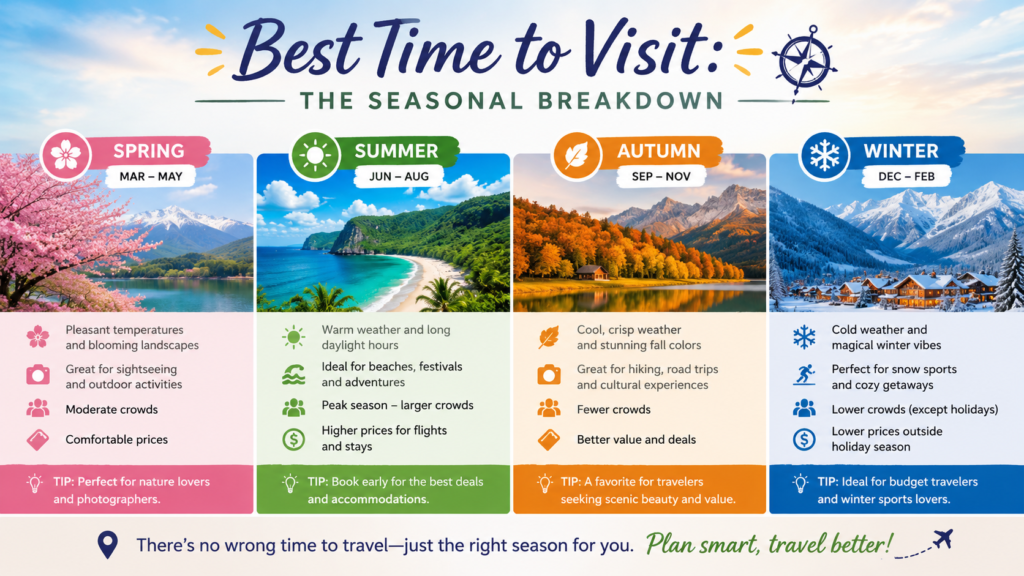
Birding in Uttarakhand isn’t a one-season game. Each window offers different species, different challenges.
| Season | Months | Temp Range | Crowd Level | Best For |
|---|---|---|---|---|
| Winter | Dec–Feb | -5°C to 15°C | Low | Himalayan Monal, Snow Pigeon, high-altitude residents |
| Spring | Mar–May | 10°C to 25°C | Moderate | Breeding plumage, migrants, Koklass Pheasant display |
| Summer/Monsoon | Jun–Aug | 15°C to 30°C | Low | Insectivores, Valley of Flowers combo, fewer tourists |
| Autumn | Sep–Nov | 10°C to 22°C | Low/Moderate | Peak migration, maximum species diversity, clear skies |
Winter is brutal but rewarding. The monal descends to 7,000 ft, making Chopta and Auli prime. Days are short. Carry thermal innerwear and a -10°C sleeping bag if camping. I made the mistake of using a flimsy jacket in Auli last December. Never again.
Spring is the sweet spot. March end to April third week. Birds are in breeding colors — the monal’s neck shines like a peacock’s. The weather is mild. Rhododendrons bloom, adding red to your photos. But it’s also school holiday season. Book stays early.
Summer (June–July) is underrated. The monsoon hasn’t fully hit. Insect life explodes, bringing flycatchers, warblers, and woodpeckers. The valley opens. Leeches are a pain, but a little salt in your socks solves that. Pro tip: Himalayan Rubythroat is easiest to spot now.
Autumn is migration madness. September 20–October 15 is my personal favorite. The skies are clearest post-monsoon. You get both resident and migratory species. The light is golden. And the crowds? Gone.
The sweet spot? Late March to mid-April. Or mid-September to mid-October. Both windows give you 50+ species days comfortably.
How to Reach: Getting to the Birds Without Losing Your Mind

By Air
Fly to Dehradun’s Jolly Grant Airport (DED). Daily flights from Delhi, Mumbai, Bangalore. From the airport, hire a prepaid taxi to Pangot (₹3,500, 8 hours) or Corbett Ramnagar (₹4,000, 7 hours). Don’t trust Google Maps timings — add 2 hours for hills.
By Rail
Kathgodam Railway Station is your best bet for Kumaon (Pangot, Sattal, Binsar). Overnight trains from Delhi: Ranikhet Express, Uttar Sampark Kranti. From Kathgodam, taxis charge ₹1,500 to Pangot (2 hours). For Garhwal (Chopta, Valley of Flowers), take a train to Haridwar or Rishikesh, then taxi onward (₹3,000 to Chopta, 9 hours).
By Road
From Delhi: Take NH9 to Moradabad, then NH309 to Haldwani (for Kumaon) or NH334 to Haridwar (for Garhwal). Distance to Pangot: 310 km. Drive time: 8–9 hours (realistic). Road conditions till Moradabad are excellent; after that, expect potholes and landslide-prone stretches in monsoon.
Bus options: UKTBC (Uttarakhand Transport) runs Volvo AC buses from Delhi ISBT to Haldwani (₹800) and Haridwar (₹700). From Haldwani, local buses to Nainital (₹150) then shared jeeps to Pangot (₹50). It’s slow but saves ₹2,500.
Personal vehicle tip: If self-driving, leave Delhi at 4 AM. You’ll beat Delhi traffic and reach the hills by noon, avoiding night driving on mountain roads. And fill up at Haldwani — the last reliable fuel station before the climb.
Where to Stay: From ₹500 Dorm Beds to ₹8,000 Forest Resorts

Budget (Under ₹1,500/night)
- Pangot: Birding Lodge (basic rooms, shared bath, hot water 7–9 AM). ₹1,200/night. Run by birder Mohan — he’ll wake you at 5 AM with tea.
- Chopta: Magpie Camp (dome tents with bedding). ₹800/night. Common toilet. Stunning meadow views. Book via WhatsApp: they don’t do online portals.
- Sattal: Methodist Ashram (spartan rooms, vegetarian meals). ₹1,000/night. Quiet, lake access, no alcohol policy.
Mid-Range (₹1,500–₹4,000)
- Pangot: The Nest Cottages (wooden cottages, attached bath, heater). ₹2,800/night. Balcony faces the oak forest. I saw a Himalayan Woodpecker from mine.
- Binsar: Binsar Forest Retreat (eco-lodge, solar power, organic food). ₹3,500/night. No TV, no WiFi. Perfect.
- Corbett: Corbett Riverside Resort (pool, restaurant, guided safaris). ₹3,200/night. 3 km from Bijrani gate.
Premium (₹4,000+)
- Sattal: V Resorts Sattal (lakefront, spa, birding guide on call). ₹5,500/night. The infinity pool overlooks the lake where dippers hunt.
- Corbett: Taj Corbett Resort & Spa (luxury, private jeep safaris). ₹12,000/night. If you’re splurging, this is it.
Homestays
Use uttarakhandstays.com (govt portal) for verified homestays. ₹1,500–₹2,000 includes meals. In Munsiyari, try Johar Homestay — the owner, Biju, knows where the Monals feed at dawn.
Where I’d Stay
If I’m on a pure birding trip, I pick The Nest in Pangot. The location is unbeatable. If I’m combining with family, V Resorts Sattal gives everyone something to do while I sneak off at dawn.
Local Food & Culture: Fuel for Dawn Patrols

You can’t birdwatch on an empty stomach. Uttarakhand’s food is hearty, local, and perfect for cold mornings.
- Aloo Ke Gutke — Spiced potatoes with mustard seeds and coriander. Served with mandua roti (finger millet bread). Tastes earthy, slightly nutty. Where: Any dhaba in Almora or Kausani. ₹80/plate.
- Chainsoo — Black gram dal, roasted and ground, then slow-cooked. Rich, smoky flavor. Where: Baba’s Dhaba near Pangot village. ₹90/plate. The owner, Prem, serves it with ghee and a smile.
- Kafuli — Spinach and fenugreek curry, thick with local herbs. Tastes like the forest itself. Where: Binsar Forest Retreat’s in-house kitchen. ₹120/plate.
- Bhang Ki Chutney — Hemp seed chutney, tangy and crunchy. Not psychoactive, relax. Where: Kumaon Restaurant in Nainital. ₹40/small bowl. Perfect with rice.
- Bal Mithai — Chocolate-like fudge with white sugar balls. Sweet enough to power a 5 AM start. Where: Mohan’s Sweet Shop in Almora market. ₹400/kg. Stock up.
- Thathwani — A soup made from lentils and grains. Warm, filling, ideal after a cold morning session. Where: Local homes in Munsiyari (if you’re homestaying).
Cultural snapshot: In Kumaon villages, locals greet with “Jai Bhole” (Hail Shiva). The pace is slow. Shops open by 9 AM, close by 7 PM. Respect the no-honking zones near forest entries — birds spook easily. And always ask before photographing people. Most are happy, but consent matters.
Etiquette tip: If you’re invited into a local home for chai, accept. It’s rude to refuse. And don’t wear shoes inside. Obvious, but I’ve seen tourists forget.
Travel Tips: The Real Stuff Nobody Tells You

- Mobile networks: BSNL/MTNL works above 10,000 ft. Jio and Airtel drop out past Sonprayag (on the way to Kedarnath). Download offline maps.
- Cash & ATMs: ATMs exist in Nainital, Almora, Haridwar. In Pangot, there’s no ATM. Carry ₹5,000 cash minimum. Many homestays don’t accept UPI above 7,000 ft — network issues.
- Altitude sickness: Chopta and Auli are above 8,000 ft. Take it slow on Day 1. Diamox helps if you’re prone. I didn’t need it, but my friend did. Symptoms: headache, nausea. Don’t ignore.
- Clothing layers: Thermal innerwear (top and bottom) is non-negotiable in winter. A windproof jacket (not just warm) is essential. The wind at Auli cuts through fleece. Carry a beanie and gloves (touchscreen-friendly). In monsoon, leech socks (₹300 in Haldwani) are lifesavers.
- Permits: Nanda Devi National Park requires an Inner Line Permit from the District Magistrate’s office in Joshimath. Apply 2 weeks in advance. For Corbett, book online only via the official portal. No shortcuts.
- Photography rules: Tripods are banned in Nanda Devi and Valley of Flowers (to prevent trampling). Use a monopod or handheld. Flash? Strictly prohibited near nesting sites. Forest officials will fine you ₹1,000.
- Road safety: Hill drivers are aggressive. If self-driving, honk at every blind turn. Night driving is suicidal — landslides, fallen rocks, no streetlights. Plan to reach your destination by 5 PM.
- Best apps: Merlin Bird ID (offline packs), eBird (log your sightings — helps science), Maps.me (offline maps with trails). Gaana or Spotify for the drive — network’s too patchy for streaming.
- Emergency contacts: Save Forest Department Control Room: 0135-2559898 (Dehradun). District Hospital Almora: 05962-230201. Ambulance (state): 108.
- Respect the forest: Don’t play call recordings to lure birds. It’s illegal (Wildlife Protection Act, 1972) and stresses them. I’ve seen guides do it. Don’t encourage it.
- Water: Carry a reusable bottle with a filter. Stream water looks clean but can have giardia. I use a Lifestraw bottle (₹1,200). Refill at homestays, not random streams.
- Birding ethics: Stay on trails. The undergrowth is fragile and full of nests you can’t see. If you spot a nest, observe from 20 ft away. Never touch eggs or chicks.
Suggested Itinerary: 5-Day Kumaon Birding Deep Dive
This is the route I did last October. Saw 89 species. Spent ₹18,000 total (mid-range).
| Day | Morning (5:30–10 AM) | Afternoon (2–5 PM) | Evening (5–7 PM) | Stay At |
|---|---|---|---|---|
| Day 1 | Arrive Delhi → Drive to Pangot (8 hrs) | Check in, acclimatize walk (1 km) | Sunset birding near cottage, dinner | The Nest Cottages, Pangot |
| Day 2 | Pangot-Kilbury trail (4 km) — Monal, pheasants | Rest, review sightings, lunch | Sattal lake edge — kingfishers, dippers | The Nest Cottages, Pangot |
| Day 3 | Drive to Sattal (1 hr) → Subhash Dhara trail | Binsar Sanctuary gate (2 hrs) → Zero Point trail wait | Drive to Almora (1 hr) → local market | Binsar Forest Retreat |
| Day 4 | Binsar core zone (5 AM entry) — partridges, thrushes | Drive to Munsiyari (5 hrs, scenic) | Check homestay, short walk for Redstarts | Johar Homestay, Munsiyari |
| Day 5 | Munsiyari meadow scan — Monal, Snow Pigeon | Drive back to Kathgodam (6 hrs) → train to Delhi | – | – |
Pro Upgrade: Add 2 days. Day 6: Munsiyari to Nanda Devi base camp trek (permit needed). Day 7: Valley of Flowers (if July–August). This pushes species count past 120.
Express Version (Weekend Warriors):
Day 1: Delhi → Pangot (arrive by 2 PM) → evening birding. Day 2: Full day Pangot-Kilbury. Day 3: Morning Sattal → drive back to Delhi by 9 PM. Species count: ~45. Cost: ₹8,000.
Estimated Travel Cost Breakdown (Per Person, 5-Day Trip)
| Expense Category | Budget (₹) | Mid-Range (₹) | Premium (₹) |
|---|---|---|---|
| Transport (Delhi round trip, shared jeep) | 4,000 | 6,500 (private taxi) | 10,000 (private AC) |
| Accommodation (4 nights) | 3,200 (₹800/night dorms) | 11,200 (₹2,800/night) | 22,000 (₹5,500/night) |
| Food (₹500/day avg) | 2,500 | 3,000 | 5,000 |
| Guide Fees (₹1,500/day × 2 days) | 1,500 (optional) | 3,000 | 4,500 (specialist) |
| Permits & Entry Fees | 500 | 800 | 1,200 |
| Miscellaneous (fuel, tips, chai) | 1,000 | 1,500 | 2,500 |
| TOTAL | ₹12,700 | ₹26,000 | ₹45,200 |
Costs updated April 2026. Prices vary 15–20% in peak season (May–June, Oct–Nov).
Why 2026 is a lovely year to go quieter
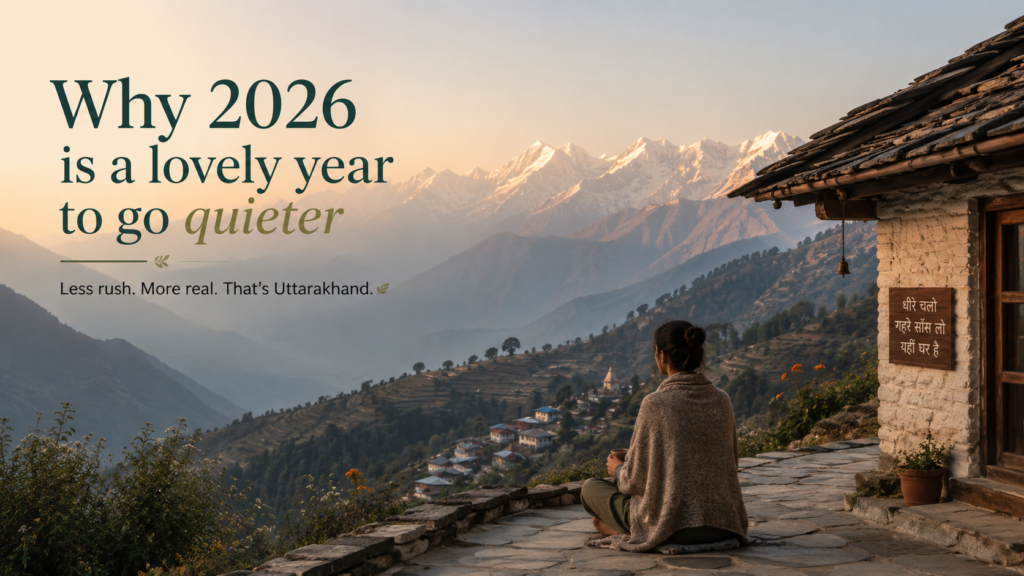
The best thing about birdwatching in Uttarakhand isn’t the rare sighting — though that helps. It’s what happens to your pace. You begin slower, listen longer, and notice silly beautiful things: frost on a railing, the smell of woodsmoke, a magpie flashing blue over a valley, the comfort of hot jhangora kheer after a cold morning.
With easier homestay discovery, better online safari systems, and more travellers finally valuing quiet over crowds, 2026 is a very good year to do this trip right. If this guide helped, share it with your birding group, save it for your next hill break, and explore more routes on uttarakhand.tours — especially the Pindari Glacier trek guide and the best snowfall places in Uttarakhand. Some trips are loud. This one rewards silence.
FAQs for Birdwatching in Uttarakhand— The Questions You’re Actually Googling
Q1: Is birdwatching in Uttarakhand safe for solo female travelers?
Q2: Which month gives the best chance to see a Himalayan Monal?
Q3: Do I need special permits for birding in Nanda Devi National Park?
Q4: What binoculars and gear should I carry for Himalayan birding?
Q5: Is Pangot or Sattal better for bird photography?
Q6: Can I combine birding with the Char Dham Yatra?
Q7: How much does a 5-day birding trip to Uttarakhand cost in 2026?
Q8: Is it worth visiting in monsoon (July–August)?
Q9: Can beginners enjoy birdwatching in Uttarakhand?
Q10: Do I need permits or online bookings in 2026?
Conclusion: Why 2026 Is Your Year to Bird Uttarakhand
Uttarakhand’s birding scene is at a tipping point. The infrastructure is improving — better roads to Chopta, online permits for Corbett, more homestays — but the crowds haven’t exploded yet. In 2025, I saw more birders than 2022, but it’s still nothing like Rajasthan’s birding circuits.
The real reward? It’s not just the species count. It’s standing in a silent deodar forest at dawn, hearing a Koklass Pheasant call from a ridge you can’t see, and feeling like you’re the first person to ever hear it. It’s the taste of hot bal mithai after a freezing morning session. It’s the way a local guide’s eyes light up when you spot a Cheer Pheasant — a bird he’s been tracking for weeks.
With the Nanda Devi Biosphere expanding eco-tourism zones and UTDB launching new birding trails in Kumaon, 2026 is the best year to explore before the secret gets out.
So grab your binoculars. Download eBird. Book that homestay in Pangot. The monals are waiting.
And when you see one? Take a moment. Just watch. Don’t photograph. Some things are better lived than captured.
Ready to plan? Explore more Uttarakhand birding guides on uttarakhand.tours. Share this with your birding group. Start logging sightings for the 2026 Great Backyard Bird Count. And if you spot a Himalayan Monal? Tag us. We live for that.
