Every winter, Uttarakhand changes character. The high shrines close after Diwali, the crowds thin out, and from December to March the state turns into India’s most accessible snow-trekking country. Forests go quiet under snow, frozen lakes appear on the trails, and summits that are green in summer become white viewpoints over the great Himalayan peaks.
This guide covers the best winter treks in Uttarakhand for the 2026–27 season: which trek suits a first-timer, which one works for a weekend, which gives the deepest snow, and which month to choose. Snow is never guaranteed on a fixed date, and conditions change with every western disturbance, so treat the months below as patterns, not promises, and always check the forecast before you leave.
How to choose your winter trek
Pick by three things: how many days you have, how fit you are, and how much cold you are ready for. First time on snow? Start with Kedarkantha or Dayara Bugyal. Only a weekend free? Nag Tibba. Want a real summit? Kuari Pass or Chandrashila. Travelling with family or children? Dayara Bugyal’s gentle meadows are the easiest fit. Whatever you choose, go with a guide in winter. Snow hides the trail, weather turns fast, and a local guide is the difference between an adventure and a rescue.
1. Kedarkantha Trek: the classic first snow trek

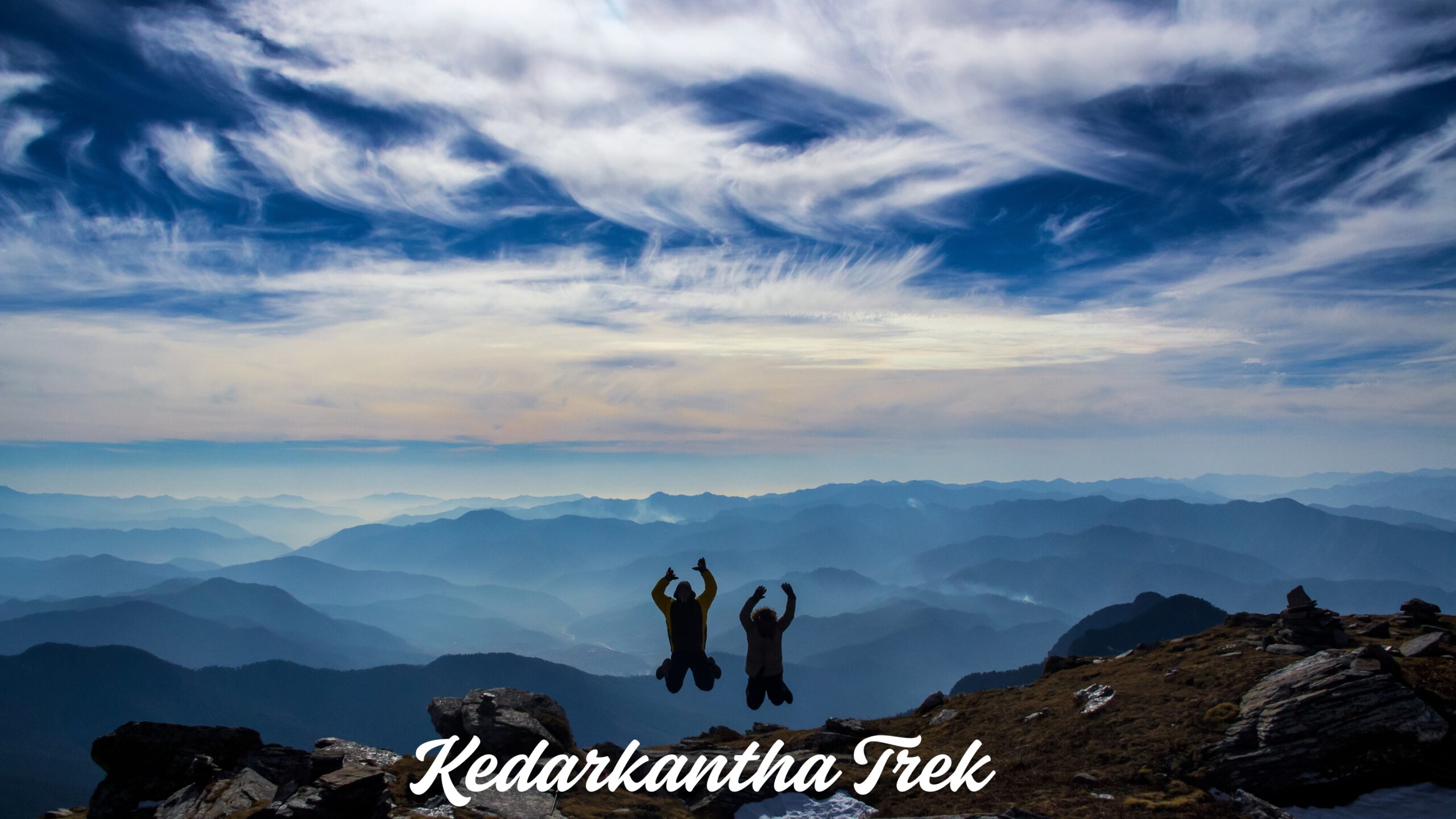
Kedarkantha is the trek most Indians do first in snow, and for good reason. Starting from Sankri village in Uttarkashi district, the five-day trail winds through pine and oak forests, past the frozen Juda Ka Talab lake, and up to a summit of about 12,500 feet. The sunrise from the top, lighting up Swargarohini, Bandarpoonch and Black Peak, is the single most photographed winter morning in Uttarakhand.
- Duration: 5 days from Sankri
- Difficulty: Easy to moderate
- Best months: December to March, with the most reliable snow in January and February
- Best for: First-time winter trekkers, families with older children, photographers
Kedarkantha works so well for beginners because the ascent is gradual, the campsites are well established, and the summit day, while long, is not technical. Book early for January batches; they fill first.
2. Brahmatal Trek: the frozen lake trek

Brahmatal, in Chamoli district, is the trek for people who want deep snow and a quieter trail than Kedarkantha. The six-day route climbs through oak and rhododendron forests to two alpine lakes, Bekaltal and Brahmatal itself, which freeze in winter. The ridge walks above the lake give long views of Trishul and Nanda Ghunti glowing in winter light.
- Duration: 6 days
- Difficulty: Moderate
- Best months: Late December to March
- Best for: Trekkers who have done one easy trek and want deeper snow and bigger views
Legend says Lord Brahma meditated beside this lake, which gives the trek a spiritual layer that many trekkers remember as much as the snow. The snow here is usually deeper than on Kedarkantha, so good boots and gaiters matter even more.
3. Dayara Bugyal Trek: the easiest snow meadow

Dayara Bugyal is one of the largest high-altitude meadows in India, and in winter it becomes a vast, rolling snowfield. Starting from Raithal village, the trail climbs gently through oak and rhododendron forest before opening into white pastures that stretch in every direction. There is no steep summit day, which is exactly why it suits families, first-timers and anyone who wants snow without a hard climb.
- Duration: 4 to 5 days from Raithal
- Difficulty: Easy to moderate
- Best months: December to February
- Best for: Families, first-timers, photography lovers, anyone who wants snow with gentle walking
In summer Dayara is green and famous for its butter festival; in winter the same meadow becomes a beginner-friendly ski slope. If your group has mixed fitness levels, this is the safest shared choice.
4. Kuari Pass Trek: the Curzon Trail and the closest Nanda Devi view

Kuari Pass follows part of the old Curzon Trail above Joshimath, and it gives one of the closest winter views of Nanda Devi, Dronagiri and Hathi Ghoda. The pass itself sits at about 3,650 metres, and the ridge walking on the way there is the finest in Garhwal for trekkers who have already done one snow trek and want something grander.
- Duration: 5 to 6 days
- Difficulty: Moderate
- Best months: December to February
- Best for: Second-time trekkers, view chasers, photographers
Because the trail starts near Joshimath and Auli, Kuari Pass pairs well with a couple of extra days in Auli for skiing or snow sightseeing. Check the Joshimath–Auli road status before you go, as snow can close it briefly after heavy falls.
5. Nag Tibba Trek: the weekend snow trek

Nag Tibba is the answer for Delhi and Dehradun trekkers who have only a Saturday and Sunday. Starting from Pantwari village, a few hours from Dehradun, the trail climbs to about 9,915 feet. From late December the top usually holds snow, and the summit gives a wide view of the Garhwal peaks without demanding a week of leave.
- Duration: 2 days
- Difficulty: Easy
- Best months: Late December to February
- Best for: Weekend trekkers, beginners testing whether they like snow, school and college groups
Nag Tibba is also the cheapest way to try a snow trek, and the shortest. If you are unsure about cold, altitude or your own fitness, do this one first and decide about a longer trek afterwards.
6. Chopta–Tungnath–Chandrashila Trek: temple and summit in snow
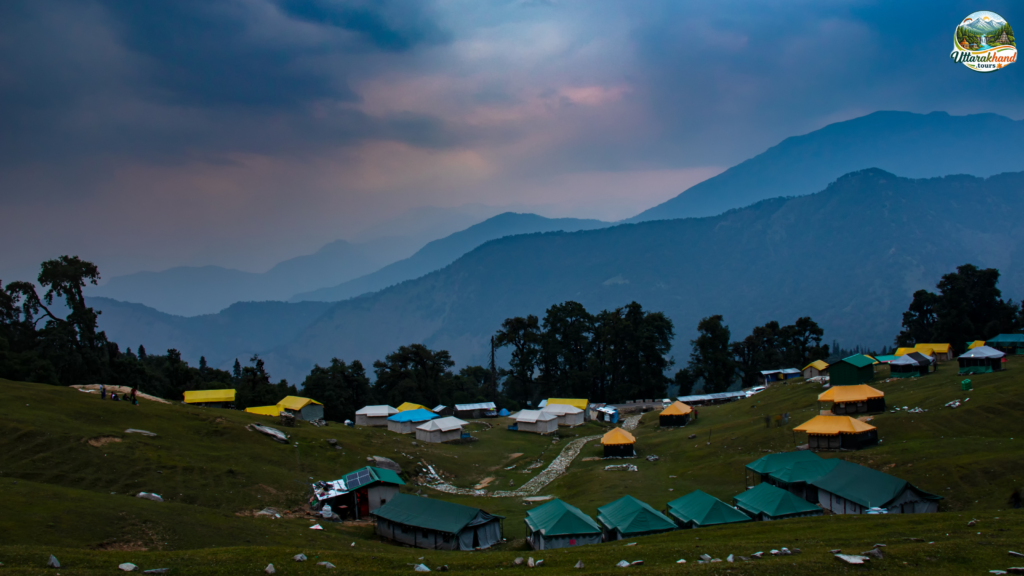
Chopta, often called the mini Switzerland of Uttarakhand, is the base for the trek to Tungnath, the highest Shiva temple in the world, and on to the Chandrashila summit at about 4,000 metres. In winter the meadows and forests around Chopta lie under deep snow, and the four-day climb to Chandrashila gives a 360-degree panorama of the Garhwal Himalaya.
One honest note: the Tungnath temple itself is closed in winter. Its deity moves to the winter seat at Makkumath after the temple closes on 6 November, so winter darshan happens at Makkumath, not at the summit temple. The snow trek to Tungnath and Chandrashila still runs in season with proper gear and a guide. Read the full story of the temple and its winter seat in our Tungnath guide.
- Duration: 4 days from Chopta
- Difficulty: Moderate
- Best months: December to March
- Best for: Trekkers who want a temple, a summit and deep snow in one trip
7. Har Ki Dun Trek: the gentle valley trek
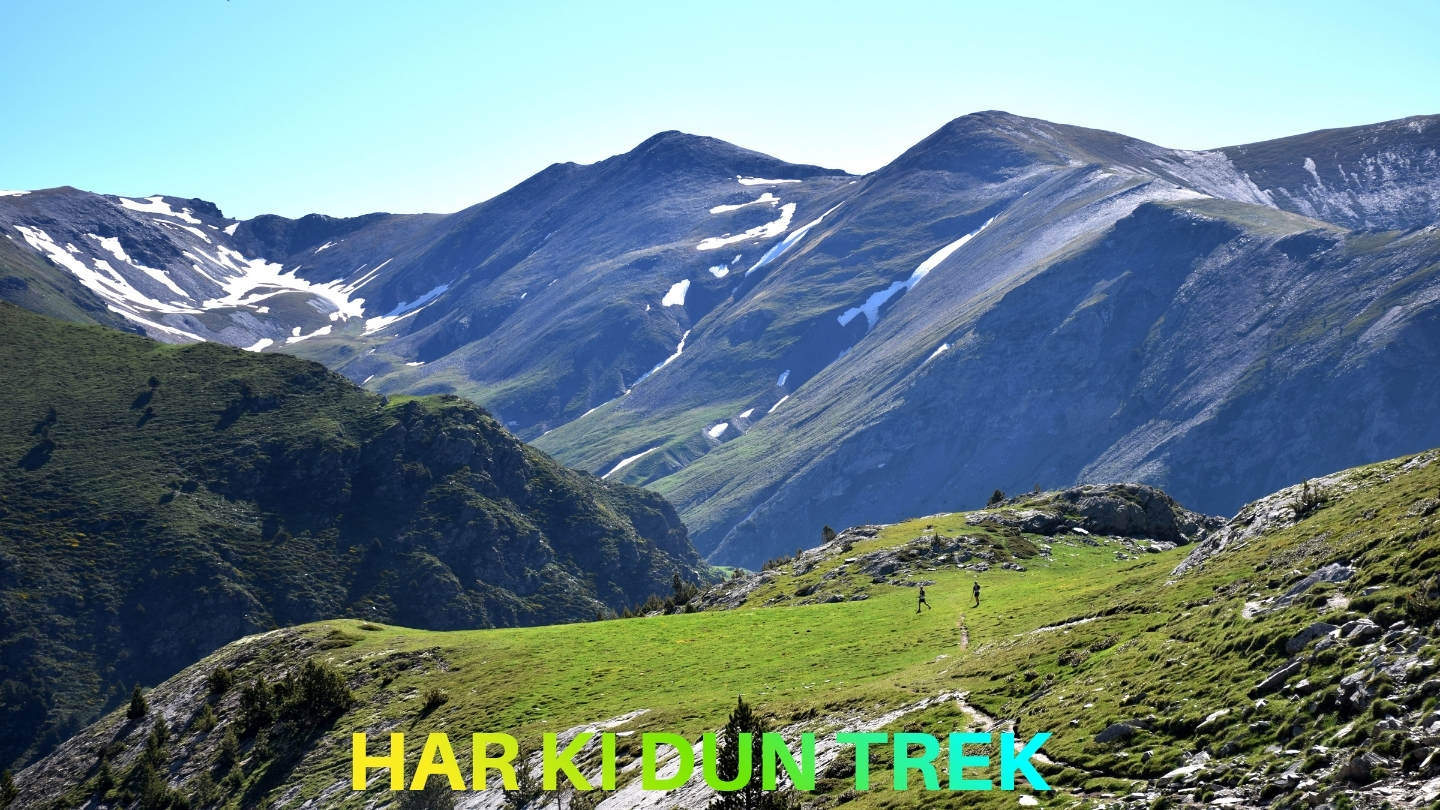
Har Ki Dun is the gentle option on this list. Instead of a summit push, the trail follows a river valley past old wooden villages like Osla to the head of the valley below the Swargarohini massif. Snow arrives later here than on Kedarkantha or Brahmatal, so it works well for late-autumn trekkers who want cold nights and snowy forests without deep snow, and for early-winter groups who prefer a valley walk to a summit climb.
- Duration: 6 to 7 days
- Difficulty: Easy to moderate
- Best months: November to February, with snow building through the season
- Best for: Slow travellers, culture lovers, trekkers who prefer valleys to summits
Winter treks at a glance
| Trek | Days | Difficulty | Best months | Best for |
|---|---|---|---|---|
| Kedarkantha | 5 | Easy–moderate | Dec–Mar | First snow trek |
| Brahmatal | 6 | Moderate | Dec–Mar | Deep snow, frozen lake |
| Dayara Bugyal | 4–5 | Easy–moderate | Dec–Feb | Families, gentle snow |
| Kuari Pass | 5–6 | Moderate | Dec–Feb | Nanda Devi views |
| Nag Tibba | 2 | Easy | Dec–Feb | Weekend trek |
| Chopta–Tungnath–Chandrashila | 4 | Moderate | Dec–Mar | Temple + summit |
| Har Ki Dun | 6–7 | Easy–moderate | Nov–Feb | Valley walk, villages |
Month by month: when to go
December brings the first snow to the high camps. Trails are quieter, early batches get fresh snow without the January crowds, but town snowfall is still a gamble and some routes may have patchy cover early in the month.
January is the peak snow month. The deepest snow, the coldest nights, and the most reliable white trails on Kedarkantha, Brahmatal and Dayara Bugyal. It is also the busiest month, so book camps and guides early.
February is the best balance for many trekkers: snow still deep, days slightly longer, and crowds thinner than January. For a first trek with the best odds of good snow and manageable cold, February is hard to beat.
March brings snow plus milder weather. The trails are still white at altitude, but the walking is more comfortable, which suits families and older trekkers. Late March can turn slushy at lower camps, so start early in the month if you can.
What a winter trek costs
As a rough guide, organised winter treks in Uttarakhand in 2026–27 cost roughly ₹4,000 to ₹11,000 per person depending on the trek, the operator and what is included, usually plus GST. Shorter treks like Nag Tibba sit at the lower end, longer ones like Kuari Pass and Brahmatal at the higher end. Prices usually cover a guide, permits, camps or homestays, meals on the trail and basic gear like crampons or gaiters where needed. Transport from Dehradun or Rishikesh to the road head is sometimes extra, so check before you book, and never choose an operator on price alone in winter. A certified guide and a small group ratio matter more than a discount when the trail is under snow.
Gear and safety: the non-negotiables
Winter trekking is not summer trekking with a jacket added. Carry three warm layers, a waterproof outer layer, waterproof boots with good grip, gaiters, warm gloves and two pairs of woollen socks. Sunglasses and sunscreen matter even more on snow, where glare is strong. Carry a buffer day in your plan: a heavy snowfall can close a road or hold you at camp for a day, and a fixed-date return ticket with no slack is how winter trips go wrong. Drink more water than you feel like drinking, watch for signs of altitude sickness above 3,000 metres, and turn back if the weather turns. The mountain will still be there next season.
Frequently asked questions
Which is the best winter trek in Uttarakhand for beginners?
Kedarkantha, followed closely by Dayara Bugyal. Both have gradual ascents, established campsites and no technical climbing, which is why they are the two most recommended first snow treks in India.
Is snowfall guaranteed on these treks?
No, not on any fixed date. Trek campsites above 3,000 metres usually hold snow for weeks from mid-December to March, which is far more reliable than town snowfall, but a dry spell can still leave a trail patchy. January and February give the best odds.
Can I do a winter trek without a guide?
It is not recommended. Snow hides trail markers, weather changes fast, and route-finding on a white ridge is a skill. A local guide also knows which slopes are avalanche-prone after fresh snow.
Is Tungnath temple open in winter?
No. The temple closes on 6 November and the deity is worshipped at Makkumath through winter. The Chopta–Tungnath–Chandrashila snow trek still runs, but winter darshan happens at Makkumath.
Which winter trek is best for families with children?
Dayara Bugyal for its gentle meadows, or Nag Tibba for a short two-day taste of snow. Both avoid long summit days and steep ground.
What is the cheapest winter trek in Uttarakhand?
Nag Tibba, because it takes only two days and starts close to Dehradun. Kedarkantha and Dayara Bugyal are the best-value multi-day options.
Final word
If you have only one winter trek in you this season, make it Kedarkantha for the classic snow summit, Dayara Bugyal for gentle meadows, or Brahmatal for the frozen lake. If you have a weekend, Nag Tibba will tell you whether winter trekking is your thing. And if you want the grandest views, Kuari Pass and Chandrashila are waiting. Whichever you pick, book early for January, go guided, and keep a buffer day. Uttarakhand in winter rewards the prepared and forgives no one in a hurry.
