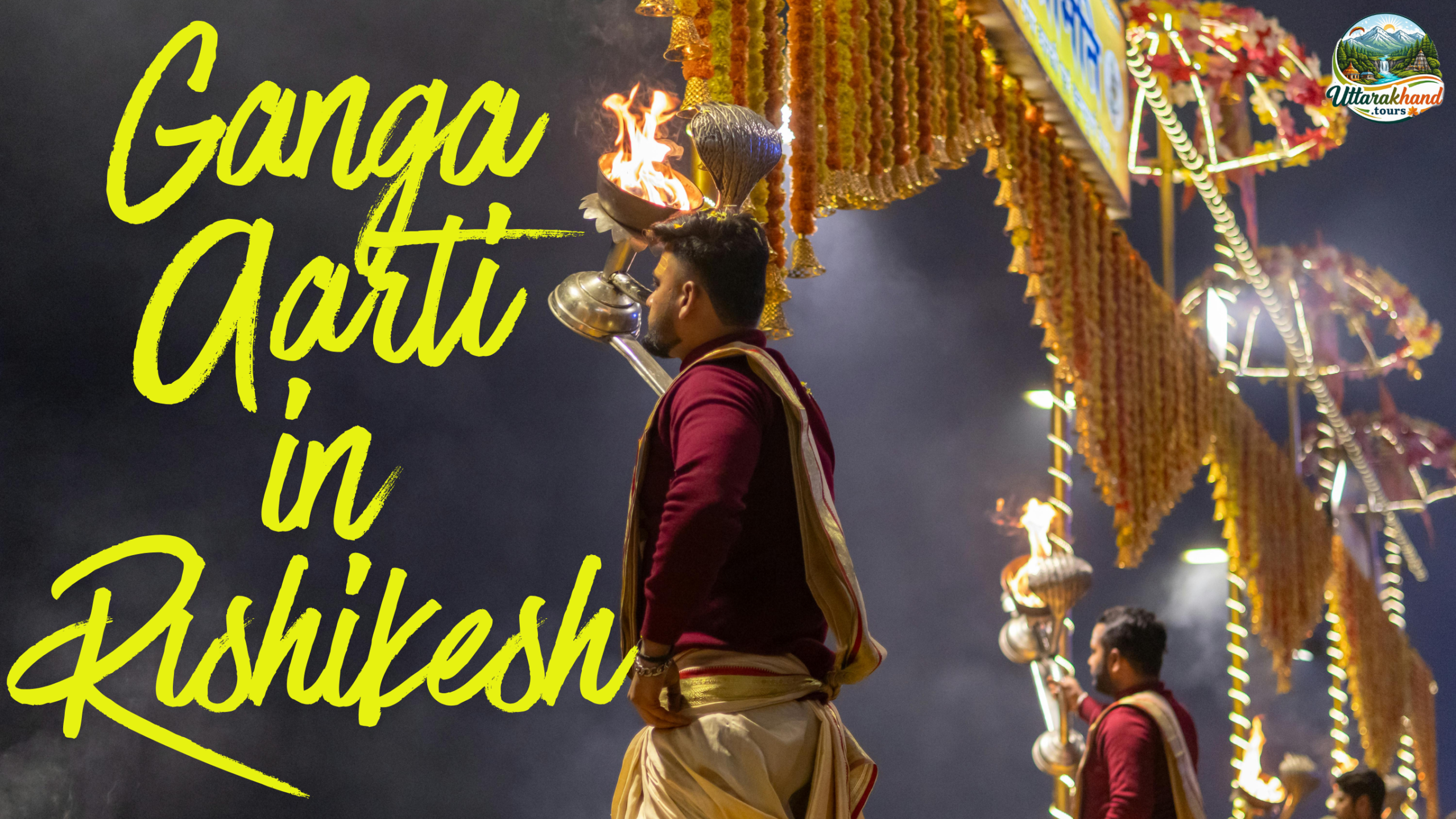
Ganga Aarti in Rishikesh Explained: Meaning, Mythology, Timings & Spiritual Magic
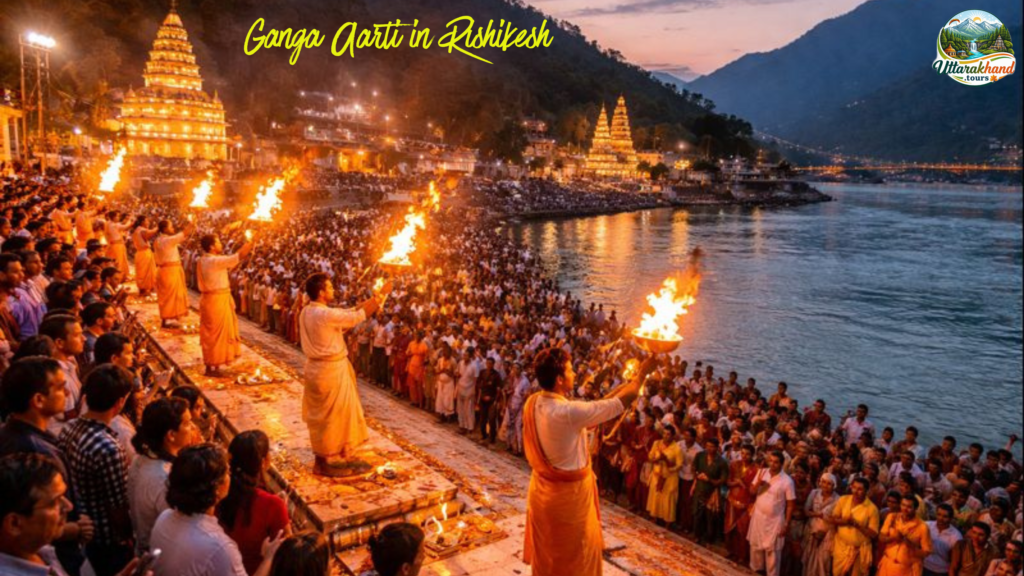
As evening descends over the Himalayan foothills, Rishikesh undergoes a quiet transformation. The chatter of the day softens. Yoga students fold their mats, rafters dry off by the riverbanks, and pilgrims move instinctively toward the stone steps of Triveni Ghat. Bells echo in the air. Saffron-robed priests lift flaming lamps. Fire reflects on water.
And in that suspended moment—when light meets the sacred flow of the Ganges—something ancient awakens within you.
This is Ganga Aarti, Not a performance. Not a tourist attraction. But a living, breathing dialogue between humans, nature, and the divine. Rishikesh is officially recognised by the Uttarakhand government as one of India’s most important spiritual tourism destinations. 👉 Uttarakhand government’s official tourism portal
What Is Ganga Aarti? (In Simple Terms)
Ganga Aarti is a daily Hindu devotional ritual performed at sunset to honour Maa Ganga, the Ganges River personified as a nurturing mother goddess. The word Aarti comes from Sanskrit ārātrika, meaning the removal of darkness—both external and inner.
Unlike temple rituals enclosed by walls, Ganga Aarti unfolds in the open, reminding devotees that divinity is not confined to idols but flows freely through nature itself. In Rishikesh, the Aarti is primarily held at Triveni Ghat, a sacred confluence where the Ganga meets two mythical rivers—Yamuna and Saraswati—making it spiritually potent.
According to Hindu belief, the Ganges does not merely cleanse the body; it purifies karma, memory, and consciousness, carrying prayers toward liberation (moksha).
Why Rishikesh Is the Most Sacred Place for Ganga Aarti
Rishikesh occupies a unique spiritual geography. It is the exact point where the Ganga descends from the Himalayas into the plains, transitioning from wild mountain force to life-giving mother river.
Known globally as the Yoga Capital of the World, Rishikesh has been a meditation hub for sages, rishis, and seekers for thousands of years. The name itself—Rishikesh—means “Abode of the Sages.”
The Mythological Power of Triveni Ghat
Hindu scriptures recount that Lord Krishna visited Triveni Ghat after being wounded by a hunter’s arrow. He took his final purifying bath here before ascending to his celestial abode. This makes every evening Aarti at Triveni Ghat a continuation of divine history—where endings and beginnings dissolve into one eternal flow.
If you’re planning a spiritual journey, this guide on Rishikesh travel and sacred places helps you explore the town beyond the Aarti.
The Legend Behind the Ganga: Bhagirath, Shiva & Divine Descent
To truly feel the emotional weight of Ganga Aarti, you must know why the river is worshipped.
According to ancient Hindu texts, King Bhagirath performed severe penance to liberate the souls of his 60,000 ancestors, who had been reduced to ashes by Sage Kapila’s curse. Only the descent of Goddess Ganga from heaven could free them.
But Ganga’s force was so immense that it threatened to destroy Earth. Lord Shiva, embodying supreme compassion, caught her descent in his matted locks (jata), gently releasing her through the Himalayas.
This story encodes a timeless truth:
👉 Divine grace flows only when human effort meets divine compassion.
During Ganga Aarti, every chant reenacts this cosmic negotiation between heaven and earth.
How the Ganga Aarti Ritual Happens (Step-by-Step)
The Aarti usually begins around sunset—between 5:30 PM and 7:00 PM, depending on the season.
1. Invocation: Calling the Sacred
The ritual opens with the powerful sound of conch shells (shankhnaad), believed to echo the primordial vibration (Om) from which creation emerged.
2. The Five-Fold Offering (Pancha Upachara)
Priests perform synchronized movements with large brass lamps (diyas), offering:
- Incense – purifying the air
- Flowers – earth’s beauty
- Water – fluid grace
- Peacock fans – life force in motion
- Fire lamps – divine illumination
Each clockwise circle (pradakshina) symbolizes surrender of ego and alignment with cosmic rhythm.
3. The Climax: Floating Diyas
Devotees light small leaf lamps and release them into the river. These glowing diyas drift downstream like visible prayers—hopes, regrets, gratitude—carried by the Ganga without judgment.
4. Collective Silence
The ceremony ends not with applause, but silence. Many stand motionless, tears flowing freely, as if something deeply personal has been gently unburdened.
The Deep Symbolism Hidden in Ganga Aarti
Every element speaks a symbolic language older than words:
- Fire (Agni): Destroys ego, illuminates awareness; messenger between humans and gods
- Water (Jal): Adaptability, purification, emotional release
- Five Elements: Earth, water, fire, air, and ether—all honoured together
- Circular Motion: Mirrors planetary orbits, affirming cosmic harmony
- Floating Lamps: The truth of surrender—what you release with devotion returns to the source
This is why the ritual feels experienced, not merely observed.
Why People Cry During Ganga Aarti (Without Knowing Why)
Many first-time visitors—Indian and foreign—are surprised by the emotional intensity of the experience.
On a surface level, rhythmic chanting and sensory immersion can induce meditative brain states. But on a deeper level, Ganga Aarti places you inside a 5,000-year-old current of collective devotion.
Standing where millions before you stood, offering the same prayers for peace and liberation, creates what Hindu philosophy calls Satsang—the presence of truth.
People often describe feeling small yet infinite, as personal anxieties dissolve into the river’s timeless flow.
Practical Guide: How to Experience Ganga Aarti Respectfully
Best Locations
- Triveni Ghat – Central, powerful, traditional
- Parmarth Niketan Ashram – Serene, Vedic chanting by trained students
Explore nearby spiritual sites with this Uttarakhand pilgrimage guide.
Timings
- Summer: 6:00 – 7:00 PM
- Winter: 5:30 – 6:30 PM
👉 Arrive 45 minutes early for a good spot.
Dress & Etiquette
- Modest clothing (cover shoulders & knees)
- Remove footwear before stepping onto ghats
- Silence phones completely
- Avoid flash photography during chants
Photography Tips
- Riverside steps for diya-level shots
- Lakshman Jhula for wide-angle views
- Boat ride (₹50–100) for unobstructed reflections
Rishikesh vs Haridwar vs Varanasi: Which Ganga Aarti Is Best?
| City | Experience | Best For |
|---|---|---|
| Rishikesh | Calm, meditative, Himalayan | Seekers & first-timers |
| Haridwar | Grand, structured, festive | Traditional devotees |
| Varanasi | Intense, raw, existential | Philosophical explorers |
Rishikesh feels like a whispered prayer. Varanasi feels like a cosmic roar.
Why Ganga Aarti Still Matters Today
In an age dominated by screens and speed, Ganga Aarti offers something revolutionary: stillness.
For 45 minutes, thousands stand together—without distraction—watching light merge with water as the Himalayas look on silently. You don’t leave with answers. You leave lighter.
When your diya drifts away, you realize the truth pilgrims have known for centuries:
The Ganges does not flow outside us.
It flows through us—waiting for stillness to be remembered.
Travel Tip
Best time to visit: October to March
How to reach: Auto-rickshaw from Lakshman Jhula (5 minutes)
Stay: Riverside eco-resorts for sunrise meditation + evening Aarti
For complete trip planning, explore https://uttarakhand.tours
FAQs:
What time does Ganga Aarti start in Rishikesh today?
Is there a morning Ganga Aarti in Rishikesh?
How early should I arrive for evening Aarti?
Which ghat has the best Ganga Aarti —Triveni or Parmarth Niketan?
Is Rishikesh’s Ganga Aarti better than Varanasi?
Do I need tickets for Ganga Aarti Rishikesh?
Can foreigners attend Ganga Aarti?
What should I wear to Ganga Aarti?
Is photography allowed during Ganga Aarti?
Can I float my own diya on the Ganges?
Why do priests ring bells during Ganga Aarti?
What does the circular lamp motion mean?
Why is Rishikesh’s Ganga Aarti considered special?
Best time to visit Rishikesh for Ganga Aarti?
How long does the evening Aarti last?
Can I combine Ganga Aarti with other Rishikesh experiences?
Sunset yoga (4:30 PM) → Walk to Triveni Ghat (5:30 PM)
Ganga rafting (morning) → Evening Aarti + riverside dinner
Beatles Ashram visit → Parmarth Niketan Aarti (Ram Jhula area)
