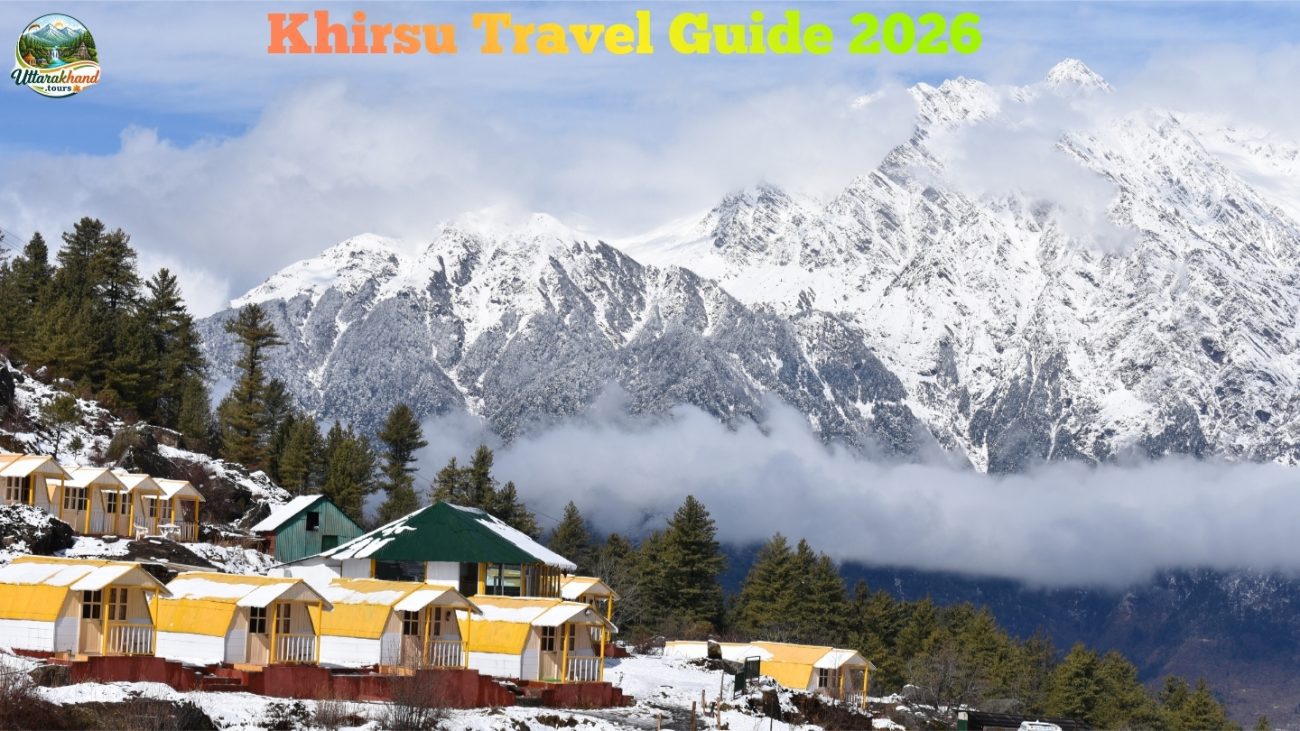
Ultimate Khirsu Travel Guide 2026: Uttarakhand’s Secret Himalayan Balcony
The setting Picture a world where your only morning ping is the chirrup of the blue magpie; your biggest bottleneck a herd of sheep blocking a precarious mountain trail. In 2026, when the digital din of life hits a crescendo and “over-tourism” transforms beloved spots such as Mussoorie and Nainital into busy urban outgr0wths, there is one thing the discerning traveler seeks: silence.
And then comes Khirsu!

Situated at an altitude of 1,700 meters (5,577 feet) in Pauri Garhwal district—Khirsu is no another pin-point on your map; it’s a “Himalayan Balcony” that too only for those who know where to look. Where other popular hill stations in Uttarakhand have fallen victim to reckless commercialization—a mall road, crowded viewpoints and a hooting frenzy – Khirsu has kept something that feels like its soul. It is still an oasis of tranquillity unscarred by the tumultuous stamp of mass tourism.
But what really makes Khirsu special in 2026 isn’t only what it lacks (crowds, pollution, noise) but also what it has in abundance. It has a mountain intimacy that is hard to experience anywhere else.” On a sunny day, you don’t just gaze at the Himalayas; you engage in conversation with them. You can actually marvel at the serrated silhouettes of more than 300 named and unnamed peaks of the Greater Himalaya from your own balcony – Panchachuli, Nanda Devi, Trishul being some of them.
Here you will have the pine and oaks scent in the crisp air and time does not tick here but moves along with the deodar shadow changing. Whether you are looking for a digital detox, a romantic hideaway or just some time alone with your thoughts, Khirsu makes feeling cut off from the world feel opulent rather than isolating.
If you are searching for a place where the “nightlife” means contemplating stars in a sky never befouled by ambient glow, and “rush-hour” is that of the wind whipping through the lace-leaves of rhododendrons, then this is your refuge. This in-depth guide is your manual to seeing and discovering hidden gems of Khirsu – a place that doesn’t just greet you, but cures you.
The Geography of Stillness: A Symphony of Forests and Peaks

It’s geography is where Khirsu’s magic lies. Unlike other crowded hill stations, situated on the bank of a river or a valley, Khirsu stands apart in terms of charming location as it hangs off a ridge with several hundred feet sheer drop beneath it. It is this special location that earns Shimla the term “Himalayan Balcony”.
It’s not even an overview, it’s a grand unobstructed 180-degree panorama that feels somehow personal. The town itself, perched at 1,700 meters, may be the Goldilocks of high-altitude living — just right high enough for crisp mountain air and breathtaking views but not too high to suffer from the cold that can come with higher altitudes.
The Verdant Embrace of Flora and Fauna

Khirsu’s stillness is lullabied by thick, primordial forests. And as you enter this green paradise, you suddenly find yourself beneath the dense Oak (Baanj), Pine (Chir) and colourful Rhododendron (Buransh). This thick forest has a purpose beyond aesthetically pleasing; it forms an extraordinary micro-climate. Even when the plains of North India bake in 45 degree Celsius heat during peak summer, Khirsu is a cool and breezy escape. The air here smells of pine needles and damp earth, a natural aromatherapy session that starts the minute you show up.
These forests are not silent. They teem with the calls of exotic birds. And pay attention for the melodious whistle of the Himalayan bulbul, the shrill barking deer and rustling of a pine marten in the underbrush. In the spring, the terrain changes when the rhododendron bushes explode in blazing red and pink blossoms that calls to birds and bees from near and far.
The Panoramic View : A Himalayan Blanket of Unremitting Nature.

What really is special about Khirsu is the jaw dropping view it offers. There are also no hills between this town and the vision along its ridge top location. On a good day the horizon is serrated with snow-covered giants, hundreds of kilometers to either side. The sensation is visceral; you feel like you can just reach out and touch the peaks.
The vista is a living canvas that shifts with the light. At dawn, the first light of morning caresses the mountaintops in a rosy, ethereal pink. Stark and magnificent, they’re typically silhouetted against the brilliant blue sky by noon. As night approaches, the sunset glows snow in shades of golden, orange and purple – that spectacular performance repeated every day.
Of the 300 visible peaks, many have their own characters and stories – but a few really stand out:
Trishul (7,120 m): Named after the trident of Shiva, the Trishul massif has three shapely peaks. It frequently traps the day’s first and last light and is a favorite of photographers.
Nanda Devi (7,816 m): The second highest mountain in India and the goddess of Uttarakhand state. Such a majestic, if slightly obscured, stand deserves respect and admiration.
Chaukhamba (7,138 m): Mean “four pillars”, a group of four impressive peaks situated like the four legs of a huge throne for gods. In sheer bulk, it overwhelms much of the skyline.
Panchachuli: is a group of five peaks, which according to local legend represent the five cooking hearths Pandavas during their exile period.
This continuous intimate touch with the Himalayas makes Khirsu not just a sightseeing but a feeling place. It is a geography that makes you want to stop, breathe and be still.
Top Things to Do in Khirsu: Beyond the Checklist
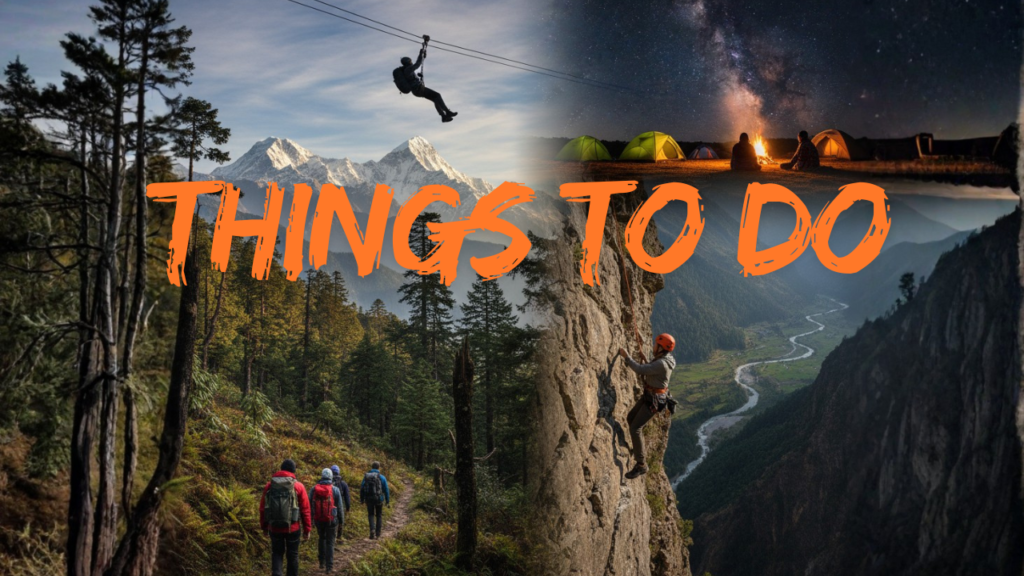
In 2026, travel has evolved. We don’t look for places any more so we can take a picture of them; instead, we search for a place to feel. Khirsu is not the place for “check list sightseeing”- rushing to a crowded monument only to dash and follow it up with another. It is a place to question oneself. The activities at play here are meant to derail you: Ground you out into nature and connect you with simplicity itself. Here is how you can spend a quiet time at Khirsu.
A. In the Oak Woods: Forest Bathing (Shinrin-yoku)
Although the idea of “forest bathing” is a Japanese one, Khirsu’s ancient forests have been practicing this therapy since time immemorial. The trails heading out of the GMVN guesthouse, into dense oak and deodar forests, are world-class in their serenity.
The Experience: It’s not like a hike, which is all about the summit. It is about the journey. Walk slowly. Turn off your phone. Stroke the mossy bark of ancient trees. Inhale the phytoncides (wood essential oils) that the pine emit.
Why Do It: Research shows doing nothing but hanging out in these woodlands for as little as 30 minutes lowers cortisol (stress) levels, reduces blood pressure and enhances immune functioning. The forest is your doctor in Khirsu.
B. Ghandiyal Devta Temple Seek some spiritual solace at Ghandiyal Devta temple.
This ancient temple is situated at a distance of few kilometers from the primary village and is worshipped in reverence to Ghandiyal Devta which is believed to be the guardian deity of that area.
The Vibe: The temple is not a grand, imposing edifice but rather an unpretentious and profoundly spiritual space hidden in tall pines. The design follows traditional Kath-Kuni style — an interlocking method of wood and stone with no cement used that is also earthquake-resistant. This itself is a tribute to the innate engineering skill of the Garhwalis;.
Why Do It: You get to see the localised Hinduism of the hills, which is different from the mainstream one. No long lines to wait in here, only the ring of a brass bell and the mutter of prayers on the wind.
C. Local Orchard Apple Picking
The Apple Bowl of Pauri has gained an identity called Khirsu. The climate here is also ideal for cultivating a crisp, juicy selection such as Royal and Golden Delicious.
The Experience: If you visit from August to September, the apple orchards are laden with fruit. Several local orchardists have made their property available to the public, so you can stroll among their trees. You can also pick your own apples to take home for a small fee.
Why Do It: You are in direct contact with your food source. You can bite into an apple you just picked off a tree that’s unwaxed and chemical-free, and taste a burst of flavor that doesn’t exist in the supermarket.
D. The Ulka Garhi Trek
For a little bit of adrenaline with history wound in, the hike to Ulka Garhi is unmissable. It is a brief yet worthwhile 3 km trek from Khirsu.
The Experience: The path meanders through thick rhododendron, eventually leading to the ruins of an ancient Garhwal fort. That hill is where the fortress once stood, and though precious little of the structure survives today, it is possible to see why from its vantage point. In return, you are met with the 360-degree panoramic view of the whole Pauri Garhwal district and such as huge Himalayan range.
Why Do It: For the sunrise, it’s primo. The sight of the sun rising from behind the Chaukhamba massif to light up the valley floor below is something you’ll never forget.
E. Village Walks and “Pahadi” Chats
To get into the heart of Khirsu, you simply have to step off the highway and wander through the villages of Khirsu, Gwar and Barlowganj.
The Vibe: The village houses are traditional, slate-roofed structures with ornate wood carvings on the doors and windows. Younger brother.” As you explore, people will predictably throw “Namaste” or a warm“Bhulla! Sip a cup of tea at a small shop; the locals are amazing raconteurs.
Why Do It: This is the best of cultural immersion. You may discover here about the tribulations of life in the hills, the lore of local ghosts (the Aachris among them) or their secret recipe for spicy Pisyu Loon (flavored salt).
F. Stargazing: The Dark Sky Experience
Khirsu being away from major cities, light pollution is almost nil. In 2026, “Dark Sky Tourism” has flourished in which Khirsu is now one the popular destination of astronomers.
The Experience: Cours on ne devine dans ces textes et images que de magnifiques planTRACE and take us through them. And given a dark night, the Milky Way can be seen without any instruments. It flows across the sky like a river of diamonds. Some eco-camps even offer telescopes, though in all honesty a patch of grass with a blanket is sufficient.
Why Just Do It: It’s one way to put human existence in perspective. Gazing into the great cosmos from a soundless Himalayan ridge is a humbling, meditation-worthy glimpse that recalibrates priorities.
How to Reach Khirsu in 2026: Navigating Your Path to Paradise

Khirsu, that hidden respite has slowly become a lot more reachable and yet can’t lose it’s ‘being there’ charm. The Garhwal region boasts of high connectivity, thanks to some large infrastructural development, in particular, the Char Dham All-Weather Road project. The first part of the adventure is planning your route. EDITOR’S NOTE: For those interested in visiting Khirsu in 2026, here’s a guide for how to get there.
By Air: The Swift Approach
Sightseers who are pressed for time find that they will want to fly. The closest airport is Jolly Grant Airport (DED) at Dehradun which provides air connectivity for Uttarakhand with help of some of the direct flights to Delhi, Mumbai and Bangalore.
- Airport: Jolly Grant Airport (DED), Dehradun 88 Kms.
- How to Reach Khirsu: Around 145 km.
- Distance from Airport: By road 05-06 hours
You have two major avenues after arriving at Jolly Grant for the onward travel. The most popular option is to take a private taxi from the airport. Taxis are plentiful, although it is recommended to book in advance, particularly during high season for better prices. Driving through Rishikesh and Devprayag, take the picturesque Ganga Route till you start heading to Pauri.
Pro Tip for 2026: Heli-Services
A game changer for those who are luxury inclined and short on time, private helicopter services are popping up. Some operators now run charters from Dehradun to a helipad in the vicinity of Pauri. THE COSTLIEST RIDE If with money you would like to rid yourself of the travel sickness and an approx six hour drive appeals less than 45 minutes of picturesque travel with aerial views over the Shivalik and Garhwal ranges. Khirsu is a short and beautiful drive of 19 kms from Pauri helipad (approximately 45 minutes).
By Train: The quintessential Indian adventure
The classic, scenic and affordable way to the foothills of Garhwal is by train. Main nearest railheads are Rishikesh and Kotdwar.
- Yog Nagari Rishikesh (YNRK) / Rishikesh junction( RKSH)
- Distance to Khirsu: 132 km
Why You Should Go: This is the most frequented railhead with good access to major towns and cities, besides being on a well developed tourist circuit. The route from Rishikesh is amazingly picturesque.
Onward Journey: You can take a taxi from the station to reach Khirsu (4-5 hours). Or, for a more grass-roots experience, join a shared taxi or bus to Pauri and then another shared taxi to Khirsu.
- Kotdwar (KTW)
- Distance to Khirsu: 115 km
Why You Should Visit: Kotdwar is also known as “Gateway to Garhwal” and is more closer in terms of distance from Khirsu. Trains such as the Mussoorie Express connect it to Delhi.
The Trade-off: Lower distance comes with a steeper and winding road, albeit free from tourist hordes – unlike the Rishikesh route. It’s a lovely drive through thick Pine forest but it can be difficult if you suffer from carsickness.
By Road: The Ultimate Driving Adventure
The road trip to Khirsu can be an experience on its own, where you get to watch a complete change of landscape from the busy city life in the plains to perfectly tranquil mountains.
- From Delhi-NCR (Approx. 330 km, 9-10 hours)
- The ordinary route consists of two parts: a fast valley drive and a meandering mountain ascent.
- Best Route: Delhi – Meerut – Bijnor -Najibabad- Kotdwar- Pauri- Khirsu.
Why this Path: The travel time on the Delhi-Meerut Expressway has been cut by a great extent. From Kotdwar, the climb begins. This way avoids the sometimes crowded Haridwar-Rishikesh stretch, most particularly on weekends or during pilgrimage seasons.
State of The Roads: We now have a well constructed All-weather road then narrow winding mountain pathways. But stand by for the odd bit of rough. I thought of writing from Khirsu, but driving in mountains after evening is not ideal, so it’s better we leave my journey half complete at Lansdowne only. Reach Would recommend starting early morning from Delhi till you are able to reach Khirsu before sunset, driving on mountainous roads post sunset can be tricky.
Local Transit: Wugichos/Pickups and Dala/Daladala
For budget travelers and sojourners seeking a touch of the local, this system also extends to side trips on less traveled terrains of Garhwal: There are shared “Boleros” or “Maxx” jeeps plying most routes in this region.
Pauri or Srinagar(Garhwal): The nearest main towns are Pauri (19 km) and Srinagar (40 KMs). Frequent shared taxis are available to Khirsu all day. This is cheapest way to get around, but less comfortable as they may be crowded.
State-owned Buses: You would get Uttarakhand Transport Corporation (UTC) connected to Pauri and Srinagar from Delhi, Haridwar & Dehradun. From there you will have to take a local shared taxi for the last part of your ride that will finally get your to Khirsu.
Best Time to Visit Khirsu: A Complete Seasonal Guide for 2026
Earlier known as one of the unexplored places in Uttarakhand, Khirsu has been gaining popularity for its calm and offbeat ambiance. No longer a secret, it still has that tranquil vibe and offers a unique experience in every season. Whether you’re running after blooming flowers, misty mornings, snow-covered panoramas or clear mountain views; Khirsu has something special for all of us.
This section of our Khirsu Travel Guide 2026, will help you know about the best season to visit and what that season has in store for you.
Spring (March–April): A Symphony of Flowers
As winter starts to relent, Khirsu becomes a riot of colours. Spring is one of the most enchanting months in the park when the forests begin to come alive.
Climate: The climate is moderate during the day, but cool during early mornings with mist and fragrant afternoons made pleasant by blooming flowers. Temperature ranges from 15C-25C.
One-On-One Experiences: The star of spring is the Rhododendron, or Buransh as it’s known locally, which also happens to be Uttarakhand’s state tree. “The trees are not green, they’re red and it feels like a strange place,” Gupta says. Walking through these forests is like entering a dream, with petals blanketing the ground and sunlight filtering in through the red-tinged canopy.
What to Do: Spring is ideal for birdwatching and nature walks, with flowering blooms that lure all manner of Himalayan birds. It’s also a great time for the Ulka Garhi trek, as the skies will be clear and the weather will be pleasant.
Cultural Highlight: Don’t the miss the local festival Phool Dei in March. Children take around trays of flowers, rice and jaggery (crude cane sugar), and place the (flowers) leaves on your head along with a sweet for good luck. It’s a sentimental tradition that captures the essence of life in Khirsu.
Summer (May – June): Escape the Heat in the Mountains
Khirsu is a great getaway when the great plains of North India get heated-up in summers. Though it is the peak tourist season, Khirsu’s offbeat location ensures that it never gets overcrowded.
Climate: Plan for clear sunny days with temperatures topping in the 20s-30s degrees Celsius. The nights can be relatively cool, so bring a light jacket or shawl. The sky is mostly clear, panoramic views of the Himalayas can be seen.
Special Experiences: Summer is meant for taking in those views. Spend hours on your balcony or at a viewpoint, gazing at the play of light on Nanda Devi and Trishul. The rich green forests offer cool, shaded trails and easy walks.
Activities: Take village walks, go on picnics to apple orchards (the trees do not yet bear fruit), visit nearby places like Pauri and Devalgarh for day trips. The Days are Long for Exploring.
Insider Tip: Plan on making your hotel reservations in plenty of time. The GMVN guest house and popular homestays are all booked up soon in this season.
Monsoon (July – September): A Misty Wonderland
The overnight showers and the aroma of damp earth are all you need to witness things coming back alive this season in Chikmagalur.
The monsoon changes Khirsu into heaven on earth. This is a season for romantics and writers and travelers who aren’t particular about rain.
Weather: The surroundings become a vivid green and mist flows through the valleys, sometimes covering the village in a dreamy cloud. Cool and pleasant temperature, rain showers are not uncommon.
Exclusivity: See the fascinating hide and seek play of clouds with mountains. One minute, the Himalayan peaks are on full display; the next, they disappear behind a shroud of mist. There’s something about seeing that never gets old.
Activities: Monsoon is great for indoor solitude—a bit of reading by the window, some hot tea and comforting Garhwali meals. Quick walks between rain are so invigorating. And come late August, apple orchards have their first fruit available to pick and bite into.
Travel Advisory: Take care during the monsoon season when landslides can sometimes block roads. Pad extra days into your itinerary and check the weather before you go.
Autumn (October – November): Clear as a Bell
Photographers would do anything for an autumn in Khirsu. With monsoon rains washing dust and haze from the air, crisp, clear air unfolds into jaw-dropping views of the Himalayas.
Weather: Days should be warm and sunny; evenings start to cool in the winter. The sky is deep and bright blue, the ideal setting for the snow-capped peaks.
Experiences: This is the perfect time to enjoy the beautiful “300-peaks view”, well known in Khirsu. The golden light of autumn makes the landscape shimmer, and the snow-draped summits seem tantalizingly close.
Activities: Autumn is the best season for trekking and photography. The arid paths and mesmerising views, is what makes this trek a must-do. Stargazing is best during a dark, moonless night.
Culture Break: With luck, catch the Pandav Nritya, an ancient dance-drama on the Mahabharata. This centuries-old act is a rousing celebration of local culture.
Winter (December ahead): White Wonderland – December, January & February
Snow crowns on Khirsu in winter, giving it a tranquil and fairy-tale like allure. Perfect for those who want some alone time.
Weather: Days are cold and clear, with nights freezing (the lows can fall below zero). Heavy snowfall in January and February turns Khirsu into a winter wonderland.
Memorable Moment: Waking up to a fresh blanket of snow is something else. The silence is deep, interrupted only by the faint whisp of snow as it falls from pine branches. The snow-covered Himalayas loom majestically against the winter sky.
Activities: Cuddle up near the fireplace, make a snowman or engage in some good-natured snowball fighting. There’s nothing quite as peaceful and invigorating as taking a walk through the snow-flocked woods. Oh and don’t forget to spoil yourself with Garhwali dishes which taste even more delicious in the chilly!
Travel Advisory If you drive, make sure your car is prepared for snow. You could even pack your heaviest woolens, thermals or insulated boots to keep warm.
Hidden Gems Near Khirsu (Within 50 KM): Exploring Pauri Garhwal
The town of Khirsu is an ideal place to relax in peace and surrounds, although it falls within the perfect distance for exploring the rest of Pauri Garhwal. From Rishikesh, you can arrange to hire a local taxi for the day and string together several of these nearby gems, each with a different insight into Garhwali culture, history and spirituality. This segment of our Khirsu Travel Guide 2026 lists the places to visit near within 50 km that can add depth to your trip.
Pauri Town (19 km):The Heartbeat of the District
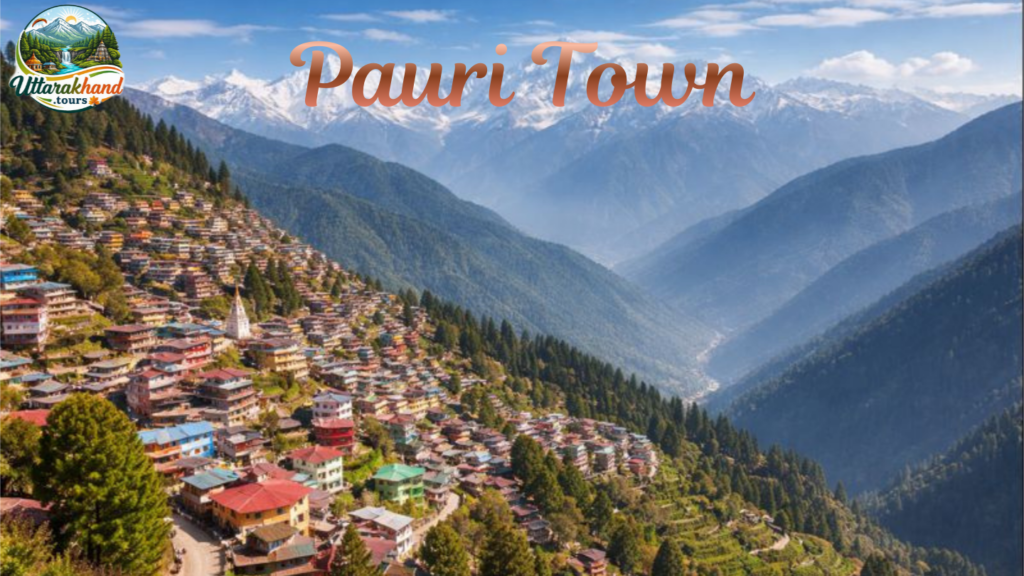
Pauri The district headquarters, Pauri is a short (45 minutes) picturesque drive from Khirsu. If Khirsu is all about the peaceful nature then Pauri also known as the Business hub of Garhwal, provides a lovely little view into modern day life in the hills with a dash of Colonial flavor.
What to See: The Kandoliya Temple is the biggest draw of Pauri, devoted to local deity Kandoliya Devta. Located on a ridge atop the climb, the temple complex provides some of the most beautiful views of Himalayas – both Gangotri and Kedarnath group. There is a lovely park with pine trees around it, and this makes it an ideal place for a picnic. Then there is the another interesting point, the Ransi stadium which is one of the highest stadiums in Asia and offering view of all snow capped mountains too.
What to do here: Pauri offers a change from the peace of Khirsu. That’s where you can feel the vibrancy of a local market, see colonial buildings and attend to practical needs like using an ATM or large shop. The drive there is stunning- through forests, with occasional windows out over the valley below.
Devalgarh (16 km) the abandoned capital
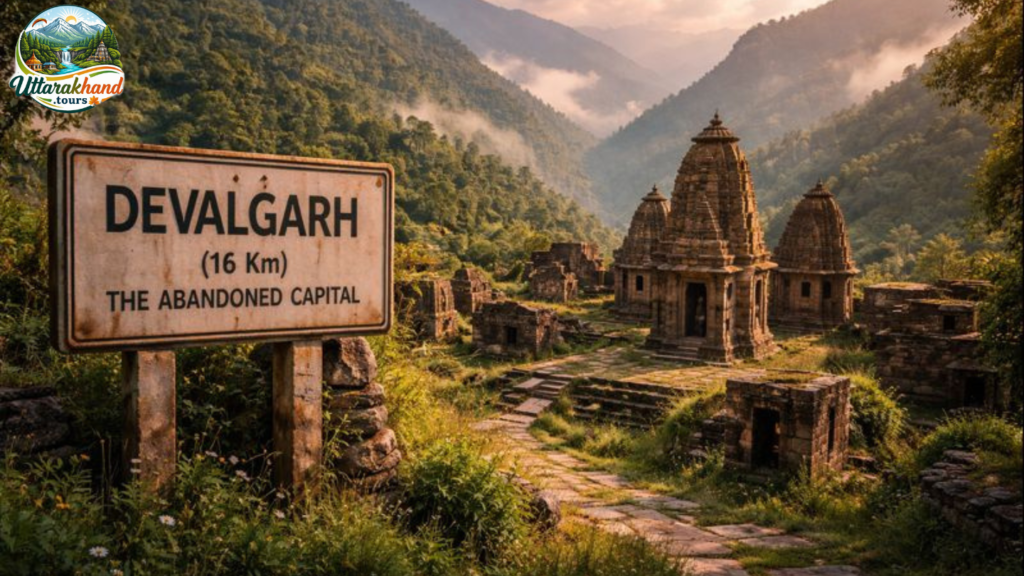
A Trp to Devalgarh is like a visit in the past. Nearby Khirsu is located this little village, which was the former capital of Garhwal Kingdom before it was moved Srinagar. It is a place with history and architectural significance, but because it’s hidden away so well, one of surprising few tourists.
What to see: The main attractions are the old temples that bear testimony to Devalgarh’s past glory. Laxmi Narayan Temple and Gauri Devi Temple are excellent specimen of the medieval Garhwali temple architecture. But, the most important destination is Raj Rajeshwari Temple. It is a very sacred Siddh Peeth, where Sunanda and Theeshtha, the wives of spiritual master”, also worshipped here. Its ornate carvings and individual-tiered-roof design are a sight to behold.
Why Go: Devalgarh provides a comprehensive look into the royal legacy as well as spiritual aura of Garhwal. It’s a must-see for history buffs, architecture lovers and anyone curious about the spiritual weave of Uttarakhand. The feeling of emptiness, and age, is deep in here.
Jwalpa Devi Temple (34 kms): The Center of Faith

The Jwalpa devi temple, located on the Pauri-Kotdwar road is one of the most revered religious places in the region. This popular Siddh Peeth devoted to the goddess Jwalpa draws pilgrims from across Garhwal.
Sightings: The temple stands at peace on the banks of Nawalika River (Nayar River). It’s not like the mountain-top temples, and its location on a river brings a different kind of peaceful energy. The temple itself is a modern building, but its spiritual importance dates back millennia. It is a routine halt for families and touring newly-wed couples visit to receive blessings.
Why Visit: Here one can experience living faith in the Garhwal hills. Devotion, clanging bells and a gurgling sound of river fill the air. It’s a restful place to spend an hour, soaking up the local culture and spirituality. A visit here can be easily combined with a trip to Pauri or Devalgarh and this makes for a rewarding day excursion.
Srinagar Garhwal (40 km): The Historical & the Educational Centre

The town is the biggest in the area and is situated on the banks of river Alaknanda. It was the capital of the ancient Khas kingdom of Kumaon for over 1,000 years and continues to be the headquarter of the Kumaon Division; as also a part of the wider Garhwal region.
What to See: The former capital of the state, Srinagar is a heritage-rich city. Pay a visit to the Kamleshwar Mahadev Temple, an old Shiva temple which is considered to have been visited by Lord Rama. Its historical significance is also demonstrated by the Shankar Math and the remnants of the old Royal Palace. Today, the town has district status and hosts Hemwati Nandan Bahuguna Garhwal University adding much lively fear to this otherwise somnolent city. Walking on the ghats of the Alaknanda is a beautiful experience.
Why go there: Srinagar is the best to cover places in and around Khirsu. It’s part ancient history, part spiritually charged site, part pulsating university town and all majestic Alaknanda River. Although it’s in an administrative headquarters town, however wandering a bit from its temples and riverbanks will give you some contrast to the high-altitude serenity that is the order of your Khirsu Travel Guide 2026.
Where to Stay in Khirsu: A 2026 Accommodation Guide
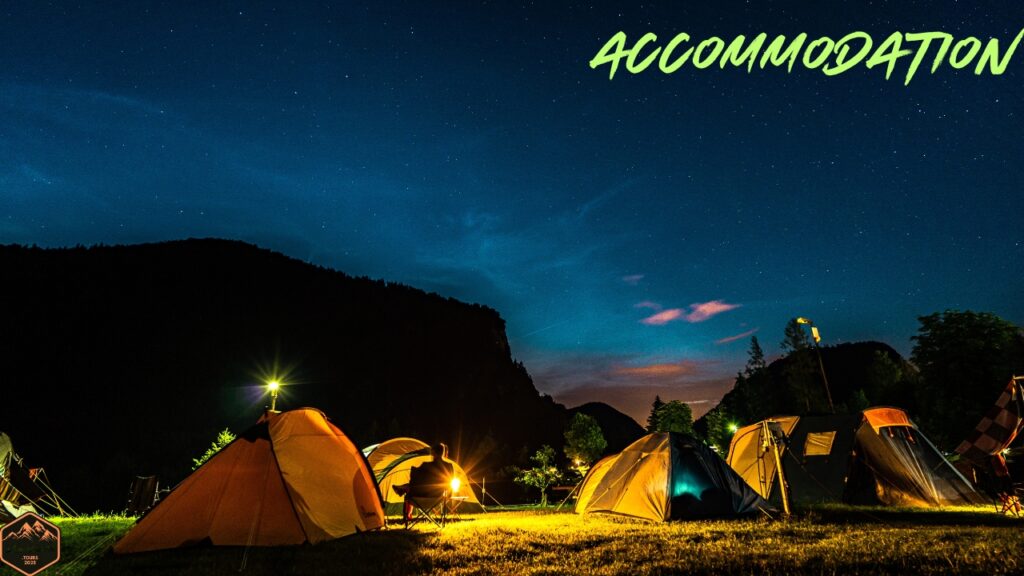
And where you choose to stay alters your Khirsu experience. This is a hospitable place, yet not in the sense of sprawling impersonal hotels. It’s not the amount of groomed runs you access via express chairlifts and grand aerial trams, but the cozy corner with trees connecting you to mountains and culture. In 2026, Khirsu Pvt Ltd has followed a responsible tourismapproach favoring small, sustainable and authentic stays. Whether you want the comfort of a government guesthouse, or authenticity of a family run homestay or just some adventure by staying in a campsite then this Khirsu Travel Guide 2026 has you covered.
The Gold Standard:Gulate Tourist Rest House by GMVN
The Garhwal Mandal Vikas Nigam (GMVN) Tourist Rest House has been the symbol of accommodation in Khirsu for decades, and rightly so. It must certainly be the most strategically placed in the whole neighbourhood.
The Experience: The GMVN guesthouse stands on a large open plot of land serving as Khirsu’s default viewpoint. The large, grassy lawns are wonderful for kids to run on, you to do your morning yoga or to just sit and gaze upon the Himalayan panorama. The rooms are basic, clean and functional, many have direct views over the snow-capped summits from their windows or balconies.
Who It’s For: First time visitors, families, and anyone who wants to be close to everything with a view. Being government operated, you are guarenteed at least a minimum level of service and safety. It has in house restaurant serving simple yet healthy Indian and Garhwali cuisine.
Pro-Tip: The rooms with the best views are booked months in advance, especially in high season (summer and autumn). Make sure to reserve your accommodation online in advance through GMVN official website.
The Heart of Khirsu – Boutique Homestays
The quintessential cultural experience is found in a homestay. But in the last few years, a handful of local families have started opening their homes to visitors with hopes of offering an authentic bite of Garhwali hospitality. This trend is central to the concept of responsible tourism, supporting the local economy directly and potentially addressing issues such as out-migration from hill regions.
The Experience: When you stay in a homestay, you are not just a tourist, you’re a guest in someone’s home. You’re likely to stay in a room attached to the family house, eat delicious home-cooked Garhwali meals sourced from what’s in season nearby, and swap stories with your hosts in the evening. This is where you find out the names of the peaks, hear local fables and learn the hard truths of mountain existence.
Who It’s For: This is the right opportunity for soloists, couples and culture vultures ready to plunge into another level of tourism. If you’re looking to meet people and engage with the local way of life, a homestay is preferable. It’s got the realness that no hotel can give.
What It’s Like: Accommodations are rudimentary, like simple rooms with shared baths, or a more comfortable and higher-end private room with a bathroom as well as Wi-Fi. The true luxury here isn’t the amenities — it’s being pampered by warm, caring and attentive hosts.
The Wanderer: Eco-Camps & Tents
For the more intrepid who want to sleep under a billion stars and feel even closer to nature, a handful of private operators have established eco-camps on the periphery of Khirsu. These camps are a mix of rugged adventure and contemporary comfort.
The Experience: You can wake up to the flapping wings of a bird, open your tent zipper in front of Trishul peak and relax sipping a morning tea as soon as you step out of bed breathing crisp mountain air. Camps like this usually provide guests with comfortable safari-style tents that have real beds and ensuite, eco-friendly toilets. Evenings are frequently enjoyed sitting under the stars around a bonfire, swapping travel stories with other guests.
Who It’s For: Adventurers, young travelers, friends groups and astronomy enthusiasts will all appreciate this choice. It’s for people who don’t mind giving up a solid wall in exchange for a canvas one, and gaining an unprecedented connection to the outdoors.
Special: Most camps add to the adventure with guided walks in nature, birdwatching and stargazing sessions that usually feature telescopes and an expert guide. Which makes it an ideal destination for an active, nature-centred vacation. Here, as this Khirsu Travel Guide 2026 signals out, you can even experience the fabled dark skies of the region.
Best Views and Most Dependable: Opt for the GMVN Guesthouse. It’s in an awesome location while remaining a reliable, easy place to stay.
For Cultural Immersion and Real Food: Choose a Homestay. It offers genuine insight into the Garhwali culture and helps the local community.
For Adventurers and Stargazers: Reserve an Eco-Camp. It’s the best way to experience Khirsu’s natural beauty.
Irrespective of the place that you stay at, what Khirsu ensures is peace, views for the eyes and rest for the ears—switching off from all that noise and coming back to something which feels real.
The Taste of Garhwal: A Culinary Journey in Khirsu
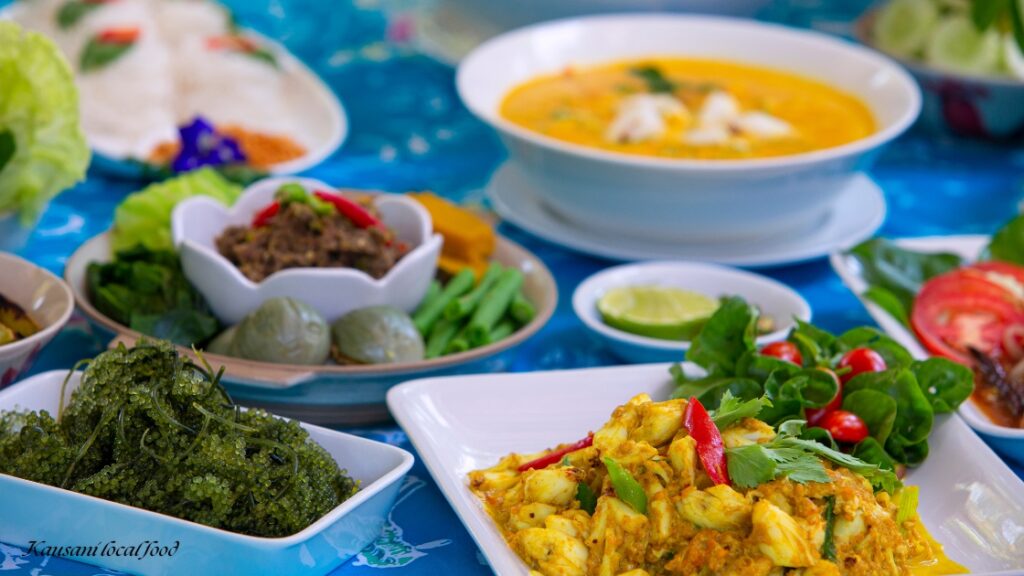
No trip is complete without enjoying the local cuisine in Himalayas. The food of Garhwal reflects the rough landscape and the sturdy people, it is simple yet nourishing, rich in flavor and made to give warmth and energy. In Khirsu, the food is as good as the view of mountains. In this part of our Khirsu Travel Guide 2026, we bring you the food which is particular to the region and should not be missed, flavors that have been perfected over time!
Put the thoughts of commercialized hill station multi-cuisine boringness behind you. When in Khirsu, your meal is incomplete without an authentic Pahadi Thali — a platter that embodies the story of the land. The food is based on local lentils, coarse grains and seasonal green vegetables; It’s healthy, and tasty.
The Heart of the Garhwali Thali: Main Courses
A meal can’t be complete without dals and vegetable preparations for Garhwali, which are savoury dishes savoured with grains grown themselves. The dishes are cooked slowly, in iron pots and that’s what makes their taste really rich and nutritious.
Chainsoo: The Protein Powerhouse
Chainsoo: This is a typical Garhwali dish, and you will get it in almost all the local homes. It is a luscious dark spicy and aromatic curry prepared with roasted black gram dal (Urad Dal). First, the dal is dry-roasted and coarsely ground. This flour is added to slow cooking ghee, ginger and garlic, tinctured with aromatic mountain spices such as jakhya (a wild local cumin) until it thickens into a consistency like soup. Its earthy, smoky flavor is so deeply satisfying — and especially so on a chill evening. The protein-rich dish is ideal for refueling after a long trek.
Kafuli: The Green Elixir of the Mountains
Kafuli is the quintessential comfort food of Garhwal. It is the green, luscious thick curry prepared with a mix of spinach (palak) and fenugreek leaves (methi). The greens are blanched and puréed, then cooked slow in an iron pot over a simple tempering of ginger, garlic and green chilies. It’s usually supplemented with a little bit of rice flour paste to thicken up. The outcome is a bright, nutritious meal that’s as restorative as it is savory. It’s normally had with a spoonful of fresh ghee/butter on the top.
Phanu: The Complex Lentil Delight
Phanu A dish similar to but distinct from chainsoo is a variety of lentils, which is treated as a basic part of Garhwali cuisine. Traditionally, these are prepared by soaking different dals (like Gahat or Arhar) overnight, grinding it into a paste and then cooking this paste with an addition of spices to form the thin curry that is similar to a soup. It’s a brothy, multilayered number that warms even the coldest insides and speaks to the regional resourcefulness of making substantive meals with minimal ingredients.
Bread and grains: The basis of the meal
The breads and grains of Garhwal could be a world away from the refined flours found on the plains. They are rude in appearance and of singularly nourishing quality, the very food for the mountain air.
Mandua ki Roti- The Super-food Flatbread
You can’t just dine on Garhwali home-cooked food, without Mandua ki Roti. Mandua, or finger millet, is a super-grain that prospers in the Himalayan foothills. Rich in calcium and fibre, this a gluten-free millet It also contains magnesium that helps reduce anxiety. The dark, brownish-grey dough is hand-flattened and intermingled with a hot griddle. The result is a dense, nutty disc with the most wonderful earthy flavor. It complements well with the thick gravies of Chainsoo or Kafuli and is best enjoyed hot with a dollop of white butter.
Jhangora ki Kheer:
The Millet Pudding Inspired by Snigdha Fuloria, and her mom who taught me so much about cooking AND life. I met them last year in Dehradun at a Food Writers conference.
For dessert, Garhwal presents an alternative to rice pudding that is both healthy and tasty. Jhangora (barnyard millet) is small, ancient grain that’s cooked in milk with sugar or jaggery until it becomes a creamy, porridge-like dish. Jhangora Ki Kheer Recipe (Himachali flavour With Caradmom and Nuts) A light, healthy kheer that works as a delicious dessert after you have indulged in something heavy.
Chutneys and Condiments: The Flavor Bombs
What takes a Garhwali thali from ordinary to blood-boiling is its distinct, potent accompaniments. These chutneys are palate-cleansing flavour boosters that cut through the richness of the mains.
Bhang ki Chutney: The Tangy Twist
One of the most popular among all Garhwali Dishes, Bhang ki chutney is something you must taste. Before you start assuming, let’s be clear: it is made from roasted hemp seeds and is 100% non-intoxicating. These seeds are roasted and then crushed with fresh mint, green chili, cumin, coriander and a good helping of lemon juice or tamarind. It’s a thick, tangy and nutty chutney that packs as much zest as it does flavor into any dish. It goes well with rotis and rice both.
Pisyu Loon: The Tasting of the Mountain Salt
Pisyu Loon known as “ground salt” is one more famous Garhwali special. This is not just plain salt, but its a tasty combination of rock salt crushed on stone (silbatta) mixed with fresh herbs like mint, coriander and of course garlic and green chillies. It’s a virulently green salt meant to be pinched and rubbed between your fingers onto anything from salads to fruit to yogurt and dals, an instant booster of fresh, herby flavor.
Where to Eat in Khirsu
The best way to experience this home food is to live with a local, when availing a local homestay. The hosts are very proud to offer home grown traditional food cooked to family recipes. This is what this Khirsu Travel Guide 2026 recommends the best places to eat in. You will eat food cooked with love and ingredients often plucked fresh from their very own kitchen gardens.
The GMVN Tourist Rest House also contains a restaurant, which provides some basic Garhwali food meals on advance request in addition to regular North Indian cuisine. Some small dhabas within the local market offer a simple&nbs and authentic pahadi thali as well. Don’t hesitate to ask for it. There’s more to gorging on the local food than the mastication; it’s all about warming up your chakras with the soul of Garhwal.
Cultural Insights & Local Traditions: The Soul of Garhwal
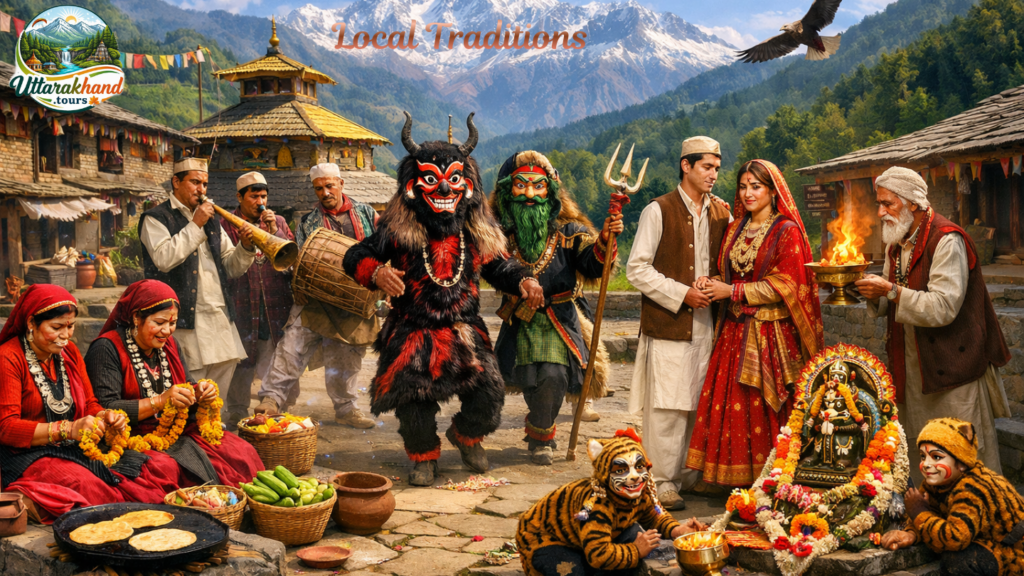
To see Khirsu is not just to look at mountains, it s to be with the members of that close circle of gods in Garhwal’s living soul. The culture here is as deep and timeless as the Himalayas that enfold it. It is a lifestyle characterized by toil, unwavering belief and unshakeable closeness with nature. This is where our Khirsu Travel Guide 2026 takes you next, away from its landscapes and into the heart of the place – its people who harbors timeless traditions.
The Garhwali Spirit: Grit and Generosity
People of Garhwal (also known as Pahadis like in Kumaon, who are from the hilly or mountainous regions) have a reputation for being caring and understanding, but also ferocious warriors. The hereditary horsemen have historically served as a recruitment brigade of the Indian Army, especialGarhwal Rifles, and this tradition of bravery and loyalty is still very evident.
However, this stoicism is undercut by an uncracked warmth and accessibility. As a traveller you will be met with genuine smiles and honesty of the nature not seen much in todays world. And don’t be surprised if a stranger in the street offers to invite you for some tea, or if a local farmer stops and hands you over a piece of fruit from their orchard. And this hospitality is not show – it is central to who they are, a tradition called Pahunai.
Ritual and Style in the Pandav Lila: Indian Art at the Close of the First Millennium
One of the most fascinating cultural rituals you could see is the Pandav Nritya. This is no mere dance: This is a spectacle in an open-air-theatre of the epic Mahabharata. This ritual is generally enacted during the late autumn and winter (October to February) following the end of harvest period, possibly for days or weeks.
The Performance: Villagers, channels for the spirits of five Pandava brothers as well as other figures in the epic, act out pivotal events through hypnotic, trance-inducing movements. This performance is complemented with the forceful and rhythmic sounds of commercial drums (dhol-damau). Each character also has an unique costume, and an unique dance style through which the stories of their glory, exile and war are told.
Why It’s Special: Watching a Pandav Nritya can prove to be an extremely spiritual and immersive experience. It is a living connection to an ancient past, a communal ceremony that ties villagers together through faith and folklore. It provides a window into an early form of storytelling that predates written language.
The Voice of the Hills: Music and Folklore
The musical tradition of Garhwal has many folk songs and dances. The songs based on different themes such as love, the beauty of nature, sorrows and pains of a soldier’s life or stories about deities and local heroes. It is soulfully added with the sound of basuri (gourd flute) and dhol-damau.
Folklore infuses everyday life. You will hear of Aachris and Paris, lovely spirits who are reputed to dwell in the remotest and most inaccessible regions of the mountains. Tales of heroic kings, wise goddesses and wily forest spirits are handed down through generations, typically shared around a blazing fire on a frosty winter night.
Essential Garhwali Words:
·Namaskar / Pai-lag: An honorific greeting (the second in reference to elders).
Bhulla / Bhuli: Younger brother/ Younger sister. A generic and endearing term of reference.
Dagariya: Friend.
Kanu chha?: How are you?
Bhuk lagi: I’m hungry.
Dhanyavad: Thank you.
Bhalu lagdu: It is good/nice.
By using these simple expressions, you are acknowledging and respecting the local culture, allowing a friendly smile to transform into an unforgettable moment.
Architectural Wisdom: The Kath-Kuni Style
Old houses in the villages around Khirsu deserve an attention. You will see a certain type of architectural style called Kath-Kuni. This is an aboriginal method of building that comprises connected slats of wood (thick, square wooden beams known as Kath) with pieces of stones (Kuni) stacked up in a crisscrossed manner without the use of any cementing material. The petal of slate roof is made to resist a heavy load snow.
This ingenius design is as beautiful as it is practical, with delicate wood doors and windows invisibly camoflaged into a set of altars. The structural intertwining makes the buildings extremely earthquake-resistant, a significant risk in the Himalayan region. Advertisement These homes are the result of generations learning to live with an unpredictable and powerful environment. A Visit to Khirsu is an opportunity to witness the eco-friendly and sustainable architecture.
Essential Travel Tips for 2026: The Smart Traveler’s Handbook

A journey to a niche-ish place like Khirsu needed some planning beyond a regular tourist itinerary. Even as infrastructure has improved, the appeal of this Himalayan hamlet was always in its isolation. In order to make your travels a seamless, safe and respectful experience for the local environment – we prepared an extensive list of handy advice. This section of my Khirsu Travel Guide 2026 is like your cheat sheet to have a hassle-free holiday.
- Cash, Connectivity, and Logistics
- Cash is Still King
In 2026, even though Unified Payments Interface (UPI) and digital wallets are part of life across India, the network in deep mountain pockets is known to stall.
The Reality: Digital payments are accepted at most homestays and GMVN guesthouse but many small dhabas,local teastalls and village shops will depend on cash.
The Advice: Withdraw enough cash before you leave Pauri or Srinagar. And although there may be a rural ATM within reach, they tend to run dry or have connectivity problems. Keep small denominations (₹10, ₹20, ₹50, ₹100) with you for dealing with local sellers.
Digital Detox vs. Digital Nomad
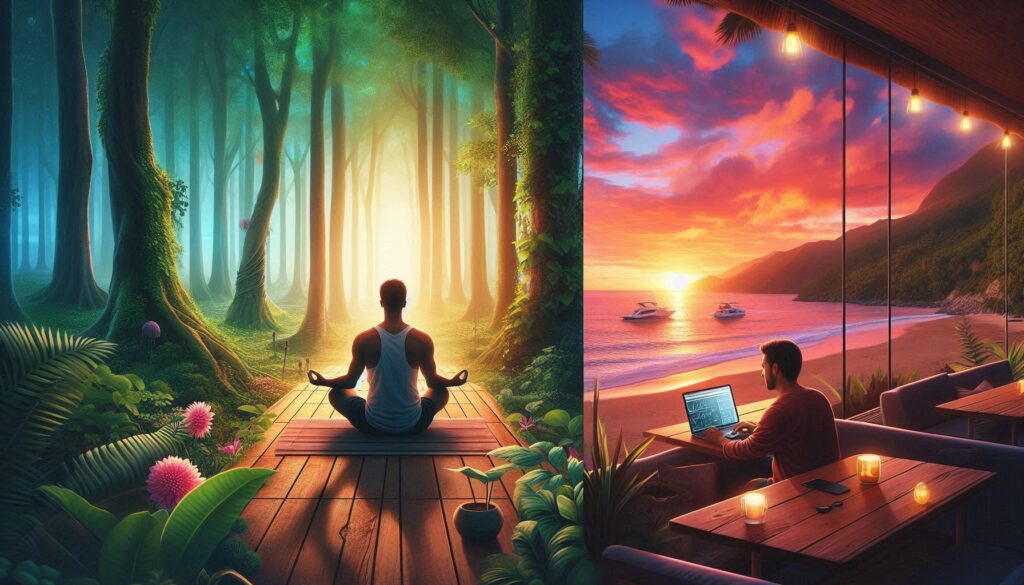
Khirshu is a perfect place to be alone or remain connected.
Network: Most of the main areas in Khirsu get average to good coverage from major operators like Jio and Airtel. But the signal can weaken a lot in dense woods or on rainy days.
Wi-Fi: Many homestays nowadays are equipped with Wi-Fi, so “workcations” aren’t hard to pull off.
The Advice: If you’re planning to work while you travel, take a dongle or a second SIM from an alternative provider as a back-up. Better yet, see a spotty network as an excuse to take a break and get out in nature.
Packing for the Hills: The Layering Commandment

Mountain weather is fickle at best. Clouds may ruin a nicely sunny afternoon and turn it into chilly evening.
Summer (May-June) Don’t let that “summer” label deceive you. Though the days are warm, the nights can be cool. Pack lightweight cotton for day, and a sweater or light jacket or fleece in the evening.
Monsoon (July-Sept): A strong raincoat or poncho flies without saying. You’re going to want waterproof hiking boots that grip the ground even if you come across some slick spots. Quick-dry clothing is a lifesaver.
Winter (Dec-Feb): You will need heavy woolens, thermals, gloves and woolen caps. If you’re going to be playing in the snow, we recommend water-resistant pants and boots.
Essentials: Bring a good pair of walking shoes, sunscreen, sunglasses and a refillable water bottle at all times.
You can purchase winter clothes or accessories from decathlon
Health and Safety on the Mountains
It is a safe place, provided that you respect its altitude and geomorphology.
Medical Kit: The closest big hospital is in Pauri,19 kms away. Bring along a basic first-aid kit with painkillers, band-aids, antiseptic cream and motion-sickness medication (which is very important when you consider how windy some of those roads can be). If you have particular medical issues, bring in additional supplies of the prescription medications.
Hydration: The chillier weather can hide dehydration. Continue to sip water in the hours before your flight.
Motion Sickness: The journey by road from Kotdwar or Rishikesh will take you through hours of serpentine roads. Eat light meals before traveling, and keep windows open for fresh air if the going gets rough.
Responsible Tourism: The Khirsu Code
As visitors to this unspoiled place, we have obligation to make sure it remains such. Khirsu is more than just a tourist destination, it’s part of the wild and habited by many relatives.
The “Silence Zone”: Khirsu is famous for maintaining silence. Don’t listen to loud music with loudspeakers while hiking through the forest. Nature is your playlist.
Zero waste policy: Bring a trash bag with you. Return home with all your non-biodegradable trash (wrappers, bottles) to a city where it can be disposed of responsibly. Don’t litter on the forests or on trekking trails.
Conservation of Water: In the hills the water is a precious commodity, particularly in summer. Be mindful of your water usage in hotels or homestays. Take shorter showers and report leaky taps.
Be culturally sensitive: Dress respectfully when visiting temples or villages. Don’t take a picture of locals without asking first. A smile and a good attitude will get you far.
These simple tips from our Khirsu Trip Guide 2026 shall keep your footprint light and memory heavy. You aren’t just visiting Khirsu; you are contributing towards preserving a way of life for generations to come.
4-Day Itinerary for Khirsu: The Perfect Long Weekend Plan
Planning an ideal itinerary for a delectable offbeat destination like Khirsu is a delicate balance. You don’t want to overpack your schedule and miss the whole reason you visit — the stillness — but you also don’t want to overlook those hidden gems in the pine forests.
This handcrafted 4-day itinerary forms the core of our Khirsu Travel Guide 2026 and is aimed at providing you with a mix of rejuvenation, exploration and cultural insight. It doesn’t matter whether you are a solo backpacker or a family trying to reconnect, this itinerary guarantees that you get the best of this Himalayan balcony.
Day 1: Arrival & First Whiff of Mountain Air
Morning: The Scenic Drive
Your trek starts with a drive from Rishikesh or Kotdwar. Climb and watch as the landscape transforms from humid plains to cool, pine-scented hills. Try to reach Khirsu around 1:00 PM, so that you get ample time for sightseeing.
Afternoon: Arrival and Lunch with a View
Check in at the hotel you’ve chosen — be it GMVN Tourist Rest House for its location, or a cozy homestay in the village.
Lunch: Keep it simple. Order a plate of hot Dal-Chawal with spicy garlic chutney from your host. Theres nothing better than a hot, basic meal after being on the road for a while.
Late Afternoon: The Introductory Walk
Walk off the travel lethargy at a leisurely pace. Proceedan to GMVN park side. This is the vantage of the town.
Activity: Just sit on the grass or a bench. See the shadows grow long across the Chaukhamba and Trishul peaks. This is your “arrival moment” — just breathe deeply as all the stress of city life escapes you.
Evening: Sunset and Bonfire
The temperature was dropping quickly with the sun and would continue to do so.
Dinner: Enjoy an early dinner. Ask for Chainsoo (black gram stew) and Mandua ki Roti, if you are at a homestay.
Night: If you can do it safely where you are staying, sit beside a small campfire. The silence of the night in a forest is deep. Look up—this is your first glimpse of Khirsu’s starlit skies.
Day 2 : Forest Therapy and Ancient Shrines
Morning: Forest Bathing (Shinrin-yoku)
Get up before (about 6:00 AM) in time to see the sunrise. The peaks glow pink and gold — a photographer’s delight.
Activity: After tea, walk for dense oak and deodar forest around the village. No need to seek out specific spots; just go where the trails take you. Walk slowly, listen to the birds and inhale the pine-scented air. And that’s what the Khirsu Travel Guide 2026 is all about—going back to nature.
Afternoon: Exploring Ghandiyal Devta Temple
Post a heavy breakfast of Aloo Parathas, drive or hike to the ancient Ghandiyal Devta Temple.
The Experience: It’s right there, just an inch away. The temple is remote, serene. Take a little time to look at the native buildings, and at the devotion of the people that come here to pay their respects. It’s a good place for meditation.
Late Afternoon: The Village Walk
Head back to Khirsu and descend towards the village area.
Battle: Pop by Sam Lam tea shop. Talk to the shopkeeper or the locals. Please learn to use a few Garhwali words – “Namaste” or “Kanu chha?” (How are you?). You could hear local ghost stories, or the best places to pick wild berries.
Evening: Stargazing
Khirsu has minimal light pollution. And on Day 2, you’ll spend your evening with the sky.
Activity: Go to a place with no streetlights. If you have a DSLR, configure a long exposure to photograph the Milky Way. If not, recline and tick off the shooting stars.
Day 3: Adventure and History (Pauri & Ulka Garhi)
Morning: The Ulka Garhi Trek
Time for a little adrenaline today.
The Trek: Leave early for the 3 kms trek to Ulka Garhi. The trail winds through a rhododendron forest (which blooms red in the spring) to ruins of an ancient fortress.
The Reward: At the summit, you’ll be treated to a 360-degree view of the entire Pauri Garhwal region and snow-covered Himalyas. It’s probably the best view in the district. Bring a light picnic breakfast to enjoy at the peak.
Afternoon: Excursion to Pauri
After the trek, refresh and take a half day taxi to pauri (19 kms).
Lunch in Pauri: Relish a genuine ‘Thali’ at one of the local restaurants near bus stand.
Sightseeing: Get spiritual vibes and great views at the Kandoliya Temple. You can check out the Ransi Stadium, one of the highest stadiums in Asia. It is surreal seeing a cricket ground floating among the clouds.
Shopping: Buy local souvenirs such as Bal Mithai (a fudge-like sweet) and locally woven woolens from the Pauri market.
Evening: Return to Stillness
Return to Khirsu before evening. The drive home at sunset is amazing as the mountains in the distance light up.
Dinner: Have some Jhangora ki Kheer (millet pudding) for dessert and treat yourself after an eventful day.
Day 4: The Route and the Goodbye
Morning: Apple Orchards and Devalgarh
Before you go, find a way to notch up one more unique experience.
Visit an Orchard: In season (August-September), make a stop at a nearby apple orchard. Even in other seasons, a walk among the fruit trees feels refreshing. Get some of the area’s jams or juices to take home.
The Detour: En route to Srinagar/Rishikesh downside, make a small detour to Devalgarh (16 km from Khirsu).
The Stop: Tour the old Raj Rajeshwari Temple and Gauri Devi Temple. The construction date of all monumental buildings here is several centuries ago, providing one last, profound cultural glimpse into the Garhwal Kingdom.
Afternoon: The Journey Home
Leave with a camera full of photographs, and your lungs full of the crisp air! During your return to the plains, chances are you’ll be already plotting a way back to this hidden Himalayan balcony.
This schedule is flexible. No need to do every trek; if one of them is calling your name, lie down for a nap under a tree instead. In Khirsu, nothing is something you might want to do.
Conclusion: The Call of the Hills – Why Khirsu Awaits You
And with that, with our trip through the Khirsu Travel Guide 2026 we come to an end but one thing sticks to it – or maybe I’ve been sticking too much – Khirsu is not a place; it’s a feeling. It’s the sensation of a breath of cool mountain air into your lungs, the warmth of an unknown person’s smile; and that feeling of peace so powerful you’ll want to close your eyes as the sun paints mountaintops in gold and violet.
In a world that never stops running, buzzing and churning, where you are demanded to stop at nothing short of achieving your best all the time – Khirsu is a luxury unlike any other – the kind that allows you to just stop and breathe. And it beckons you to step out of the treadmill of modern life and tap back into a rhythm that is slower, deeper, and infinitely more satisfying.
More Than Just a Viewpoint
Sure, there’s no escaping the panoramic views of Trishul, Nanda Devi and Chaukhamba (the sheer beauty of which might just take your breath away) but the real magic of Khirsu is in between these tableaux. It’s in the smell of pine needles after a rain, the sweet taste of newly-picked apples and the poignant sound of a flute playing across a valley.
This is a place where “doing nothing” very much counts as a thing to do. Whether forest bathing in the ancient oak woods, absorbing the legends of the Pandavas during a village festival, or simply sipping chai as the mist descends — every hour is an opportunity to be in present.
A Sanctuary for Every Traveler
Khirsu is welcoming for every type of traveller.
For the seeker : Self-reflect in solitude, find solace in their spiritual connect, seek silence within the forests but more so within ancient temples like Ghandiyal Devta.
The adventurer: It has trails to hike, ridges to climb and dark skies to explore.
For the family It provides kids with a fun, hideaway escape and a place to bond away from screens, while imparting practical knowledge.Share stories around a bonfire or experience nature first hand.
For the culture vulture: It offers an insight into the enduring, welcoming spirit of Garhwal with lessons in sustainable living and a strong sense of community.
Your Journey Begins Now
Everything You Need To Know About Khirsu Travel Guide 2026 Infrastructural changes and travel tips mentioned in this Khirsu Travel Guide 2026 are to make your journey hassle-free. The roads are in, the homestays are waiting and the hills are calling. You’ve now got the game plan for a memorable escape — from when to visit, to the etiquette that wins hearts.
Don’t just let this be another article you save for “someday:” If health care is an issue in the election, I believe Democrats will lose. The Himalayas have a way of transforming you, reorienting your perspective and lightening your load. Khirsu is an esoteric balcony, and one that remains relatively unspoiled, though in the travel world, secrets like these don’t stay secret forever.
Bring your bags, come ready to investigate and don’t sweat the small stuff. The calm and quiet of Khirsu is ready to get you back home.
Ready to book your trip? Begin with a stay at the GMVN guesthouse, or at one of the delightful homestays in town. The mountains aren’t going anywhere, but your vacation days might. We pray that this guide becomes a trusty companion on the windy road to paradise. Safe travels!
Khirsu FAQs: Your Quick Questions Answered
Planning a trip to Khirsu? We’ve got you covered! Here’s a helpful FAQ section to clear up all your burning questions. This post is a part of Our Khirsu Travel Guide 2026 on making your travel better!
What is the best time to visit Khirsu?
-Autumn (October- November) Ideal for clear skies, beautiful Himalayan vistas and good weather.
-Spring (March-April): The hills and its beautiful gardens revives with fresh greeneries accompanied by blooming rhododendrons.
-Summer (May-June): An ideal break from the pan-India scorching sun.
-Monsoon (July-September): If you’re a fan of mist-shrouded panoramas and empty space, white water rafting the Zanskar is your time.
-Winter (December - February): Come for a fairytale opportunity to experience snowfall.
How is Khirsu for family with kids?
How much money should I bring on my trip?
How is the mobile network and internet connectivity in Khirsu?
Do I need to reserve my overnight stay in advance?
What will be the food I will get in Khirsu?
How is the road to Khirsu?
What are some of the things I must do at around Khirsu?
See the sun rise over the Himalayas from the GMVN lawn.
Enjoy a peaceful walk on the oaks and deodar forest trail (skipping therapy).
Hike from Pokemon to Ulka Garhi for 360 degree view of surroundings.
Stop by the historic Ghandiyal Devta temple.
Take an evening and go stargazing on a clear, moonless night.
