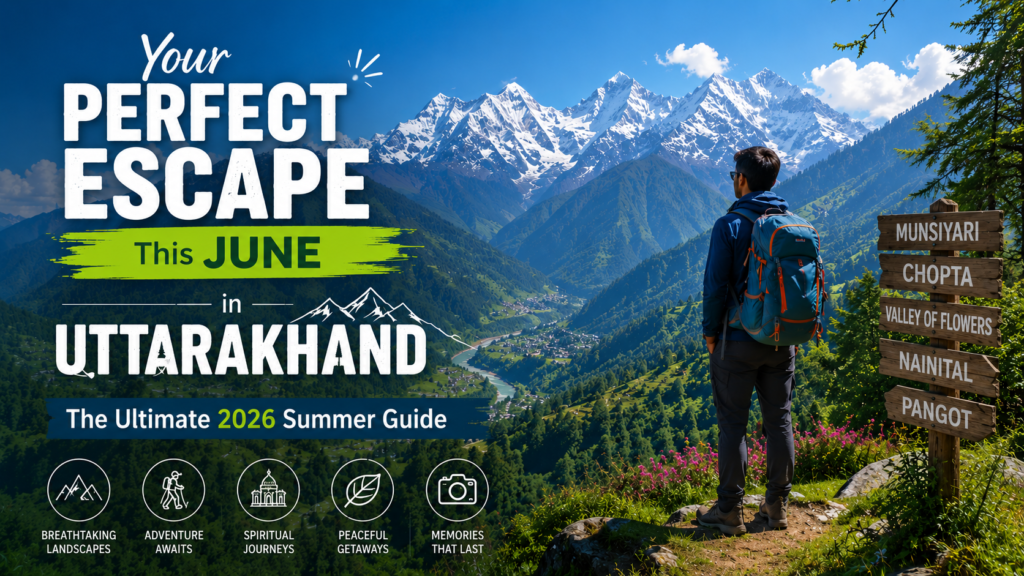
Your Perfect Escape This June in Uttarakhand: The Ultimate 2026 Summer Guide
Right now, wherever you’re reading this, there’s a decent chance your ceiling fan is doing nothing useful. The air outside is the colour of exhaustion. Your phone is too hot to hold. And somewhere deep in your brain, a voice keeps repeating: there has to be somewhere cooler.
There is.
Uttarakhand in June is a different reality entirely — rhododendron forests dripping with pre-monsoon mist, rivers running fast with snowmelt, alpine meadows exploding green above 3,000 metres. While the plains melt, the mountains are throwing a party. And you’re invited.
This guide is everything you need to plan your escape. The right routes. Realistic costs. Honest crowd assessments. The places that actually deserve your limited vacation days. Think of it as advice from someone who’s driven those ghat roads more times than they can count, eaten at every roadside dhaba between Rishikesh and Chopta, and learned a few things the hard way — so you don’t have to.
Your June starts here.
The Big Picture: What You’re Walking Into
Uttarakhand stretches from the Terai grasslands along the Indo-Nepal border — barely 300 metres above sea level — to peaks that touch 7,000+ metres in the Garhwal Himalayas. June sits right at the hinge between summer and monsoon. Down in the plains of Haridwar and Dehradun, you’ll still feel the heat (30–36°C). But climb above 1,800 metres and the air transforms around you.
Take Chopta, for example. Sitting at 2,700 metres, June daytime temperatures hover around 15°C. Evening drops to 8°C. The bugyals — alpine meadows — are thigh-high green grass dotted with wildflowers. The Himalayan panorama — Nanda Devi, Trishul, Chaukhamba — is crystal clear on most mornings before clouds build by noon.
Here’s something most travellers don’t know: June is when the Char Dham Yatra runs at full capacity, which means the Rudraprayag-Chamoli corridor gets clogged with pilgrim traffic. But that same season leaves non-Yatra destinations — Chopta, Kanatal, Binsar — surprisingly peaceful. You get the great weather without the spiritual bottleneck.
For a quiet summer retreat, you need to head to the Kumaon division. If you want to explore the wild side of the state, checking out the best wildlife sanctuaries in Uttarakhand is a great way to see how these habitats overlap. The GMVN (Garhwal Mandal Vikas Nigam) and KMVN (Kumaon Mandal Vikas Nigam) guesthouses are all operational in June and offer some of the best-value stays in the state. Book through the official Uttarakhand Tourism portal for verified rates. Don’t trust random WhatsApp booking links — scams spike every summer.
10 Destinations That Make Your June in Uttarakhand Unforgettable
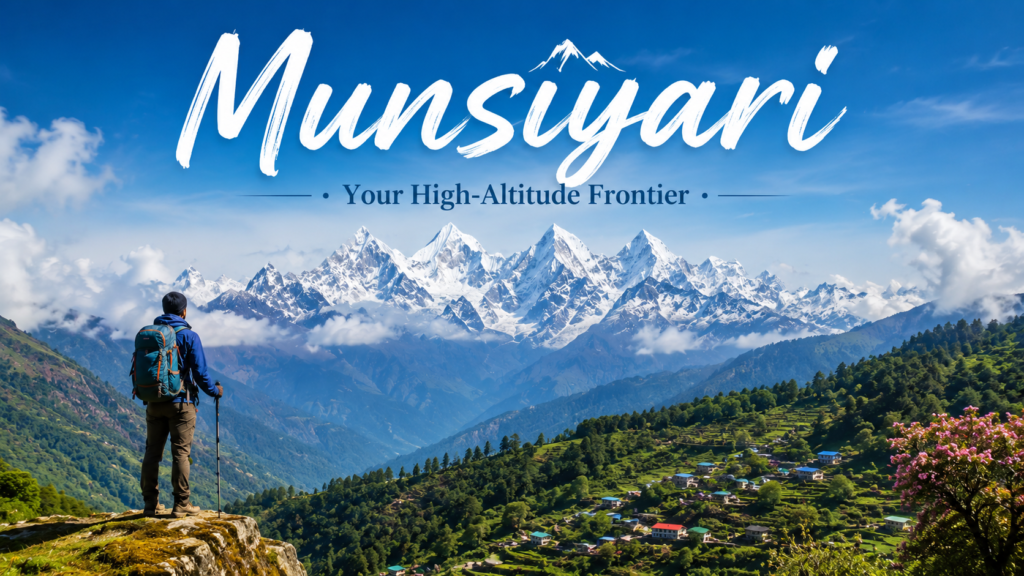
1. Munsiyari — Your High-Altitude Frontier
Vibe: Raw, remote, and visually staggering.
Sitting at 2,298 meters in the Johar Valley, Munsiyari offers you uninterrupted views of the Panchachuli range. The air here is thin and smells sharply of pine needles and woodsmoke. It’s a place that demands your attention and makes your phone feel entirely irrelevant.
You’ll spot Himalayan Griffons soaring above the deep gorges. The best time for you to walk the trails is right at dawn when the peaks turn a brilliant, burning gold.
- Entry Fee: Free (Forest check post fees apply for specific treks).
- Timings: Open 24/7.
- Insider Tip: Skip the main viewpoint. Hike up to the ancient Nanda Devi temple on the ridge. The silence up there is absolute, and you’ll have the views entirely to yourself.
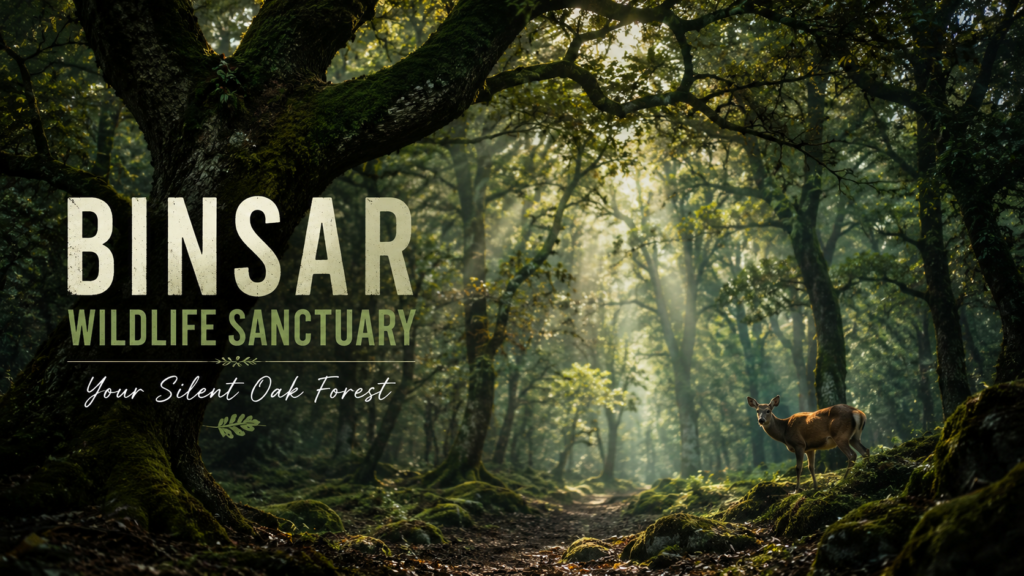
2. Binsar Wildlife Sanctuary — Your Silent Oak Forest
Vibe: Deep wilderness, zero light pollution, total isolation.
Binsar is strictly protected. You won’t find commercial shops or loud music here. Just endless stretches of towering oak and rhododendron.
Because it’s a sanctuary, the wildlife is noticeably less afraid of humans. You might have a Himalayan Flameback woodpecker foraging just five feet away from your head. The rhythmic thwack-thwack of its beak echoing through the silent woods is a memory that will stick with you forever.
- Entry Fee: ₹150 for Indians, ₹600 for foreigners (plus vehicle fees).
- Timings: 6:00 AM to 6:00 PM (No night driving allowed).
- Insider Tip: Book a stay inside the sanctuary. You get to walk the trails before the day-trippers arrive at 9 AM, giving you the forest entirely to yourself.
3. Pangot — Your Birder’s Paradise
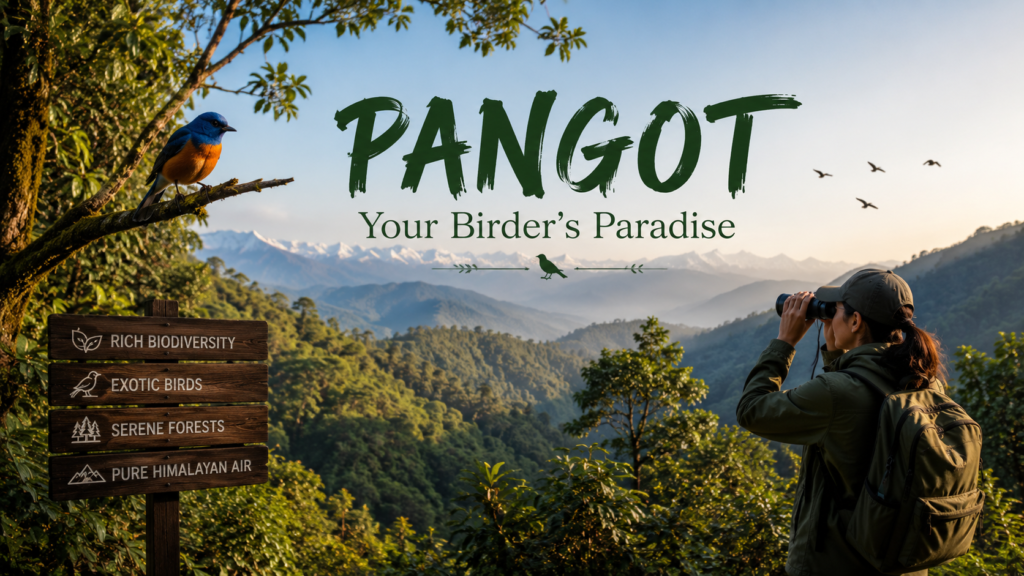
Vibe: Classic, accessible, and incredibly rewarding.
Pangot sits just 15 km from Nainital, but it feels like a different planet. This is the undisputed king of birding spots. The sharp, metallic kwak-kwak of a Koklass Pheasant echoing through the valley at 5:00 AM is the ultimate wake-up call for you.
- Entry Fee: ₹50 per person (Forest check post).
- Timings: 6:00 AM to 6:00 PM.
- Insider Tip: Take the dirt trail behind the KMVN guest house. It’s steeper, but the Verditer Flycatchers love the dense canopy there. Your calves will burn, but your camera roll will thank you.
4. Chopta — Your Mini Switzerland, Minus the Crowd
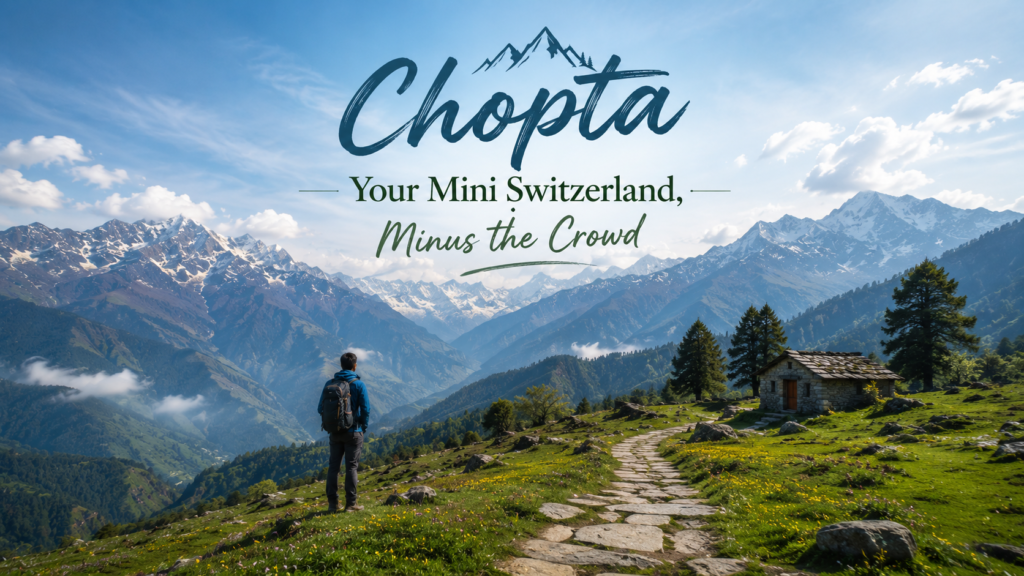
Chopta is a small settlement on the Ukhimath-Gopeshwar road at 2,700 metres. The meadows here in June are absurdly green — your eyes will need a moment to adjust because nothing in the plains has prepared you for this saturation. The Tungnath temple trek (3.68 km one way, altitude 3,680 m) starts from Chopta, and if you push another 1.5 km to Chandrashila summit, you get a 360° Himalayan panorama — Nanda Devi, Kedarnath, Trishul — laid out in front of you like a painting that somehow moves.
Best time: Early morning, 5:00–7:30 AM. Clouds roll in by 10 and erase everything.
Entry: No formal fee. Temple donations are voluntary.
Your insider tip: Most trekkers rush to Chandrashila for sunrise and come straight back. But the rhododendron belt between Chopta and Tungnath — those gnarled buransh trees with red petals scattered across the trail — is where your real photography happens. Dawn light filtering through those blooms will make you forget every sunrise you’ve seen before.
What you’ll feel: The trail smells like damp earth and wild thyme after a pre-monsoon shower. Your boots sink slightly into the soft alpine turf. Somewhere above, a Himalayan Monal calls — a sound that doesn’t exist below 2,500 metres, and one you’ll try to record on your phone and fail because it’s too beautiful for a speaker to hold.
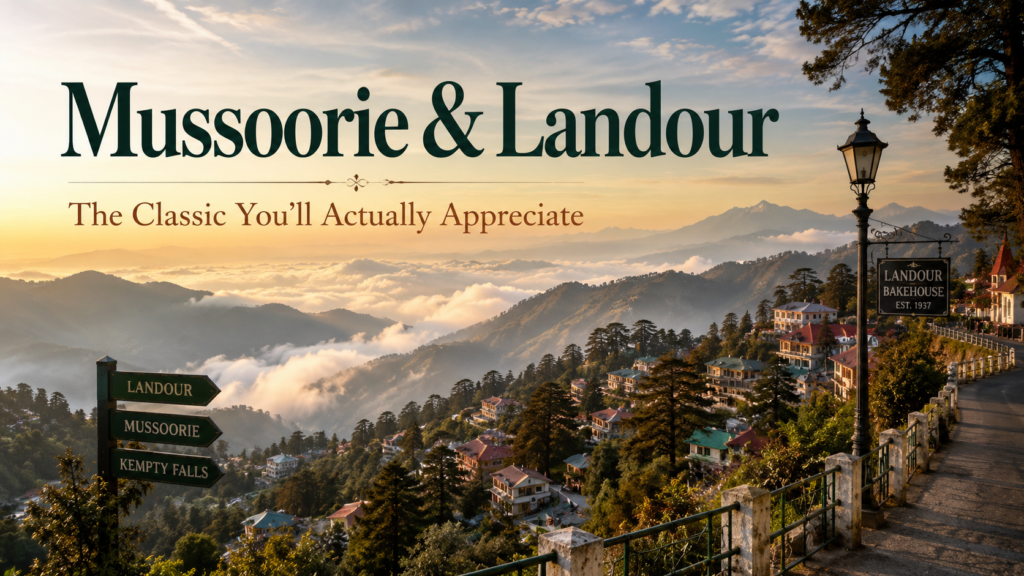
5. Mussoorie & Landour — The Classic You’ll Actually Appreciate
You’ve probably heard Mussoorie is overcrowded. Fair. But here’s what most people get wrong — they assume the entire town is Mall Road chaos. It’s not.
Mall Road? Packed. Touts selling ₹200 momos. Skip it without guilt.
But Landour — the cantonment area barely 3 km above Mall Road — is a different world. Stone cottages covered in ivy. A clock tower from 1908. The scent of fresh bread from Landour Bakehouse (cinnamon rolls, ₹180, worth every rupee). Silence. Actual silence. You can hear your own footsteps on the cobblestones.
Best time: Weekday mornings. Weekends bring Delhi crowds that turn even Landour into a queue.
Entry: No fees. Char Dukan area is open from 8 AM–8 PM.
Your insider tip: Walk past Sister’s Bazaar to the highest point of Landour Ridge. On a clear June morning, you can see the Yamunotri range — 120 km of snow-capped wall stretching across the horizon. Almost nobody goes there because the Instagram crowd stops at Char Dukan for hot chocolate selfies. Their loss. Your gain.
The drive from Dehradun to Mussoorie is 35 km and takes about 1.5 hours. But leave before 6 AM. By 8 AM, the Mussoorie bypass becomes a parking lot. The person giving you this advice sat in that traffic for 3 hours once. It wasn’t character-building. It was just miserable.
6. Rishikesh — Where Your Adrenaline Meets the Ganges

June Rishikesh is peak rafting season. The Ganges is swollen with snowmelt, fast and bitterly cold. Grade III and IV rapids at Brahmpuri and Shivpuri are exhilarating — the kind where you grip the rope so hard your knuckles go white, then the raft levels out and you’re laughing before you even realise the terror has passed.
Rafting cost: ₹800–1,500 per person for a 16 km stretch (Shivpuri to Ram Jhula). Packages through GMVN-registered operators include safety gear and a guide.
Duration: 2–3 hours on water. Half-day total with transport and changing.
But Rishikesh in June isn’t only about adrenaline. The Ganga Aarti at Triveni Ghat at dusk — oil lamps reflected in the river, conch shells echoing off the water, the smell of camphor and marigold drifting through the crowd — that’s a spiritual reset no adventure sport can match. You don’t have to be religious. You just have to stand there and let it wash over you.
Your insider tip: Stay in Tapovan, not main Rishikesh town. Tapovan is quieter, has better cafés (try the wood-fired pizza at Ganga View Café, ₹350), and you can walk to Laxman Jhula in 15 minutes. The Tapovan area has several good hostels — dorm beds from ₹400 a night if you’re watching your budget.
7. Valley of Flowers — The Reason You Need to Start Training Your Legs

The Valley of Flowers opens for the season around June 1 — exact date depends on snow clearance, so check the Uttarakhand forest department site before you book anything. This UNESCO World Heritage Site sits at 3,658 metres and is accessible only on foot — a 13 km trek from Govindghat, then a steep 3 km climb from Ghangaria.
In early June, the valley is just waking up. Blue poppies push through melting snow patches. Brahma kamal appears in scattered clusters. By late June, the entire palette explodes into colours your phone camera will refuse to believe are real.
Entry fee: ₹150 (Indians), ₹600 (foreigners). Camera: ₹500.
Duration: Full day from Ghangaria. Start by 6 AM, return by 2 PM — afternoon clouds make the return trek slippery, and you don’t want to be scrambling on wet rocks in fading light.
Your insider tip: Most visitors do a day trip from Ghangaria and rush through the first 2 km of trail. If your legs allow it, walk deeper — past the last marked section into the unmaintained meadows. The further you go, the fewer humans and the wilder the flowers. I once walked 2 km past the last marker and found an entire meadow of Himalayan blue poppies with nobody else around. That’s not a brochure promise. That’s a real memory you could make yours.
8. Jim Corbett National Park — Your Last Chance Before the Monsoon Locks the Gates

June is the final month Corbett is fully open before monsoon closures (July onwards, most zones shut down). The dry summer pushes animals toward water sources — Ramganga River, Dhikala grasslands — making your odds of a tiger sighting genuinely better than at almost any other time of year.
Safari cost: ₹4,500–7,000 per jeep (6 people max) for the Bijrani zone. Dhikala overnight: ₹8,000–12,000 including accommodation and multiple safaris. Book at corbettonline.uk.gov.in — slots open 45 days in advance and sell out fast for June weekends. If you’re reading this in May, book today. Not tomorrow. Today.
Best zone in June: Dhikala. The grasslands turn dry golden, visibility is excellent, and the Ramganga’s banks are lined with gharials and wild elephants.
Your insider tip: Don’t book through random WhatsApp numbers promising “guaranteed tiger sightings.” Nobody can guarantee that. Scam operators proliferate every summer. Use the official portal or a KMVN-affiliated agent. The Sitabani buffer zone doesn’t need advance booking and has excellent birding (300+ species), even if your tiger odds drop a bit.
9. Kanatal & Dhanaulti — Where You Go When You Don’t Want to See Another Tourist
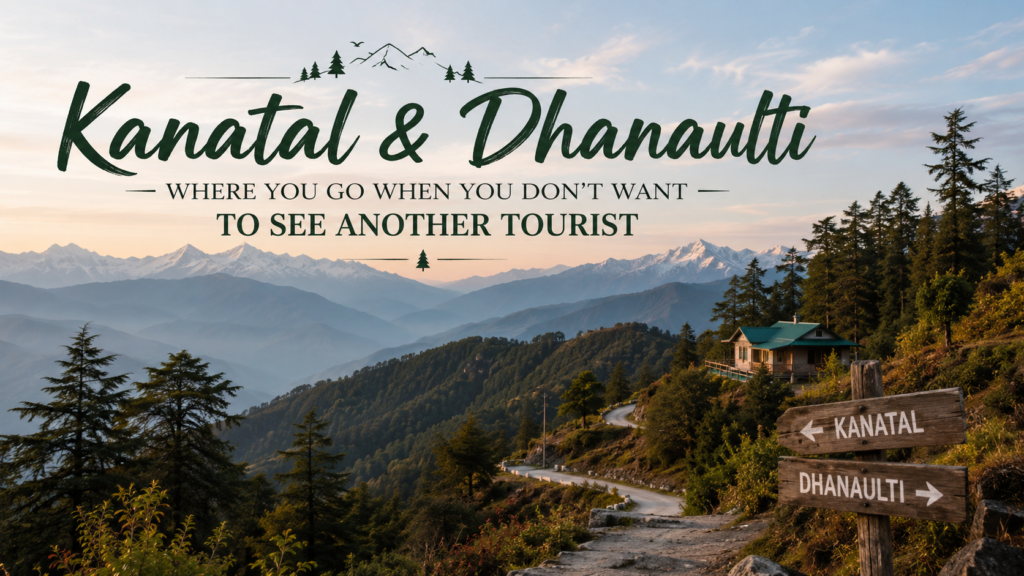
If Mussoorie is the popular sibling, Kanatal and Dhanaulti are the introverted ones who read books in the garden and don’t need validation from anyone. Located 25–35 km ahead of Mussoorie on the Chamba-Mussoorie road, these twin retreats sit at 2,200–2,600 metres surrounded by dense deodar and oak forests.
June temperatures: 12–22°C. Crowds: almost zero on weekdays. You might go an entire afternoon without seeing another tourist.
The Eco Park in Dhanaulti (₹25 entry) has well-maintained walking trails through ancient deodar stands. It’s small, yes, but the silence is medicinal. Kanatal is more spread out — apple orchards, campsites, and homestays that feel more like visiting a friend’s mountain house than checking into a commercial property.
Your insider tip: The Surkanda Devi temple (2,750 m) sits between Dhanaulti and Kanatal. The 2 km uphill trek is steep but short — about 45 minutes. At the top, on a clear June morning, you’ll see the entire Garhwal range stretching in both directions. The temple itself is quiet, reverent, and surrounded by prayer flags snapping in the mountain wind. If a priest offers you tea from a dented steel kettle — accept it. That tea tastes like the mountain itself.
What you’ll smell: Walk into the deodar forest behind Dhanaulti Eco Park around 7 AM. The air smells like cold resin and wet bark. No traffic. No honking. Just birdsong and the soft crunch of pine needles under your shoes.
10. Nainital & Bhimtal — Lakes That Float in the Clouds
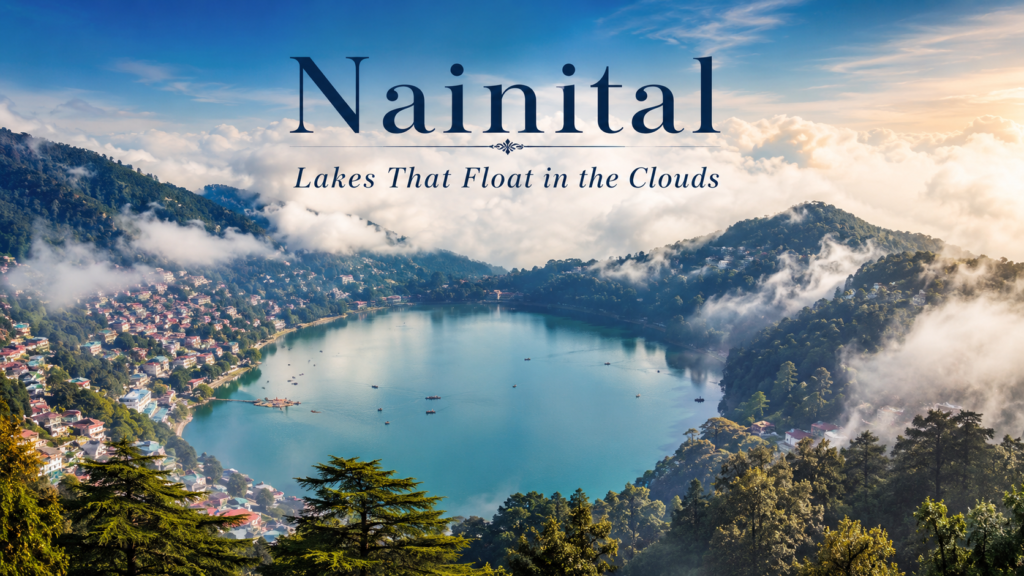
The classic family destination. June means Naini Lake is full, boat rides are running, and Naina Devi temple draws steady crowds. Nainital at 1,938 metres stays around 15–22°C in June — pleasant during the day, genuinely cool at night when you’ll want a light jacket for your evening lakeside walk.
But here’s an honest take: Nainital Mall Road in June is chaotic. Parking takes 45 minutes on a good day. The lake viewpoints are shoulder-to-shoulder on weekends. If peace is what you’re after, the town centre won’t give it to you.
The fix? Stay in Bhimtal (22 km from Nainital). The lake is larger, cleaner, and surrounded by forest rather than concrete. The butterfly museum near Bhimtal lake (₹50 entry) is surprisingly good — your kids will love it, and you’ll end up spending longer than expected. You can drive to Nainital for a day visit without dealing with overnight parking madness.
Your insider tip: The Kainchi Dham ashram between Bhimtal and Almora — the temple Steve Jobs visited — is worth a stop on your drive. It’s peaceful, well-maintained, and the forested setting along the Kosi River is genuinely beautiful. Go on a weekday. Weekends turn it into a traffic jam of white SUVs and selfie sticks.
“The mountains are not stadiums where I satisfy my ambition to achieve — they are cathedrals where I practice my religion.” — Anatoli Boukreev. Said about climbing. Applies equally to sitting in Chopta’s meadows, doing absolutely nothing, and feeling like it’s the most important thing you’ve done all year.
6 Things You Should Actually Do This June
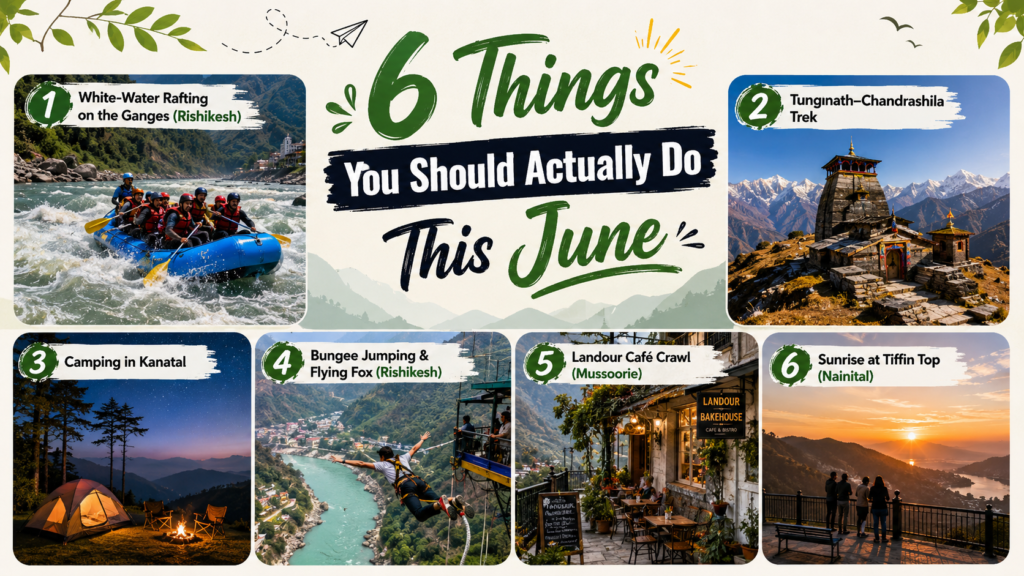
1. White-Water Rafting on the Ganges (Rishikesh)
The 16 km Shivpuri-to-Ram Jhula stretch has 8 named rapids including “Roller Coaster” and “Golf Course.” Cold snowmelt water. Big splashes. Your arms will ache the next day and you’ll love it.
- Cost: ₹800–1,500/person
- Duration: 2.5–3 hours
- Difficulty: Grade III–IV (not suitable for children under 12)
- Pro tip: Morning slots (7–9 AM) have calmer water and better light for photos. Afternoon is wilder — pick your preference.
2. Tungnath–Chandrashila Trek
3.68 km from Chopta base. Altitude gain from 2,700m to 4,000m. The trail is well-marked stone steps — steep but not technical. Your legs will burn. Your lungs will protest at 3,800m. Then you’ll summit and forget all of it.
- Cost: Free (no permit needed)
- Duration: 4–5 hours round trip
- Pro tip: Carry at least 2 litres of water. There’s no source past Tungnath temple, and dehydration at altitude is no joke.
3. Camping in Kanatal
Tented stays in apple orchards with bonfire, stargazing, and mountain views. June nights are cool enough for a campfire without you sweating.
- Cost: ₹1,500–3,500/person including meals
- Duration: Overnight
- Pro tip: Book campsites away from the main road. The ones near the Surkanda Devi turn-off have the best sunset views.
4. Bungee Jumping & Flying Fox (Rishikesh)
India’s highest bungee platform at 83 metres. Your stomach will leave your body for exactly 5 seconds.
- Cost: ₹3,550 (bungee), ₹1,800 (flying fox)
- Duration: 30 minutes including briefing
- Pro tip: Book 3 days in advance for June weekends. Slots fill by Wednesday.
5. Landour Café Crawl (Mussoorie)
A perfectly spent June afternoon: hot chocolate at Char Dukan (₹150), lemon tart at Landour Bakehouse (₹220), a proper lunch at Emily’s in Rokeby Manor (₹600–800).
- Cost: ₹500–1,200 for a full afternoon
- Duration: 3–4 hours of lazy strolling
- Pro tip: Go on a Tuesday or Wednesday. Weekend Landour is packed with people photographing their coffee from seventeen angles.
6. Sunrise at Tiffin Top (Nainital)
Hire a horse (₹600–800 round trip) or hike 4 km from Mallital. June mornings give you some of the clearest Himalayan views of the year — Trishul, Nanda Kot, and sometimes Panchachuli in the far distance.
- Cost: ₹600 (horse) or free (hike)
- Duration: 2–3 hours
- Pro tip: Reach by 5:30 AM. The golden light lasts exactly 40 minutes. Then clouds swallow everything. Time it wrong and you’ve woken up at 4:30 AM for a view of fog.
The Honest Weather Breakdown: What You’ll Actually Feel
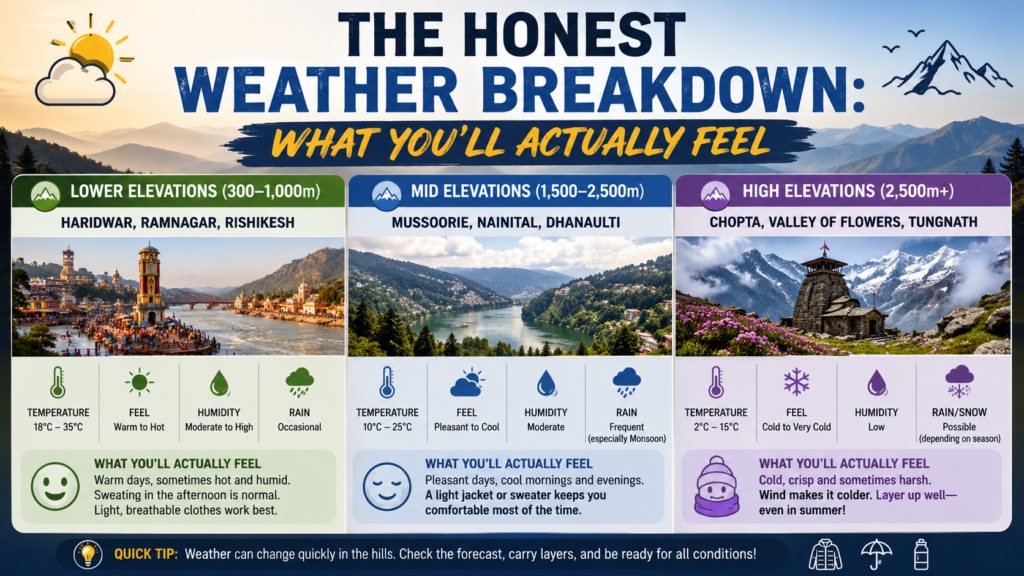
June in Uttarakhand isn’t one experience. The state’s extreme geography means weather shifts dramatically with altitude — and you need to know what you’re walking into.
Lower elevations (300–1,000m): Haridwar, Ramnagar, Rishikesh — 30–38°C by day, 22–25°C at night. Humid. Pre-monsoon thunderstorms hit every 3–4 days, usually late afternoon. Sky goes dark purple, lightning cracks across the valley, rain hammers for 40 minutes, then it’s over. Keep a rain jacket in your daypack.
Mid elevations (1,500–2,500m): Mussoorie, Nainital, Dhanaulti — 15–25°C days, 10–15°C nights. Occasional rain. Mostly clear mornings with cloud buildup by noon. The sweet spot for your comfort.
High elevations (2,500m+): Chopta, Valley of Flowers, Tungnath — 8–18°C days, 2–8°C nights. Snowmelt is complete by June. Trails are accessible. Pre-monsoon drizzle is common but not dangerous. You’ll want a fleece for early mornings.
The real risk? Late June landslides on hill roads, especially the Rishikesh–Badrinath and Rishikesh–Kedarnath corridors. The Border Roads Organisation maintains these highways, but heavy rain can block routes for 4–8 hours. Carry snacks, water, and patience. Don’t try to drive through standing water on a mountain road — ever.
| Season | Months | Temp Range | Crowd Level | Best For |
|---|---|---|---|---|
| Spring | Mar–Apr | 10–22°C | Moderate | Blossoms, pleasant treks |
| Summer/Early Monsoon | May–Jun | 15–30°C | Heavy (weekends) | Meadows, rafting, heat escape |
| Monsoon | Jul–Sep | 15–28°C | Low | Valley of Flowers, lush greenery |
| Autumn | Oct–Nov | 5–20°C | Low–Moderate | Clear skies, post-monsoon trekking |
| Winter | Dec–Feb | -5 to 12°C | Low | Snow, solitude, frozen lakes |
Your sweet spot? First two weeks of June. You get summer warmth without heavy monsoon. The Valley of Flowers just opens. And the school-holiday rush that peaks mid-June onwards hasn’t fully kicked in. That window — June 1 to June 14 — is the period every experienced Uttarakhand traveller books every single year. You should too.
How You’ll Get There: Routes That Actually Work in June
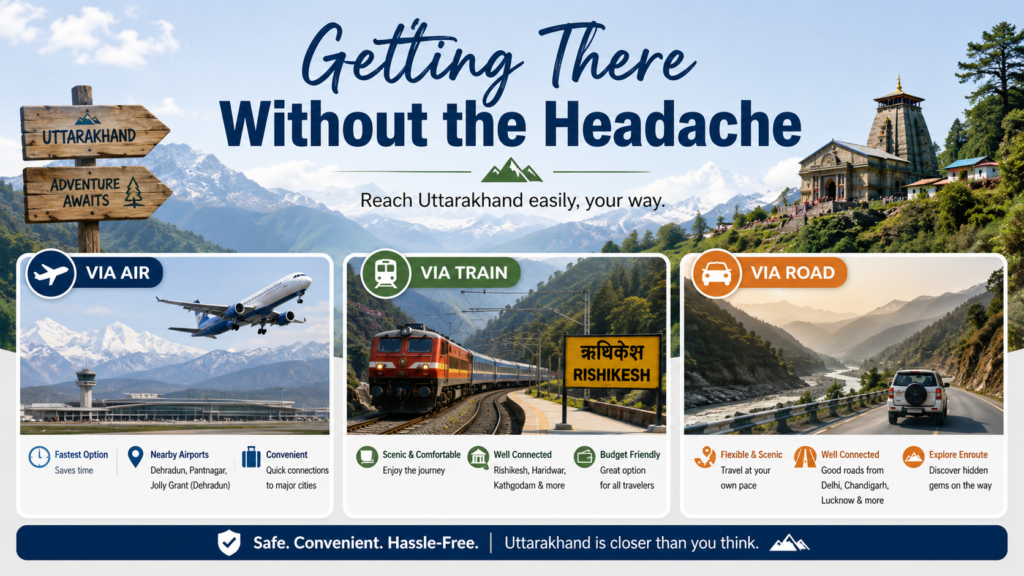
By Air
Jolly Grant Airport, Dehradun — 25 km from Dehradun city, your main gateway for Garhwal destinations. Rishikesh is 30 minutes away. Mussoorie: 1.5 hours. Chopta: 7 hours. Daily flights from Delhi (1 hour, ₹3,500–7,000 one way on IndiGo and SpiceJet in June). Taxis from the airport to Rishikesh: ₹800–1,200. To Mussoorie: ₹1,800–2,500.
Pantnagar Airport — serves the Kumaon side (Nainital, Bhimtal, Corbett). Limited flights from Delhi, mostly SpiceJet. Your taxi to Nainital: ₹2,000–2,500 (2 hours).
By Rail
Kathgodam is your railhead for Kumaon. Ranikhet Express (15013) from Delhi departs 10:40 PM, arrives 6:00 AM — ₹700 (sleeper), ₹1,800 (3AC). Book via IRCTC at least 3 weeks ahead for June. Tickets disappear fast.
For Garhwal, Haridwar Junction connects to Rishikesh (20 km) and Dehradun (55 km). The Jan Shatabdi from Delhi (6:50 AM) reaches Haridwar by 11:30 AM — ₹450 (chair car), excellent value.
By Road
Delhi to Rishikesh: 240 km via NH334, 5–6 hours. Excellent road till Haridwar, then it gets winding.
Delhi to Nainital: 300 km via NH9 through Haldwani, 6–7 hours. Last 35 km from Haldwani to Nainital is a steep ghat road — beautiful but slow. Don’t attempt it at night.
Delhi to Chopta: 420 km via Rishikesh–Rudraprayag, 10–12 hours. Best broken into two days — stop overnight at Rishikesh or Srinagar (Garhwal, not Kashmir).
Google Maps tip: If heading to Mussoorie, search “Dehradun to Mussoorie via Rajpur Road” — Maps often defaults to the bypass, which is longer and less scenic. Use Rajpur Road early morning, bypass after 9 AM. Actually, wait — if you’re arriving after 9 AM, definitely take the bypass. Rajpur Road gridlocks by then.
State buses from ISBT Kashmere Gate (Delhi) run to Dehradun, Haridwar, Haldwani, and Nainital. UTC Volvo services are comfortable — ₹600–900 per seat. Book through RedBus app.
Where You’ll Sleep: Stays for Every Budget
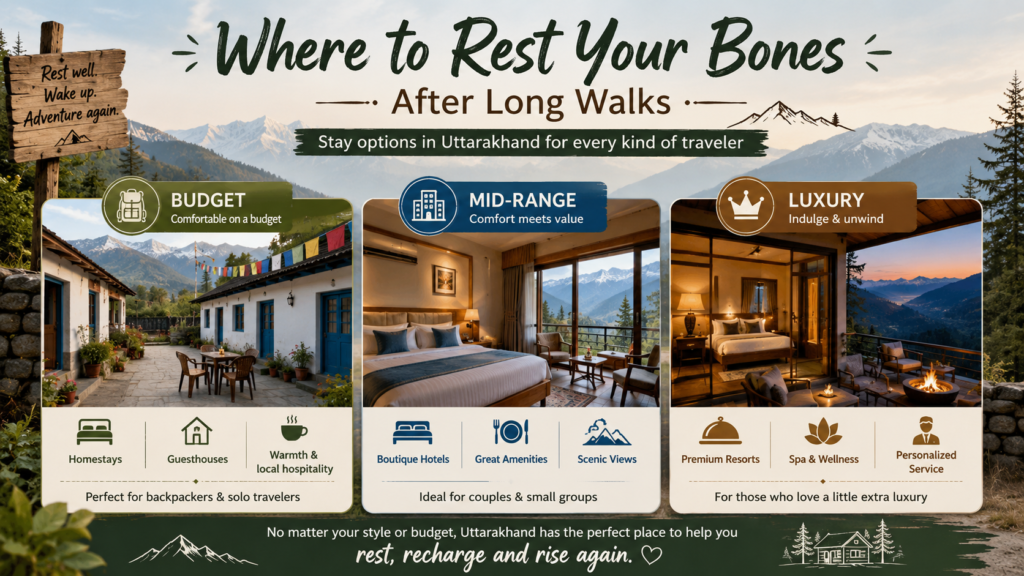
Budget (Under ₹1,500/night)
- GMVN guesthouses — Rishikesh (₹800–1,200), Chopta (₹1,000–1,400), Ghangaria (₹1,200). Basic rooms, hot water, reliable. Book via GMVN’s official site.
- Zostel Rishikesh — Dorm beds from ₹450, private rooms from ₹1,200. Riverfront property, solid common area.
- KMVN Bhimtal — ₹900–1,300. Lake-facing rooms. The restaurant serves dependable dal-rice when you’re too tired to hunt.
Mid-Range (₹1,500–₹4,000)
- Hotel Devdar, Dhanaulti — ₹2,500–3,500. Deodar forest views, wood-panelled rooms, evening bonfire.
- Rokeby Manor, Landour — ₹3,000–4,000. Colonial heritage property. The restaurant alone is worth the price.
- Corbett Machaan Resort — ₹3,500. Near Bijrani zone. Great base for your June safaris.
Premium (₹4,000+)
- JW Marriott Mussoorie Walnut Grove — ₹12,000–18,000. Sprawling property with its own waterfall trail and heated pool.
- Naini Retreat by Leisure Hotels, Nainital — ₹5,500–8,000. Overlooks Naini Lake. Best sunset views in town.
Homestays
Use uttarastays.com — the Uttarakhand government’s verified homestay portal. Kanatal and Chopta have excellent village homestays at ₹1,200–2,000 including meals. The food is always better than hotels. Always.
Where you should stay: A Kanatal homestay with an apple orchard view. You’ll wake up to 15°C silence, step outside onto a stone veranda with mountains on three sides, and eat paranthas made in a wood-fired kitchen. That’s your June Uttarakhand experience, distilled into a single morning.
What You’ll Eat: Food You’ll Dream About After You Leave
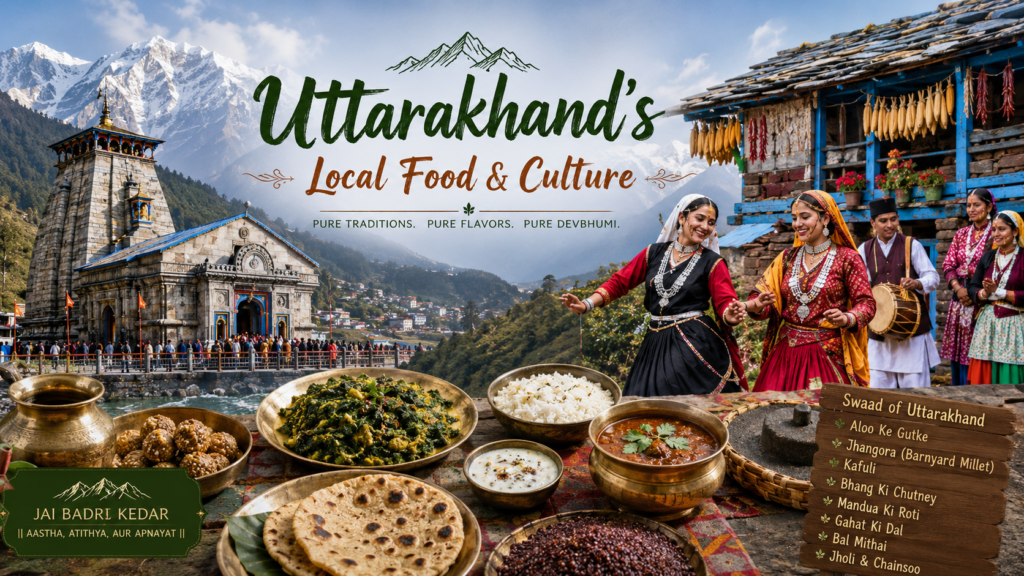
Aloo ke Gutke — Dry-roasted spiced potatoes with jakhiya (wild mustard) tempering. Crunchy edges, fiery kick. You’ll find it at any Kumaoni dhaba near Bhimtal or Nainital’s Tallital market. Costs ₹60–80. Tastes like ₹600.
Kafuli — A thick spinach-fenugreek gravy cooked in an iron kadhai. Deep green, earthy, warming on cool June evenings. Every homestay makes it slightly differently. You’ll love every version.
Chainsoo — Black gram dal, slow-roasted and ground, cooked with garlic and cumin. Nutty, smoky, pure Garhwali comfort. Have it with mandua (finger millet) roti at a GMVN guesthouse — they do it consistently well.
Bal Mithai — Almora’s pride: dark khoya balls coated in white sugar granules. Buy it fresh from Kheem Singh Mohan Singh Ram Sweet Shop in Almora’s Lala Bazaar. Anything pre-packaged from a tourist shop is a pale imitation. The genuine stuff crumbles on your tongue with a slightly caramelised edge.
Momos & Thukpa — The Tibetan market stalls near Nainital’s Mallital make the best chicken momos — ₹80 for 8 pieces, steamed not fried, with a fiery red chutney that’ll clear your sinuses faster than any pharmacy.
Gahat ki Dal — Horse gram soup, a Kumaoni staple most tourists never encounter. Earthy and protein-rich. You won’t find it in restaurants — ask your homestay host the night before.
Chai from a roadside stall — After 3 hours on a winding mountain road, you’ll stop at a hand-painted chai stall with plastic chairs and a view of 50 km of valley. That ₹10 cutting chai will taste like salvation. It’s not on any menu. It appears exactly when you need it.
Cultural note: June brings local fairs in Kumaon. Harela festival (late June/early July) celebrates the monsoon’s arrival with community plantings and feasting. If your homestay hosts mention it, join in. You’ll eat things you’ve never heard of before and love every bite.
Etiquette tip: In Garhwali villages, always remove shoes before entering a home. And when someone offers you chai — accept it. Refusing hospitality is rude. Even if you’re full, take the cup. Sip slowly. Nobody’s timing you.
10 Tips That’ll Save Your June Trip

- Carry ₹5,000–8,000 in cash. ATMs exist in Dehradun, Rishikesh, Mussoorie, and Nainital. Beyond that — Chopta, Kanatal, deep Garhwal — you’re in cash-only territory. UPI works in towns. It fails completely in forests.
- BSNL is king above 2,000m. Your Jio drops out past Kaudiya on the Chopta route. Airtel is patchy even in Landour. Buy a BSNL SIM in Dehradun for ₹50 — it might be the best ₹50 you spend on this entire trip.
- Pack layers, not warm clothes. One thermal inner, one fleece, one windproof shell. June days at 2,500m reach 20°C. Evenings drop to 8°C. The temperature swing in a single day will catch you off guard no matter how prepared you think you are.
- Start drives before 6 AM. Mussoorie and Nainital ghat roads become standstill traffic after 8 AM on June weekends. One 35 km stretch between Dehradun and Mussoorie once took 3.5 hours. Learn from that misery so you don’t repeat it.
- Pre-book Corbett safaris 45 days out. June is the last fully-open month. Safari slots at corbettonline.uk.gov.in open 45 days prior and vanish within hours for weekend dates.
- Rain gear is not optional by late June. Carry a rain jacket and waterproof bag cover. A sudden downpour at Chopta will soak everything you own in 4 minutes flat.
- Take altitude seriously on the Chopta–Tungnath trek. At 4,000m (Chandrashila summit), you might feel breathless with a mild headache. Walk slowly. Carry water. If you have a history of altitude sickness, consult your doctor before the trek — not after.
- No photography inside Kedarnath and Tungnath temples. Your phone and camera go into your bag before the temple gate. The security is strict. They’ve heard every excuse.
- Download offline Google Maps. Network drops are common on the Rishikesh–Chopta and Haldwani–Nainital roads. Download the region before you leave home. You’ll thank yourself at that random fork in the road with zero signal.
- Fuel up in towns. Petrol pumps thin out above Rudraprayag and beyond Bhimtal. Fill your tank in Srinagar (Garhwal) or Haldwani before heading uphill. Running on fumes on a mountain road is not an adventure. It’s a problem you don’t want.
Your emergency contacts:
- Uttarakhand Tourist Helpline: 1364
- Police: 112
- Ambulance: 108
- Disaster Management (landslide updates): 1070
Your Perfect 7-Day June Itinerary
This covers the best of Garhwal and Kumaon — mountains, meadows, rivers, lakes. Designed as a road trip starting from Delhi.
| Day | Morning | Afternoon | Evening | Stay At |
|---|---|---|---|---|
| Day 1 | Leave Delhi by 5 AM. Drive to Rishikesh (240 km, 5 hrs). Check in | Explore Laxman Jhula, Beatles Ashram (₹500 entry) | Ganga Aarti at Triveni Ghat, 6:30 PM — don’t skip this | Tapovan, Rishikesh |
| Day 2 | Rafting from Shivpuri (7 AM slot) | Lunch at Tapovan café. Begin drive to Chopta (170 km, 6 hrs via Rudraprayag) | Arrive Chopta. Dinner at homestay. Stargazing — zero light pollution | Chopta homestay |
| Day 3 | Tungnath–Chandrashila trek (start 5 AM, return by 11 AM) | Rest. Explore Chopta meadows at a lazy pace | Early dinner. Bonfire if your homestay offers one | Chopta homestay |
| Day 4 | Drive to Kanatal via Chamba (120 km, 4 hrs). Stop at Surkanda Devi temple | Arrive Kanatal. Walk through deodar forests behind your homestay | Quiet evening. Home-cooked Kumaoni dinner with your hosts | Kanatal homestay |
| Day 5 | Drive to Mussoorie–Landour (25 km, 1 hr). Your café crawl begins | Walk to Lal Tibba viewpoint (₹50). Watch clouds build over the Yamunotri range | Landour Bakehouse dinner. Drive to Dhanaulti (30 km) | Dhanaulti |
| Day 6 | Dhanaulti Eco Park morning walk. Drive to Nainital via Bhimtal (230 km, 6 hrs) | Bhimtal lake. Quick stop at Kainchi Dham | Naini Lake boating at sunset (₹210/30 min per boat) | Nainital or Bhimtal |
| Day 7 | Tiffin Top sunrise (5:30 AM). Naina Devi temple | Nainital Zoo (₹50), Tibetan Market for souvenirs | Drive back to Delhi (300 km, 7 hrs) or overnight train from Kathgodam | Home |
Pro Upgrade: Add 2 days for the Valley of Flowers trek after Day 3. From Chopta, drive to Govindghat (200 km, 8 hrs via Joshimath). Trek to Ghangaria (13 km, 5–6 hrs). Day trip into the valley next morning, return, trek down the following day. It’s physically demanding — but your body will recover. Your memory of those blue poppies won’t fade.
Your Express Version (3 days): Delhi → Rishikesh (Day 1: rafting + Ganga Aarti) → Mussoorie–Landour (Day 2: café crawl + Dhanaulti) → Delhi (Day 3). Tight but doable for a long weekend.
What Your Trip Actually Costs
| Expense Category | Budget (₹) | Mid-Range (₹) | Premium (₹) |
|---|---|---|---|
| Transport (Delhi return, 7 days) | 3,000 (bus/train) | 8,000 (self-drive fuel + tolls) | 15,000 (chauffeur-driven SUV) |
| Accommodation (per night) | 800–1,500 | 2,500–4,000 | 6,000–15,000 |
| Food (per day) | 400–600 | 800–1,200 | 2,500+ |
| Activities (rafting, safari, entry fees) | 2,000 | 5,000 | 10,000 |
| Miscellaneous (fuel, tips, chai stops) | 1,000 | 2,000 | 4,000 |
| TOTAL (7 days, per person) | ₹14,000–20,000 | ₹35,000–48,000 | ₹75,000–1,10,000 |
Prices verified April 2026. Fuel, accommodation, and safari costs may fluctuate by season.
Your Uttarakhand-in-June Questions, Answer
Q: Is June a good time to visit Uttarakhand?
Q: Which is the best place to visit in Uttarakhand in June?
Q: Does it rain in Uttarakhand in June?
Q: Is the Valley of Flowers open in June?
Q: Is Uttarakhand crowded in June?
Q: Is Chopta or Mussoorie better for a June trip?
Q: How much does an Uttarakhand June trip cost?
Q: Is Uttarakhand safe for solo female travellers in June?
What is the weather like in Uttarakhand in June?
Is Chopta open for you in June?
Which is better for your June trip: Munsiyari or Binsar?
Do you need to register to visit Uttarakhand in June?
Are leeches a problem for you in June?
The Mountains Are Waiting — Don’t Make Them Wait Another Summer
Here’s the truth nobody puts in travel brochures: the version of you that stands on Chandrashila at 5:45 AM, watching the first light hit Nanda Devi’s snow-covered summit, breathing air that tastes like pine and snowmelt — that version is calmer, sharper, more alive than the one sitting in an air-conditioned room reading this article right now.
Uttarakhand in June isn’t just an escape from heat. It’s a recalibration of what your summer should feel like. The rivers run fast. The meadows are impossibly green. The chai tastes better at altitude — this is a scientific fact verified personally across at least 40 roadside stalls between Rishikesh and Chopta.
With new road improvements on the Chopta–Ukhimath stretch (completed early 2026) and expanded GMVN accommodation in Ghangaria for Valley of Flowers trekkers, this summer is genuinely the easiest year to plan your trip. Don’t overthink it. Don’t wait for the “perfect” weekend that never comes.
Pick your date. Pack your layers. Leave before 6 AM. The monsoon arrives July 1. Your window is open right now.
Start with our complete Uttarakhand travel guide for route planning, then lock in your Chopta trekking itinerary or Rishikesh adventure guide. Share this with the friend who’s been melting in Delhi all May.
They’ll thank you. Probably with chai. The mountain kind.
