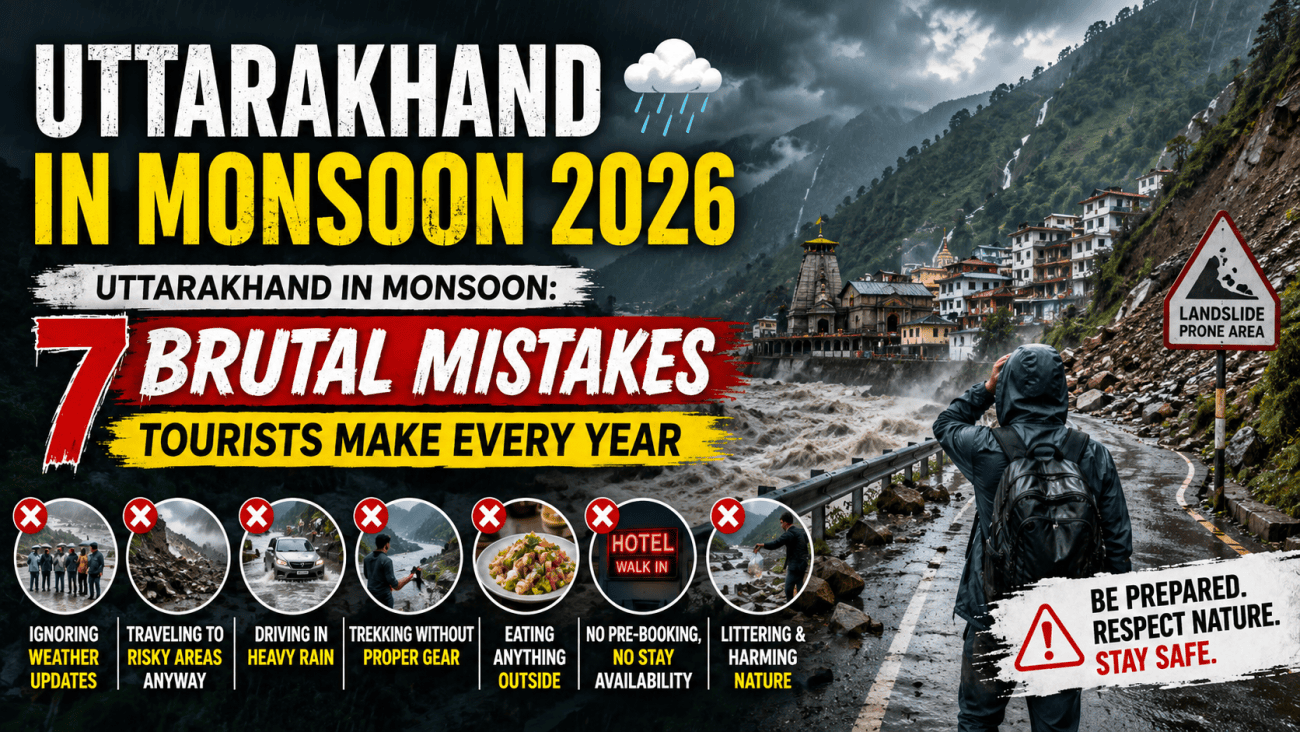
Uttarakhand in Monsoon 2026: The Brutal Truth, The Magic, and The Survival Guide
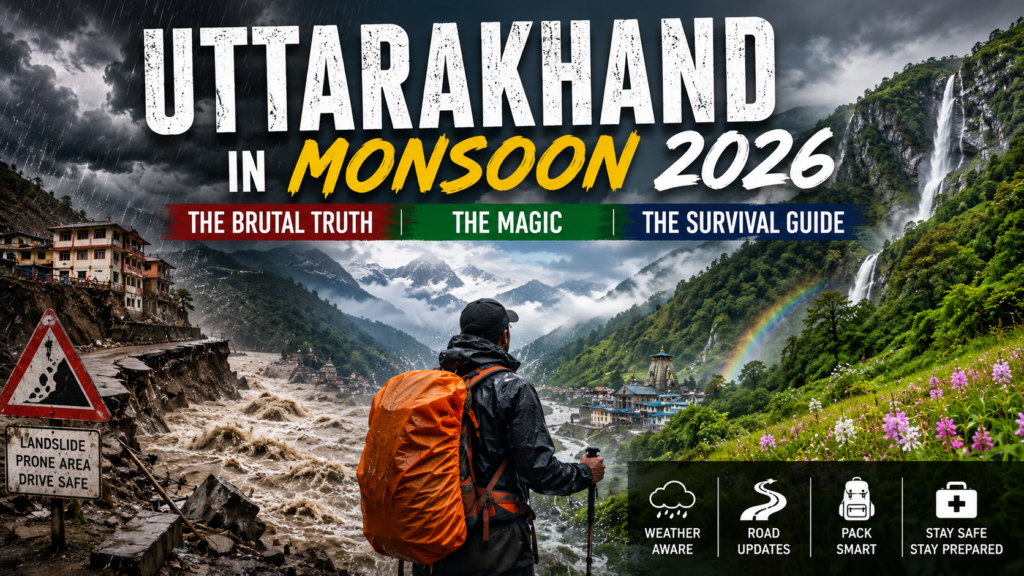
The first time I got caught in a cloudburst near Mussoorie, I was standing on a roadside tea stall, holding a piping-hot kulhar of chai. The sky turned the colour of bruised plums. Then the hills just… opened up. Within 90 seconds, the road ahead vanished under a brown river of mud and rolling stones.
That was my real Uttarakhand in monsoon education.
Look — there’s a reason the brochures push September through June. The state is drop-dead gorgeous in every other season. But the Uttarakhand in monsoon experience? It’s a different beast entirely. The hills turn impossibly green, waterfalls roar out of nowhere, and the air smells like wet pine, cardamom, and woodsmoke. Magical. But the same rain that paints those postcard views also triggers landslides, washes out highways, and strands travellers for hours.
So should you go? Honestly? Yes — but only if you go prepared. Here’s everything I’ve learned from making every mistake so you don’t have to.
When Exactly Does Monsoon Hit Uttarakhand?
Let’s get the boring stuff out of the way first. Because timing decides everything about your Uttarakhand monsoon trip.
| Month | Rainfall Intensity | Crowd Level | Verdict |
|---|---|---|---|
| Late June | Moderate, pre-monsoon showers | Moderate | Decent shoulder window |
| July | Heavy — peak landslide season | Low (smart crowds avoid) | Risky but cheapest |
| August | Heavy, often with cloudbursts | Very low | Only for experienced travellers |
| September (early) | Tapering off, post-monsoon glow | Low-moderate | The sweet spot |
| October | Monsoon retreats, clear skies | Picking up | Better, but no longer “monsoon” |
Temperatures swing wildly — Dehradun sits at 22–32°C in July, but Nainital drops to 14–22°C with misty evenings that demand a jacket. Higher altitudes like Auli or Chopta? Add another 8–10 degrees of cold and wind chill.
The sweet spot? Mid-September. The rains ease, the rivers are still full, the hills are at peak green, and the worst landslide risk has passed. You get the magic without most of the madness.
The Dos — What Smart Travellers Actually Do

Do Match Your Destination to the Weather
Not every hill station in Uttarakhand is a smart pick when the sky is falling. Here’s what works — and what doesn’t.
🟢 Go for it in monsoon:
- Rishikesh — River rafting mostly shuts down in peak rain, but the ashrams, cafés, and that hypnotic Ganga Aarti are unforgettable. Yoga in the rain here? Next level.
- Mukteshwar & Ramgarh — Fruit orchards dripping, fog rolling through pine forests, and homestays where you can sit by a window with chai and watch clouds literally walk through the valley. The smell of wet apple leaves? Intoxicating.
- Chakrata — Offbeat, quiet, and Tiger Falls becomes a 300-foot liquid thunder. Almost no tourists.
- Jim Corbett (Jhirna & Bijrani zones) — The jungle is impossibly lush. Bring a good raincoat for the safari jeep.
- Lansdowne — A cantonment town that’s practically deserted in monsoon. Pine-scented walks, empty roads, and the occasional leopard sighting (stay in your vehicle, obviously).
🔴 Skip these in monsoon — they turn genuinely dangerous:
- Char Dham Yatra (Kedarnath, Badrinath, Yamunotri, Gangotri) — the highways are landslide nightmares
- Valley of Flowers & Hemkund Sahib — leeches, snowmelt, and zero visibility
- Roopkund Trek — the trail becomes a death wish
- Chopta-Tungnath — slippery, fogged out, and the temple complex gets sketchy in rain
Do Pack Like You Mean It
I’ll be direct — a casual umbrella will not save you. Uttarakhand in monsoon demands proper gear.
- Sturdy raincoat with sealed seams (NOT a cheap poncho)
- Waterproof trekking shoes (Vibram sole or equivalent)
- 4–5 pairs of synthetic quick-dry socks (cotton = blisters)
- Waterproof phone pouch + Ziplock bags for documents
- Headlamp with extra batteries (power cuts are common)
- Paracetamol, ORS, Digene, motion sickness tabs, band-aids
- Cash in small notes — ATMs in hill towns often run dry or go offline
- BSNL or Jio SIM — Airtel barely works in remote areas
Pro move: Carry one complete set of dry clothes in a ziplock inside your backpack. When everything else is soaked, you’ll thank past-you.
Do Follow the 6 AM Rule
Mountain weather in monsoon is predictable in one way — mornings are clear, afternoons are chaos. Start every driving or trekking day by 6:30 AM. Aim to be off the road by 2 PM. Don’t even think about driving after 6 PM. Those mountain roads in the dark, in rain? Hard pass.
Do Save the Lifesaving Numbers
Before you leave your hotel Wi-Fi, save these to your phone:
| Service | Number |
|---|---|
| National Emergency | 112 |
| Disaster Helpline (Uttarakhand) | 1070 |
| Ambulance | 108 |
| Tourist Helpline | 1364 |
| BRO Highway Status | Twitter @BROindia |
Also, share your live location with one family member back home. Always.
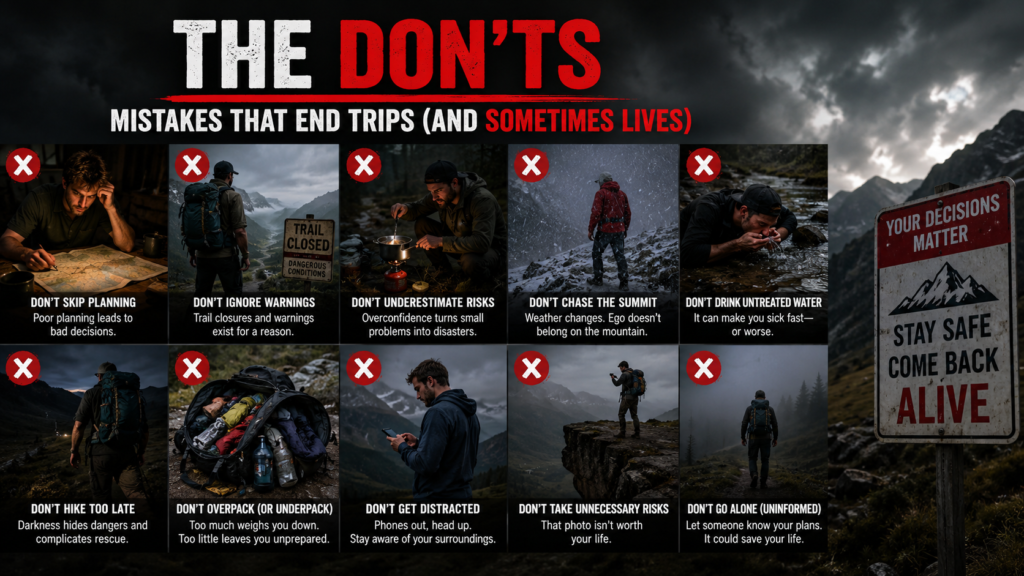
The Don’ts — Mistakes That End Trips (and Sometimes Lives)
Don’t Trust the River
This is rule one for a reason. Every monsoon, somewhere in Uttarakhand, someone dies trying to cross a flooded nallah or photograph a raging river.
- Never camp within 50 metres of a riverbed
- Never cross a flowing stream on foot — turn around, full stop
- “River rafting in Rishikesh in monsoon” is mostly shut down for safety — don’t pressure operators to take you out
- If you hear a sudden roaring sound from upstream, climb immediately — flash floods give you seconds, not minutes
Don’t Drive Like You’re on a Highway
I’ve watched tourists overtake on blind curves in Garhwal. The horn is not a substitute for visibility. Drive in second gear downhill, keep headlights on in fog, and maintain 100-metre gaps. Better still — hire a local driver who knows which stretches eat tyres every monsoon.
Don’t Ignore Road Closures
If the police have put a barrier up, it’s there because the hill moved three hours ago. Don’t argue. Don’t try the “shortcut.” Don’t trust Google Maps — it doesn’t know about that 200-metre road washout 8 km ahead. Check the official Uttarakhand Tourism alerts page before driving each morning.
Don’t Skip Travel Insurance
This isn’t a “nice to have.” Mountain medical evacuations in Uttarakhand can cost ₹50,000–₹2,00,000. A basic policy covering helicopter rescue is around ₹500–₹1,500 for a week. Do the math.
A Real Monsoon Itinerary (5 Days, No Regrets)
| Day | Morning | Afternoon | Evening | Stay |
|---|---|---|---|---|
| Day 1 | Drive Delhi → Rishikesh (5–6 hrs) | Check in, freshen up | Triveni Ghat Ganga Aarti, dinner at Chotiwala | Rishikesh (Tapovan area) |
| Day 2 | Sunrise yoga by the Ganga | Beatle Ashram, Ram Jhula walk, café hopping | Riverside stroll, attend the evening aarti | Rishikesh |
| Day 3 | Drive to Mukteshwar (5 hrs) | Check into homestay, chai with valley views | Bonfire, stargazing (clouds permitting) | Mukteshwar orchard homestay |
| Day 4 | Trek to Chauli Ki Jali | Visit Mukteshwar Dham temple | Local Kumaoni thali dinner | Mukteshwar |
| Day 5 | Drive back to Delhi via Bhimtal | Stop for lakeside lunch at Bhimtal | Reach Delhi by night | — |
Express version (weekend): Just Rishikesh — 2 days, 1 night. Drive Friday night, yoga + aarti Saturday, drive back Sunday morning. Done.
Pro upgrade: Add 2 more days and extend to Chaukori or Pithoragarh for one of the most underrated sunrise views in India — the Panchachuli peaks catching the first light over your morning chai. Truly unforgettable.
Travel Tips That Actually Matter in 2026
- UPI works in most towns but not in remote villages — carry ₹8,000–₹10,000 cash
- BSNL and Jio are the only reliable networks in Garhwal’s interior — Airtel drops out past Srinagar
- Monsoon discounts are real — hotels drop 30–50%, but always check recent reviews mentioning monsoon stays
- Trains to Haridwar are cheaper than flights to Dehradun, and the IRCTC tatkal window opens 1 day before
- Permits for Jim Corbett zones need to be booked online 30+ days in advance — check the official forest department portal
- Photography is restricted at Kedarnath, Badrinath, and some ashrams — no drones without written permission
- Altitude sickness rarely hits below 8,000 ft, but stay hydrated regardless — humidity masks dehydration
- Wear leech socks if you’re walking through grass anywhere below 6,000 ft. Salt packets in your pocket are a free lifesaver
Real Cost Breakdown (2026, Per Person)
| Expense | Budget | Mid-Range |
|---|---|---|
| Delhi–Rishikesh–Mukteshwar–Delhi (Sedan) | ₹8,000 (shared) | ₹14,000 (private) |
| Accommodation (4 nights) | ₹4,000 | ₹12,000 |
| Food (4 days) | ₹2,500 | ₹5,500 |
| Activities & entry fees | ₹1,500 | ₹3,500 |
| Total | ₹16,000 | ₹35,000 |
Prices may vary ±15% by season and availability.
FAQs — Quick Answers to What You’re Actually Searching
Is Uttarakhand safe to visit during monsoon?
Which month is best for monsoon travel in Uttarakhand?
Can I go to Mussoorie in monsoon?
Are there landslides in Uttarakhand in July?
Is monsoon a good time to visit Rishikesh?
Uttarakhand vs Himachal in monsoon — which is better?
How much does a 5-day monsoon trip to Uttarakhand cost?
Final Word: Should You Book That Trip?
Look — I’ve seen Uttarakhand in monsoon take travellers from “best trip of my life” to “I’m never coming back” in the same week. The difference almost always comes down to one thing: how seriously you took the rain.
If you go with the right destination, the right gear, and the right mindset — you’ll see a side of the Himalayas that 90% of tourists never will. Green so vivid it hurts your eyes. Waterfalls that roar like freight trains. Mist that turns ordinary villages into scenes from a Studio Ghibli film.
Just respect the mountains. They don’t care about your itinerary.
👉 Planning your 2026 monsoon trip? Read our complete Char Dham Yatra guide for the post-monsoon season if you’d rather wait for safer skies.
The hills are calling. Just bring a better raincoat than I did. 🏔️☔
