

Table of Contents
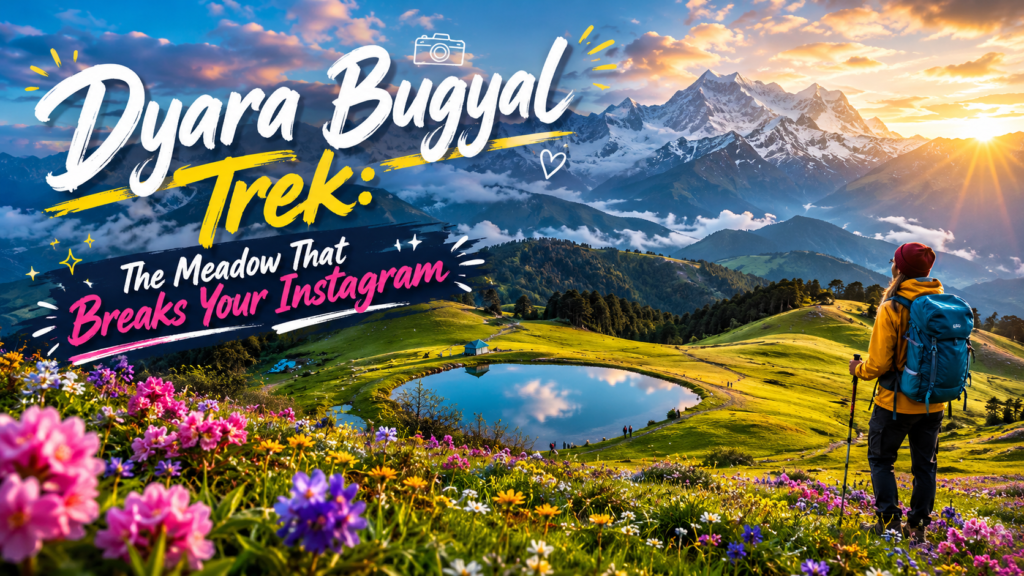
Dyara Bugyal Trek: The Meadow That Breaks Your Instagram
The first time I saw Dayara Bugyal, I laughed.
Not a gentle chuckle — actual, slightly unhinged laughter. Because nothing prepares you for it. You’ve seen the photos on Instagram, the perfectly framed shots with people doing yoga poses at sunrise. Cute. Nice. But standing there, at roughly 11,800 feet, with the entire Gangotri range punching through clouds on one side and an ocean of grassland stretching so far it literally curves with the earth…
Your phone becomes irrelevant.
Flat green-gold meadows rolling for kilometers in every direction. Patches of snow clinging to the northern slopes even in May. Tiny shepherd huts that look like someone placed them there with tweezers. And the silence — God, the silence. It’s the kind of quiet where you can hear your own heartbeat and the distant rush of the Bhagirathi River thousands of feet below, both sounds somehow merging into one.
I’ve done 47 Himalayan treks. Counted. Dayara Bugyal remains in my top 5 — not because it’s the hardest (it isn’t) or the most dramatic (gang, it’s a meadow, not a summit), but because it delivers something increasingly rare in Indian trekking: a payoff wildly disproportionate to the effort.
The Dyara Bugyal Trek is short. The approach is straightforward. You won’t need technical gear or guide certifications or legs of steel. What you will need is a camera with actual storage space and the willingness to accept that every sunrise you witness after this one will feel slightly disappointing.
Here’s everything you need to plan this trek right — no fluff, no generic advice, just the real stuff from someone who’s made the mistakes so you won’t have to.
Dayara Bugyal Trek’s Height, Location & The One Fact Nobody Tells You
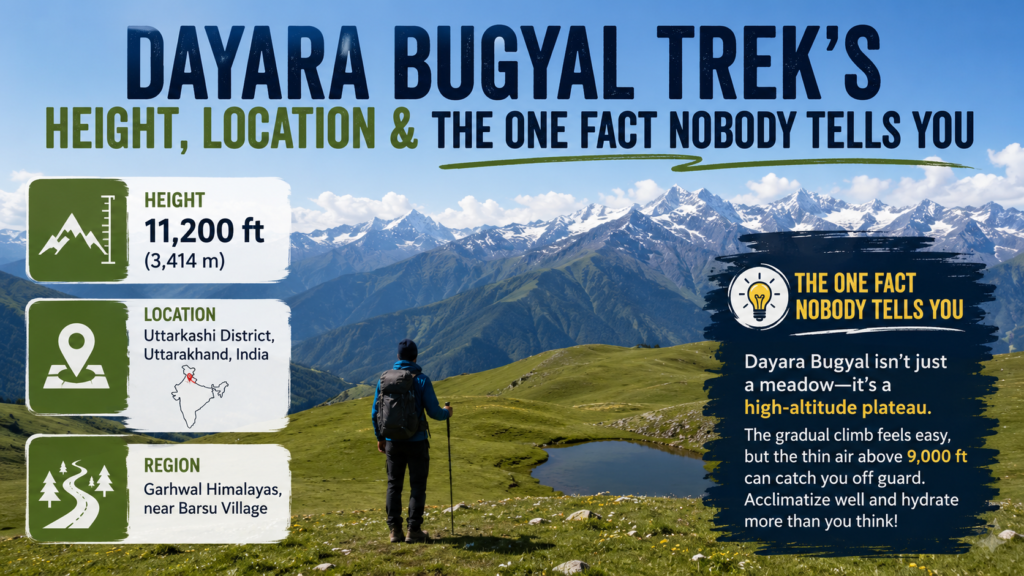
Altitude: 11,830 feet (3,608 meters) at the main meadow. Surya Top, the optional peak extension, hits approximately 12,500 feet.
Where exactly: Uttarkashi district, Uttarakhand. The meadow sits on a high ridge between the Bhagirathi River valley and the Assi Ganga valley. Nearest town is Bhatwari (about 8 km downhill). Nearest proper city with decent facilities is Uttarkashi town (roughly 40 km).
What “Bugyal” actually means: In the local Garhwali dialect, bugyal translates to “high-altitude meadow.” Not a valley, not a plateau — a bugyal specifically refers to pastures above the treeline that burst into wildflower carpets after snowmelt. These meadows have been traditional grazing grounds for centuries. The shepherds still bring their flocks up in summer — you’ll spot their temporary stone-and-tin shelters (known as “chhanni” locally) scattered across the grassland.
The surprising part nobody mentions: Dayara Bugyal isn’t one meadow. It’s a massive connected complex of at least 4 major clearings — Barnala Bugyal (the first you hit from the Raithal side), the main Dayara meadow, the upper plateau near the forest rest house, and the slopes climbing toward Surya Top. Combined area is roughly 28 square kilometers. That’s larger than some European micro-nations. You can walk for hours and still find entirely new perspectives.
The meadow sits under the administrative watch of the Uttarakhand Tourism Development Board and the Govind Wildlife Sanctuary authority. Camping rules have tightened since 2024 — more on that in the camping section.
Google Maps reality check: Typing “Dayara Bugyal” into Maps will get you to the approximate zone, but the trekking routes from Barsu and Raithal aren’t Google-mapped trails. Download offline maps before you lose signal near Bhatwari. I use Maps.me with the India topo overlay — saved my navigation twice when cloud cover dropped to zero visibility.
The Two Routes: Barsu vs Raithal — Which One’s Not Trying To Kill You?
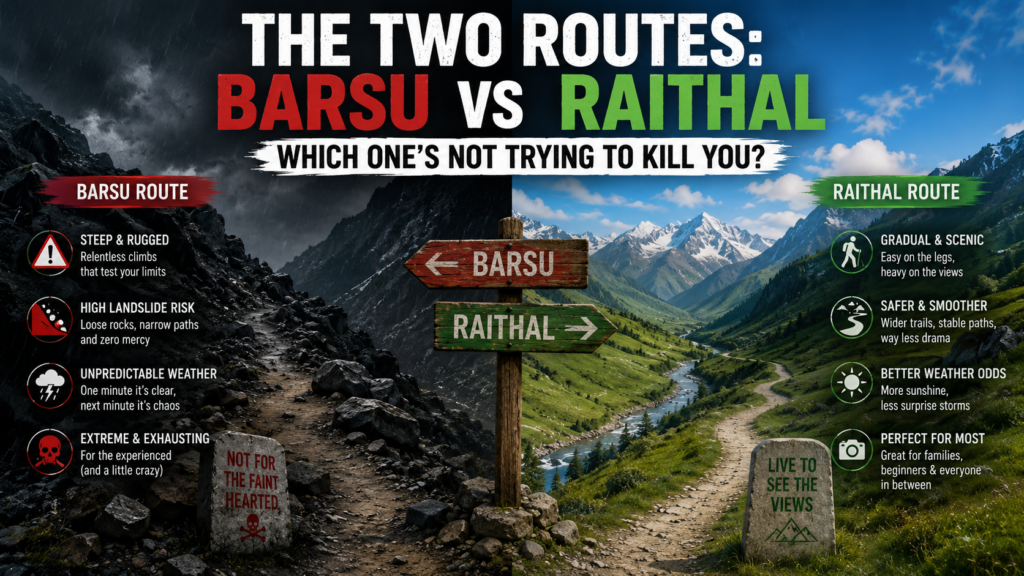
There are exactly two approach routes to Dayara Bugyal. Both start from villages connected by a 17 km road. Both take roughly the same time. But they are NOT the same trek.
Let me break this down honestly.
Raithal Route — The Classic, The Brutal, The Beautiful
Raithal village sits at about 7,000 feet. The trail kicks off right from the village market area — there’s a small signboard near the GMVN guesthouse, though it’s faded and you might miss it if you’re not looking.
Distance: Raithal to Dayara Bugyal main meadow is approximately 9 km one way.
Time: 5–7 hours up, 3–4 hours down. Depends entirely on how many times you stop to gasp.
Gradient: Steep. Not “oh this is pleasant” steep — proper quad-burning, switchback-after-switchback steep for the first 4 km through dense oak and rhododendron forest. The trail gains roughly 4,800 feet in those 9 kilometers. Math isn’t complicated there.
The forest section is stunning though. Massive old oaks with trunks four people couldn’t wrap arms around. In spring (March–April), the rhododendrons explode red and pink — petals literally carpet the trail. The forest floor smells like wet earth, crushed leaves, and something faintly sweet you can’t quite identify. Woodpeckers hammering somewhere in the canopy. Langurs crashing through branches above you, unimpressed by your presence.
Around 4 km in, you hit the first clearing — Barnala Bugyal. This is where most Raithal trekkers collapse in exaggerated relief. It’s a smaller meadow, maybe a third the size of the main one, but after hours of forest, the sudden openness feels like being slapped awake. There’s a small water source here (seasonal stream) and a basic shepherd shelter.
From Barnala, another 3 km of gentler climbing brings you to the main Dayara meadow. The treeline thins. The wind picks up. And suddenly — grass. Everywhere.
Pro tip for Raithal route: Start by 6 AM. The forest section has almost no water sources until Barnala, and the climb generates serious sweat. I made the mistake of starting at 9 AM in May — the forest humidity nearly broke me. Carry at least 2 liters per person for this section.
Barsu Route — The Sensible Choice That Nobody Talks About Enough
Barsu village sits at roughly 7,500 feet — slightly higher than Raithal. The road to Barsu is the same NH-34, then a right turn near Bhatwari that climbs steeply. The last 5 km of this approach road are narrow, occasionally terrifying, and absolutely worth it.
Distance: Barsu to Dayara Bugyal is about 7 km one way.
Time: 4–5 hours up, 2.5–3.5 hours down.
Gradient: Moderate. There’s still climbing — this IS a Himalayan trek — but it’s spread more evenly. The trail stays above the treeline for longer stretches, meaning you get view-candy much earlier.
The Barsu trail feels fundamentally different. You climb through mixed forest for maybe 2.5 km, then the trees start thinning and — boom — you can see the meadow complex spread out above you. There’s something psychologically encouraging about being able to SEE your destination while you walk toward it.
There’s a Forest Rest House at the upper edge of Dayara on this side. It’s basic but weatherproof, and booking it requires prior permission from the Uttarkashi Forest Division office. More on that in the stay section.
Which route would I pick? Honestly — Barsu for the ascent, Raithal for the descent. Best of both worlds. But if you can only do one route, and you’re not actively seeking suffering as a character-building exercise, take Barsu. The Raithal forest section IS magical, but you’ll still pass through beautiful forest on Barsu — just less of the “why did I think this was a good idea” variety.
Transport logistics between the two villages: Local shared jeeps run between Bhatwari and both villages. But they’re irregular. If you’re doing a cross-route (up one, down the other) with your own vehicle parked at one end, you’ll need to arrange a pick-up or hitch. The road distance between Raithal and Barsu via Bhatwari is about 17 km, taking 40–50 minutes by car.
Dyara Bugyal Trek In Winter: The Snow Trek That Doesn’t Demand Crampons
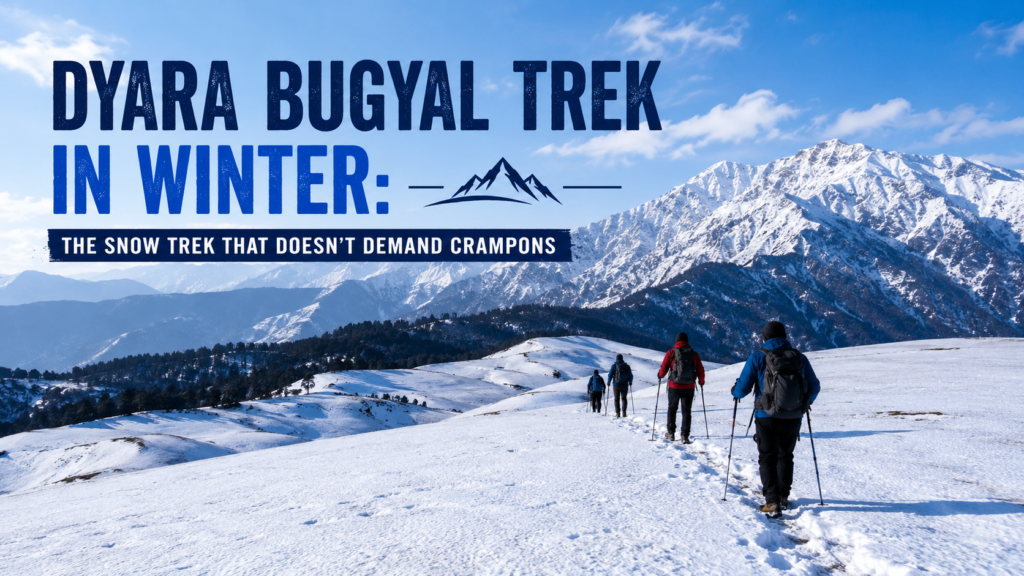
I’ve done Dayara in three different seasons now. The winter version? That’s the one that stuck.
Between late December and early March, the entire meadow disappears under snow. Not a dusting — proper, multi-foot accumulation that transforms the bugyal into something almost unrecognizable. The grass is buried. The trails vanish. The shepherd huts become snow caves with tin roofs poking out. And the Gangotri peaks, already spectacular in summer, become blinding white monoliths against crystal-blue winter skies.
Snow depth: Typically 2–4 feet on the meadow floor by January. Drifted areas near Surya Top can accumulate 8+ feet.
Temperature range: Daytime hovers around 2–8°C if sunny. Night drops to -8°C to -15°C. Factor in wind chill at the exposed campsite and it can feel much colder.
Do you need technical gear? For the standard meadow trek — no. Gaiters are strongly recommended (snow WILL get in your boots otherwise), and microspikes help on icy patches, but you don’t need full crampons or ice axes. The gradient isn’t steep enough to create avalanche risk on the standard routes. Surya Top in winter is a different conversation — steeper, more exposed, and I’d want proper mountaineering kit if attempting it December–February.
The winter trail starts from either village but often gets consolidated by local guides and previous trekkers. If there’s been fresh snowfall (which happens frequently), you’ll be breaking trail in places — which is exhausting and slow but also incredibly peaceful.
One thing I love about winter Dayara: the solitude. Summer weekends can see 50+ trekkers spread across the meadow. Winter? I’ve been up there with exactly 4 other humans on a February weekend. Just the snow, the peaks, the wind, and the weird crunching sound your boots make on dry powder at -5°C.
The winter caveat: Water sources freeze. The small streams on the Raithal side become unusable. You’ll need to melt snow for drinking water, which means carrying a stove with sufficient fuel. This isn’t optional. Dehydration at altitude in freezing conditions is a fast track to hypothermia and poor decision-making.
Best Time To Visit Dayara Bugyal: A Season-By-Season Breakdown
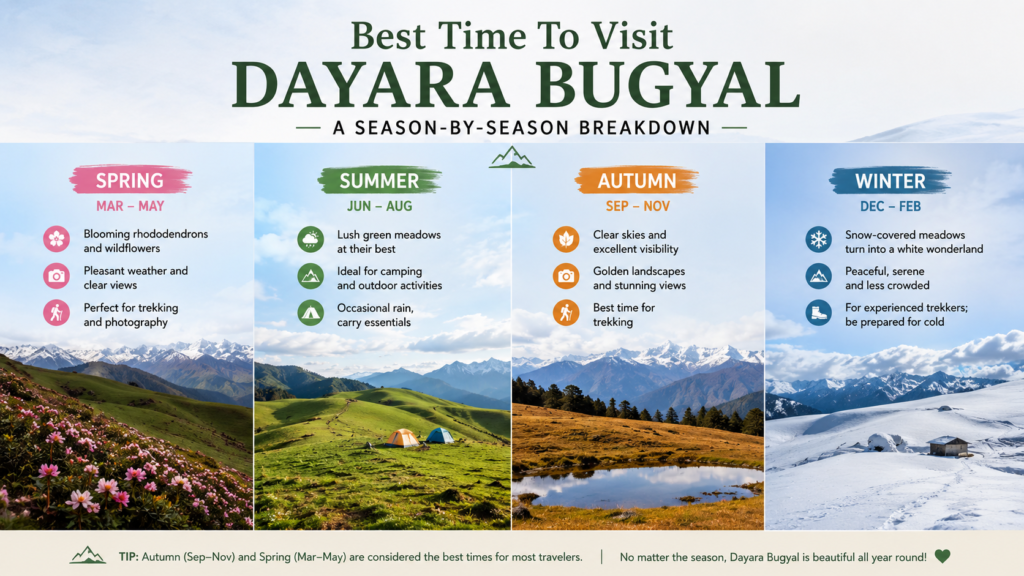
There’s no single “perfect” time. Dayara transforms so completely across the year that the best season depends entirely on what you want to see.
| Season | Months | Temp Range (°C) | Meadow Condition | Crowd Level | Vibe Check |
|---|---|---|---|---|---|
| Spring | March–April | 5–15 (day), -2–5 (night) | Patchy snow melting, rhododendron bloom in forest | Low–Moderate | Colors everywhere, trails muddy but manageable |
| Summer | May–June | 10–22 (day), 2–8 (night) | Full green, wildflowers starting, all grass visible | Peak | Warmest, busiest, clearest mountain views |
| Monsoon | July–mid-September | 8–18 (day), 2–10 (night) | Very green but WET, leeches in forest | Minimal | Unpredictable views, risky trail conditions, not recommended |
| Autumn | mid-September–November | 5–18 (day), -3–6 (night) | Golden grass, crystal clear skies, post-monsoon clarity | Moderate | Arguably best views of the year, cold creeping in |
| Winter | December–February | 2–8 (day), -8 to -15 (night) | Buried under 2-4 ft snow | Low (weekdays) to Moderate (Christmas/NYE) | Snow magic, challenging camping, maximum solitude |
My honest recommendation: Mid-May to mid-June for first-timers, late September to October for photographers, January for snow-lovers who know what they’re doing.
The sweet spot? Last week of May. Snow patches remain on the northern slopes for contrast photos, wildflowers start appearing in the lower meadow sections, daytime temperatures are genuinely pleasant (a light fleece is enough while walking, jacket in the evening), and the monsoon hasn’t arrived yet. You get summer meadow magic with winter mountain backdrops. Chef’s kiss.
Monsoon warning, real talk: I’ve known people who trekked Dayara in August. Some got lucky with clear windows. Others spent two days in a tent watching rain turn the meadow into a marsh, seeing absolutely zero mountain views, and sliding down muddy trails that had become small rivers. GPS said they were at a beautiful meadow. Eyes said they were in a cloud. The leeches in the forest sections during monsoon are also… enthusiastic. Do yourself a favour and avoid July–August unless you have schedule constraints and a high tolerance for wet misery.
How To Reach Dayara Bugyal From Delhi: Every Option, Actual Costs
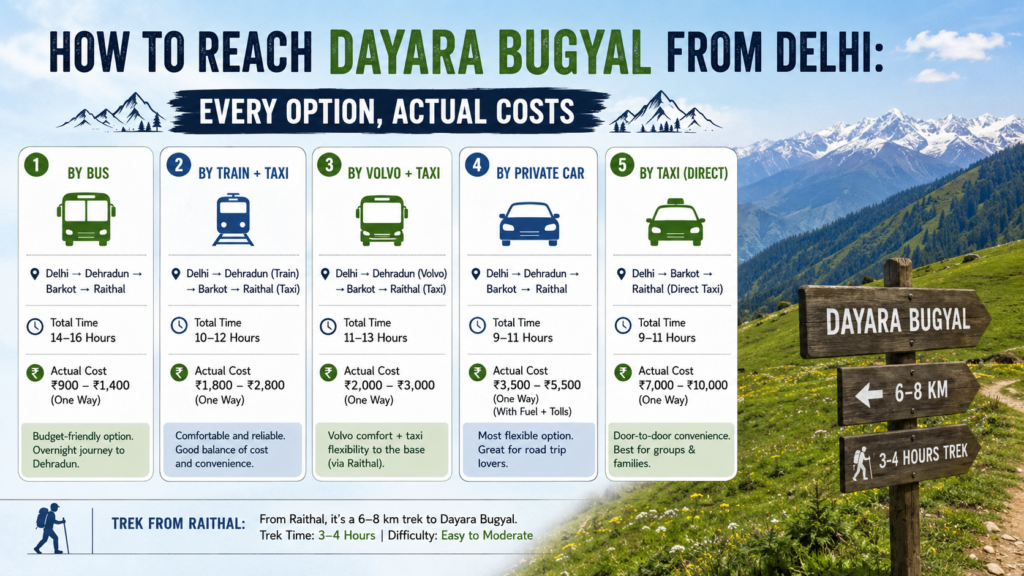
The journey from Delhi to the trailhead is a full day’s travel. Plan for it.
By Road — Most Flexible, Most Common
Route: Delhi → Haridwar → Rishikesh → Chamba → Uttarkashi → Bhatwari → Barsu/Raithal
Total distance: Approximately 460–480 km (depending on which Delhi starting point)
Drive time: 12–14 hours with breaks. Do NOT trust Google Maps estimates of 10 hours — they don’t account for mountain road reality, truck convoys, chai stops your driver WILL insist on, and the stretch between Chamba and Uttarkashi which is perpetually under some form of repair.
Road condition update 2026: The Delhi–Haridwar section is expressway/bliss. Haridwar to Rishikesh is fine. Rishikesh to Chamba gets windy but decent. Chamba to Uttarkashi — this is where it gets real. Sections of single-lane road, occasional landslide debris (quickly cleared but still), and that one stretch near Gangnani that narrows to basically a lane and a half with a sheer drop on one side. Uttarkashi to Bhatwari is better. The final climb to Barsu village is steep, paved but deteriorating in patches — low-clearance cars will scrape.
Bus options:
- Uttarakhand Transport Corporation (UTC) runs daily buses from ISBT Kashmere Gate, Delhi, to Uttarkashi. Fare: approximately ₹650–800 for ordinary, ₹1,100–1,400 for semi-sleeper Volvo (limited Volvo services on this route).
- From Uttarkashi, shared jeeps to Bhatwari (fare: ₹50–70, 40 min), then shared jeeps to Barsu or Raithal (₹30–50, very irregular schedule).
- GMOU (Garhwal Motor Owners Union) operates shared taxi services from Rishikesh to Uttarkashi. Faster than buses, cost around ₹500–700 per person in shared Sumo/Bolero.
By Train — Cheaper, Slower
Nearest major station: Haridwar Junction (HW), approximately 250 km from Barsu.
Key trains from Delhi:
- Nanda Devi Express (12205/12206) — comfortable, reliable
- Jan Shatabdi (12055) — faster, day train
- Mussorie Express (14041) — budget overnight
From Haridwar railway station, buses to Uttarkashi depart from the Haridwar bus stand (2 km from station, auto ₹100–150). Alternatively, book a private taxi from Haridwar to Barsu/Raithal directly — cost roughly ₹5,500–7,000 for a small sedan (Dzire/Etios), ₹8,000–10,000 for an Innova.
The IRCTC tip: Book train tickets at least 2 weeks in advance. The Haridwar trains fill up with Char Dham pilgrims May–June and again in September–October. Waiting-list tickets on these routes rarely clear. Source: IRCTC
By Air — Fastest, Priciest
Nearest airport: Jolly Grant Airport, Dehradun (DED), approximately 210 km from Barsu.
Flights from Delhi: IndiGo, Air India, Vistara — 1 hour flight, typical fare ₹2,500–5,000 one-way if booked 3–4 weeks ahead.
From airport to trailhead: Pre-booked taxi from Dehradun to Barsu/Raithal costs ₹6,000–9,000 depending on vehicle type. Alternatively, take a cab to Rishikesh (₹1,200–1,500, 45 min) and catch a shared Sumo to Uttarkashi from the Tehri bus stand (₹400–500, 6–7 hours).
My travel recommendation: If you can afford the flight, take the early morning IndiGo (6E 2134, departs Delhi 6:35 AM, lands Dehradun 7:35 AM). Pre-arrange a pickup. You’ll be in Barsu by 3–4 PM — tired but with enough light to settle in. If budget constraints push you to train/bus combo, budget a FULL travel day and don’t plan to start trekking until the next morning.
Google Maps tip: Download offline maps of the entire Uttarkashi–Bhatwari–Barsu region before leaving Rishikesh. Network gets spotty after Chamba, and nonexistent past Uttarkashi for anything except BSNL.
Where To Stay: From Village Homestays To Meadow Camping
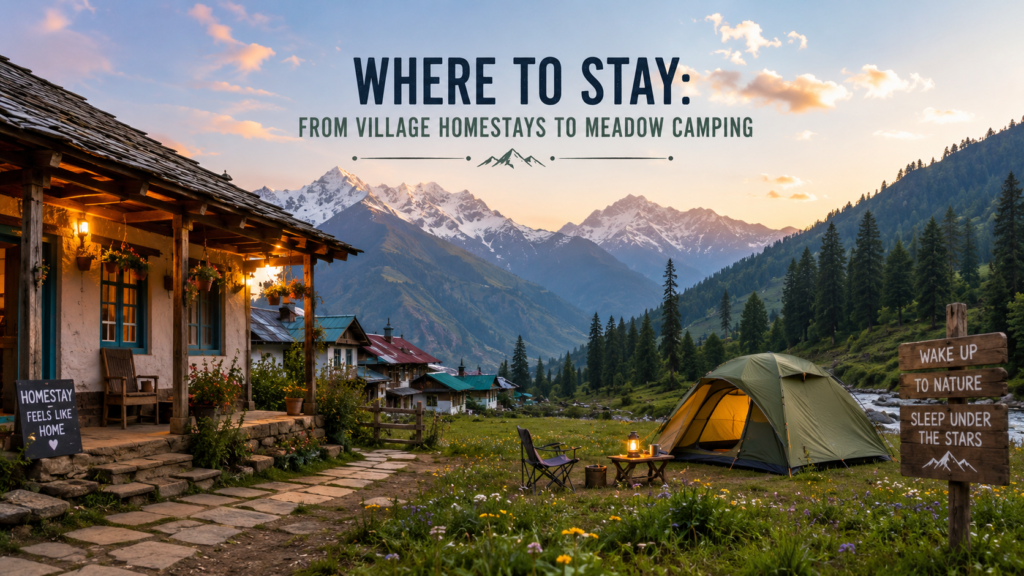
Accommodation on the Dayara Bugyal trek ranges from “basic but charming village rooms” to “you’re literally sleeping in a tent on a frozen meadow, what did you expect.”
Budget Stays (Under ₹1,500/night)
GMVN Tourist Rest House, Raithal
The government-run option. Basic rooms with attached bathrooms. Hot water is solar-powered, meaning sunny mornings = hot shower, cloudy mornings = character-building cold water. The GMVN rest house is clean but Spartan — think thin mattresses, functional blankets, and that specific government-guesthouse smell of phenyl and aged wood.
- Tariff: ₹800–1,200 for double occupancy (2026 rates)
- Booking: Direct at reception or through GMVN website.
Homestays in Barsu Village
Barsu has about 8–10 homestays now, most registered under the Uttarakhand Tourism homestay scheme. The family-run operations are consistently better than the commercial setups.
- Tariff: ₹600–1,000 per person including dinner and breakfast
- Expect: Simple Garhwali meals (dal, rice, roti, seasonal sabzi), shared bathrooms, and the kind of hospitality where the didi will ask if you want second helpings while already spooning more rice onto your plate.
Where I’d stay in the budget category: Negi Homestay in Barsu. Laxman Negi and his wife run a 3-room setup. The rooms are unremarkable. The views from their courtyard, looking straight at the snow peaks, are not. Their aloo ke gutke (potatoes roasted with jakhiya seeds) is something I still think about. ₹800/person with meals. No online booking — call only. The number changes occasionally so ask around in Bhatwari.
Mid-Range Stays (₹1,500–4,000/night)
Forest Rest House, Dayara Bugyal
Located right on the upper edge of the meadow at roughly 11,500 feet. This is a basic forest department structure — two rooms, shared bathroom, a caretaker who may or may not be present depending on season.
- Tariff: ₹1,500–2,500 depending on season (separate from entry fees)
- Booking: Through Uttarkashi Forest Division Office — requires advance permission, ideally 2–3 weeks prior. No online booking. Visit the office in person or call. Yes, it’s old-school. Yes, it’s worth it to not carry a tent.
- What you get: The sunrise literally at your doorstep. Walk out of the rest house, take 30 steps, and you’re standing in the middle of Dayara Bugyal with zero effort.
Uttarakhand Tourism Guesthouse, Bhatwari
If you want a comfortable base before/after the trek with reliable hot water and decent rooms:
- Tariff: ₹2,000–3,500
- Contact: Uttarakhand Tourism or book through their portal.
Premium/Camping (₹4,000+/night)
Organized Camping on Dayara Bugyal
Several operators set up semi-permanent camps on the meadow during peak seasons (May–June, October–November, late December). These range from basic dome tents to Swiss cottage tents with cots and quilts.
- Tariff: ₹3,000–6,000 per person including meals
- What you get: Tent accommodation, common dining tent, bonfire (wood availability permitting), guided walks
- Operators: Check with GMVN for their seasonal camp, or private operators like IndiaHikes, Trek The Himalayas, and local Uttarkashi-based outfits.
Camping regulations note: Since 2024, the Forest Department has tightened camping permissions in the Govind Wildlife Sanctuary zone. Unauthorized camping is being fined. If you’re doing independent camping (carrying your own tent), get permission from the Uttarkashi Forest Division office beforehand. The fee is nominal (₹150–250 per tent per night) but the paperwork takes a day in Uttarkashi town.
Dayara Bugyal Trek Itinerary: The Actual Day-By-Day Plan
I’ve designed this for the Barsu-up, Raithal-down approach. Timings assume moderate fitness and generous photo stops. Because honestly, what’s the point of rushing through this meadow?
| Day | Morning (6 AM–12 PM) | Afternoon (12 PM–5 PM) | Evening (5 PM onwards) | Night Stay |
|---|---|---|---|---|
| Day 0 | — | Arrive Barsu/Raithal village | Settle into homestay, short village walk, dinner by 8 PM | Barsu village homestay |
| Day 1 | 6 AM: Wake up, breakfast. 7 AM: Start trek from Barsu. 9:30 AM: Forest section ends, first meadow views. 11 AM: Reach Barnala side approach. | 12 PM: Arrive at Dayara Bugyal main meadow. Lunch (packed or at campsite). 1–4 PM: Explore meadow, photographs, rest. | Sunset watching (5:30–6:30 PM depending on season). Dinner. Bonfire if camping. | Campsite or Forest Rest House on Dayara |
| Day 2 | 5 AM: Sunrise viewing — non-negotiable. 7 AM: Breakfast. 8 AM: Optional trek to Surya Top (3–4 hours round trip) OR meadow exploration. | 11 AM: Start descent via Raithal route. 1 PM: Barnala Bugyal — lunch break. 3 PM: Re-enter forest. | 4:30–5:30 PM: Reach Raithal village. Tea. Collapse. | Raithal homestay OR drive to Uttarkashi |
| Day 3 | Depart for Delhi/Dehradun | — | — | — |
Pro Upgrade (extend to 4 days):
- Day 2 continued: After descending to Raithal, drive to Gangnani hot springs (30 km toward Uttarkashi). Natural thermal pools overlooking the Bhagirathi valley. Your legs will thank you. ₹50 entry.
- Day 3: Visit Uttarkashi town — Kashi Vishwanath Temple (not the Varanasi one, but significant), explore the market, drive back toward Delhi in the afternoon.
- Day 4: Arrive Delhi.
Express 2-Day Weekend Version:
For Delhi NCR weekend warriors with limited leave days:
- Friday night: Overnight bus Delhi → Uttarkashi (depart 9 PM, arrive 7 AM)
- Saturday: Jeep to Barsu (8 AM), trek up (9 AM–2 PM), sunset on meadow
- Sunday: Sunrise, descend Raithal (7 AM–11 AM), jeep to Uttarkashi (12 PM), afternoon bus to Delhi (arrive late Sunday night)
Brutal? Yes. Doable? Yes. Worth it? For the sunrise alone — absolutely.
Dayara Bugyal Trek Cost Breakdown 2026
Here’s where every rupee goes. Prices verified April 2026, based on solo travel from Delhi. Group costs will be lower per person.
| Expense Category | Budget (₹) | Mid-Range (₹) | Premium (₹) |
|---|---|---|---|
| Transport Delhi–Uttarkashi–Delhi (bus/taxi/flight) | 2,200 (bus round trip) | 6,000 (shared taxi one way + bus return) | 16,000 (flight + private Innova) |
| Local Transport (Uttarkashi–Barsu–Raithal jeep) | 600 (shared jeeps) | 1,500 (reserved jeep drop/pickup) | 3,000 (dedicated vehicle for 3 days) |
| Accommodation (3 nights) | 1,800 (homestays × 2 + camping × 1) | 4,500 (homestay + forest rest house + mid-range room) | 9,000+ (organized camping package + premium stays) |
| Food (3 days) | 1,200 (local dhabas, dal-rice-thali) | 2,500 (homestay meals + packed lunch + better options) | 5,000 (camp dining + restaurant meals in Uttarkashi) |
| Trek Fees & Permits | 200 (camping permit) | 500 (forest entry + camping permit) | 1,500 (guide + permits + tips) |
| Guide (optional but recommended for winter) | 0 (self-guided) | 1,500–2,500/day (local guide) | 4,000+/day (certified trek leader) |
| Misc (water, snacks, tips, chai) | 500 | 1,000 | 2,000 |
| TOTAL (solo, without guide) | ≈ ₹6,500 | ≈ ₹15,500 | ≈ ₹36,500 |
| TOTAL (group of 4, per person) | ≈ ₹4,800 | ≈ ₹9,500 | ≈ ₹22,000 |
The budget version is genuinely comfortable if you’re okay with shared transport and basic homestays. The mid-range sweet spot at ₹9,500 per person (in a group) gets you comfort, better food, and less logistical hassle.
Local Food & Culture: What You’re Eating And Who You’re Meeting

The Garhwali food on this trek deserves attention. Not as a sidenote — as a reason to come.
Aloo ke Gutke — This is the dish. Potatoes, skin on, roasted in mustard oil with jakhiya seeds (a local wild spice that looks like tiny black poppy seeds but tastes entirely different — nutty, slightly bitter, aromatic). Sometimes dried red chilies join the party. Served with mandua roti (finger millet flatbread, dark brown, earthy, slightly denser than wheat roti). I’ve eaten this in five different homestays across Uttarkashi district. It’s never been bad. It’s occasionally been transcendent.
Chainsoo — Black gram (urad dal) dry-roasted, stone-ground, then slow-cooked with ginger, garlic, and mountain spices. Thick, protein-heavy, sticks to your ribs kind of food. Perfect after a cold day of trekking.
Mandua Roti — Finger millet bread. Nutty, slightly coarse texture. Looks like dark chocolate but tastes wholesome. Gluten-free (bonus). Eaten with ghee and jaggery for breakfast, or with dal/sabzi for dinner.
Jhangora Kheer — Barnyard millet pudding. Lighter than rice kheer, with a texture almost like tiny pearls. Cardamom, milk, sugar, sometimes a sprinkle of local walnuts on top. The Garhwali dessert flex.
Gahat Dal — Horse gram lentil soup. Earthy, slightly bitter, deeply warming. Served in big steel glasses (yes, glasses — it’s a drinkable dal consistency) with a squeeze of lemon and a pinch of salt. The homestay didi will tell you it’s good for kidney stones. Ayurveda backs this up.
Bhangjeera Chutney — Hemp seed chutney. Before you get ideas — it’s non-psychoactive. Roasted hemp seeds ground with garlic, green chilies, and a splash of lemon juice. Pungent, addictive, slightly crumbly. You’ll ask for seconds.
Buransh Juice — Rhododendron flower squash. Bright pink. Tart, floral, slightly sweetened. Served cold in summer. So intensely pink it stains your lips temporarily. Instagram would love it.
Where to eat: Village homestays. I cannot stress this enough. The dhabas on the highway serve standard North Indian fare — fine, but unremarkable. The food cooked in village kitchens, with family recipes and local ingredients, is entirely different. Negi Homestay (Barsu) and Rana Homestay (Raithal) consistently deliver. Meals typically cost ₹200–300 per person.
Cultural context: The villages around Dayara — Barsu, Raithal, Bhatwari — are Garhwali Hindu communities with deep ties to the land. Many families have been grazing livestock on Dayara Bugyal seasonally for generations. The shepherds (locally called “bakra palak” or “gujjar” in some areas, though the term varies) move their flocks up in May–June and down in September–October. If you’re trekking during migration season, you might share the trail with hundreds of sheep and goats — bells clanking, dogs herding, shepherds calling out across the valley.
Temple etiquette: If you visit the Kashi Vishwanath Temple in Uttarkashi town, shoes off, leather items (belts, wallets) out before entering the inner sanctum. Photography is generally restricted inside. Dress modestly — covering shoulders and knees.
Language: Garhwali is the local dialect. Hindi is universally understood. A few phrases that’ll earn you smiles: “Bhaiji namaskar” (Respectful greeting, elder brother), “Bhaut bhaut dhanyavaad” (Thank you very much), “Kya baat!” (expression of appreciation — like “wow, nice!”).
One etiquette thing: When eating in a village home, the family may wait for you to finish before eating themselves. It’s a hospitality custom. Let them know you’re comfortable eating together, or at least insist they don’t wait. The phrase: “Aap bhi saath mein khaaiye na” — please eat together with us.
Travel Tips That’ll Actually Save Your Trip
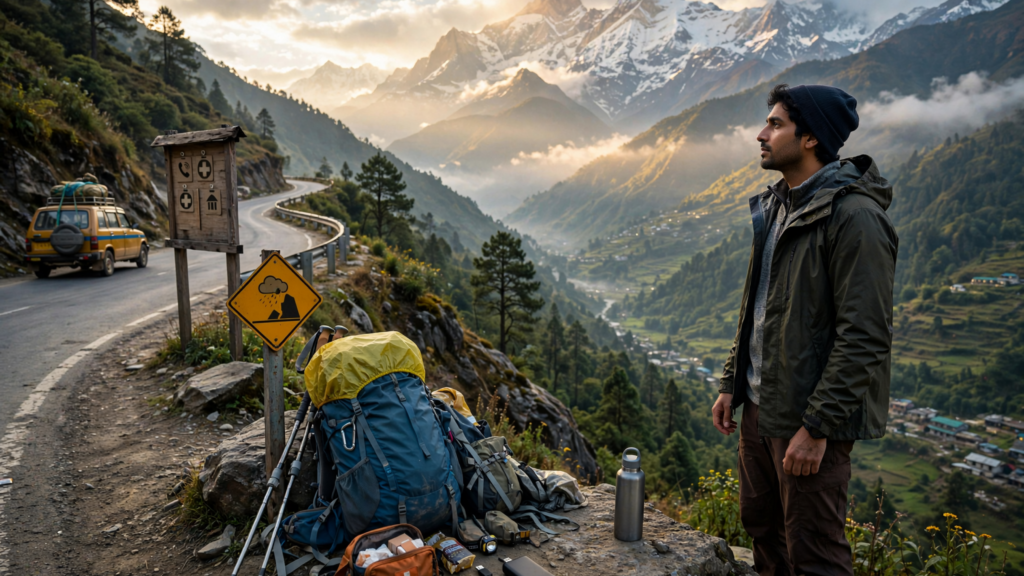
- BSNL or nothing above 10,000 feet. Jio completely drops past Bhatwari. Airtel clings to one bar near the forest rest house and then dies. BSNL works — calls and even spotty 2G data — across most of the meadow. If you don’t have BSNL, accept your digital detox and download everything beforehand.
- Cash rules everything here. There are NO ATMs in Barsu or Raithal. The last functional ATMs are in Uttarkashi town (SBI and PNB are most reliable). Bhatwari has one ATM theoretically, but it’s been out of service every single time I’ve passed through. Carry enough cash: ₹3,000–4,000 minimum per person.
- The altitude hits different people differently. Dayara isn’t extreme at 11,800 feet, but if you’re coming from sea-level Delhi with zero acclimatization, you might feel it. Headaches, nausea, poor sleep — classic AMS symptoms. Spend a night in Barsu/Raithal (7,500 ft) before trekking up. Stay hydrated. Diamox isn’t necessary at this altitude for most people, but consult your doctor if you’re prone to altitude issues.
- Layers, not bulk. The temperature swing between hiking at 11 AM (sunny, 15°C, you’re in a t-shirt) and standing still for sunset at 6 PM (windy, 2°C, dropping fast) is dramatic. System: moisture-wicking base layer → fleece mid-layer → windproof/waterproof outer shell. Add a packable down jacket for evenings and early mornings. This isn’t “carry warm clothes” generic advice — this is the specific layering system that works.
- Water purification is non-negotiable. The streams on the mountain are beautiful and clear and probably contaminated with something. Giardia is real, it’s unpleasant, and it’ll ruin the second half of your trip. Carry purification tablets (₹200 for a strip of 50), a LifeStraw (₹1,500–2,500), or a steri-pen. Boiling works too if you’re carrying a stove.
- Start early, finish early. Afternoon clouds build fast in the mountains, even in “clear” seasons. A trek that starts at 9 AM risks hitting zero-visibility cloud cover on the meadow by 2 PM. Starting at 6–7 AM usually means reaching camp with clear skies and good light.
- Temple photography rules at Uttarkashi’s Kashi Vishwanath: Phones off inside the sanctum. No photos of the main deity. Outer temple architecture is fine to photograph. Don’t be that person.
- The road from Bhatwari to Barsu has exactly one section — about 200 meters — that is legitimately scary. No guardrail, narrow, steep drop on the downhill side. If your driver seems confident, they’ve done this before. If they seem nervous, close your eyes for 30 seconds. It passes.
- Best trekking app: Maps.me with the “India Himalayas” offline map layer. Shows trails, water sources, approximate altitudes. Far more detailed than Google Maps for actual trekking routes. Download before you lose signal in Bhatwari.
- Pack your bag for the meadow, not the plane. Things that seem unnecessary until you need them: sunscreen (UV at 12,000 feet is brutal even in winter), lip balm with SPF, sunglasses (snow blindness is a thing on winter treks), a headlamp with fresh batteries (the meadow at night is pitch black), a small power bank (no electricity at most campsites).
- Emergency contacts — save these:
- Uttarkashi District Hospital: +91-1374-222101
- Uttarakhand Tourism helpline: 1364 (toll-free within Uttarakhand)
- Forest Division Uttarkashi: +91-1374-222362
- GMVN Uttarkashi: +91-1374-222208
- The “I’ll find a guide when I arrive” trap. For peak summer weekends, good local guides in Barsu/Raithal get booked. Contact them beforehand. Alternatively, ask your homestay to arrange a guide — they know the reliable people, not just the random guys standing at the trailhead.
Dayara Bugyal vs Ali Bugyal: The Comparison You’ve Been Googling
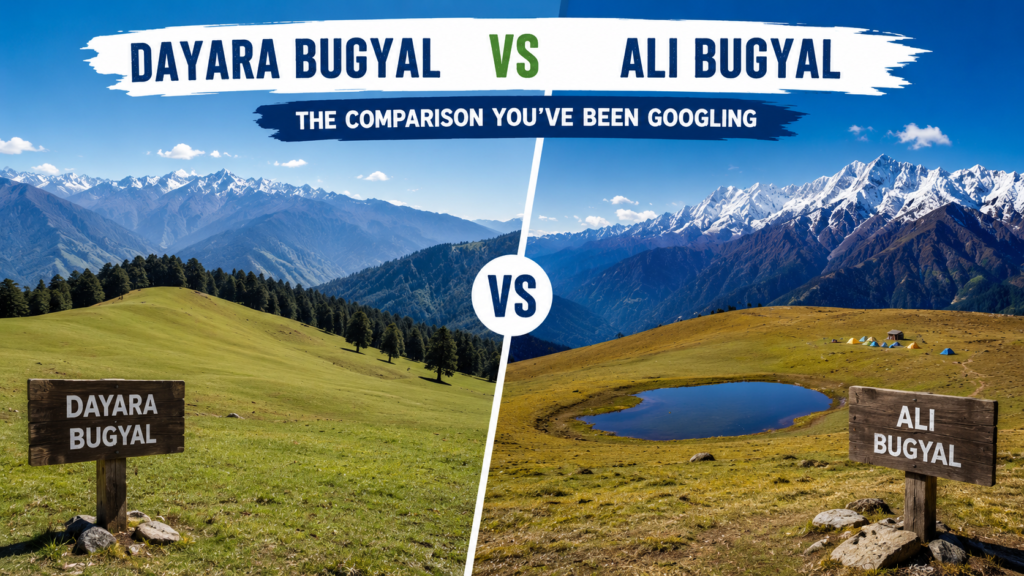
Because almost everyone planning a Uttarakhand meadow trek ends up comparing these two. Fair.
I’ve done both. Twice each. Here’s the honest breakdown — not the “both are beautiful in their own way” cop-out.
The terrain difference:
Dayara is one massive, connected, sprawling meadow complex. It feels endless. You can walk for 3 hours and still not see its edges. Ali Bugyal (and its connected Bedni Bugyal) is gorgeous but broken up differently — more defined into distinct meadow patches with forest breaks between them.
The effort-to-view ratio:
Dayara wins this hands down. Barsu to the main meadow is 7 km of moderate trekking. The Ali Bugyal trek from Lohajung is longer and has steeper sections. Dayara gives you an easier climb for an equally spectacular meadow payoff.
The mountain views:
Dayara faces the Gangotri range — Bandarpunch, Black Peak, Srikanth, and the Gangotri peaks. Sharp, jagged, dramatic. Ali Bugyal faces Trishul and Nanda Ghunti — the Nanda Devi region. Different peaks, equally stunning. Honestly, this one’s a draw.
The crowds:
Ali Bugyal gets more traffic because it’s on the Roopkund trek route (one of Uttarakhand’s most popular treks). Dayara is quieter, especially outside peak summer weekends.
The village experience:
Both have beautiful start-point villages. Lohajung (for Ali) has better infrastructure and more accommodation. Barsu and Raithal feel more genuinely remote and untouched.
My verdict: If you’re a first-time Himalayan trekker, pick Dayara. The easier approach, the instant meadow reward, the lower altitude, the better camping — it’s more forgiving and equally beautiful. If you’re experienced and want a longer, more challenging trek with cultural stops, combine Ali + Bedni Bugyal.
But if someone asks me “which one meadow should I see?” — Dayara. Every time.
Frequently Asked Questions
Is Dayara Bugyal trek dangerous or difficult?
Not dangerous by Himalayan standards. The trails are well-defined, the altitude is moderate (11,800 ft), and there’s no technical climbing. Difficulty level: easy to moderate. The Raithal route is steeper and more physically demanding. Winter snow adds difficulty but not technical danger on the standard route. Solo trekkers with basic navigation skills can manage the Barsu route in good weather without a guide.
Dayara Bugyal vs Ali Bugyal — which one should I choose?
For beginners: Dayara (easier climb, instant rewards). For experienced trekkers wanting more challenge: Ali + Bedni. For solitude: Dayara is quieter. For infrastructure (more guesthouses, easier logistics): Ali Bugyal via Lohajung has better facilities. Both offer spectacular high-altitude meadow experiences.
Can I do Dayara Bugyal trek as a complete beginner?
Yes — with caveats. Choose the Barsu route, hire a local guide (₹1,500–2,500/day), trek in May/June or October (avoid winter for first trek), and spend a night in Barsu for acclimatization. The trek is short and the trail is clear. Thousands of beginners successfully complete this trek annually.
What’s the camping situation on Dayara Bugyal?
Organized camps operate in peak seasons (₹3,000–6,000/person including meals). Independent camping is allowed with Forest Department permission (obtain in Uttarkashi, ₹150–250/tent/night). In winter, camping is harder — you’re pitching on snow, melting snow for water, and dealing with sub-zero nights. Winter independent camping: experienced campers only.
How much does the Dayara Bugyal trek actually cost in 2026?
Solo budget trip from Delhi: ₹6,000–7,500 total (3–4 days). Mid-range group trip: ₹9,000–12,000 per person. Premium guided experience: ₹18,000–25,000 per person. This includes all transport, food, accommodation, and permits. The biggest variable is whether you fly to Dehradun or take the bus.
Is Dayara Bugyal safe for solo female travelers?
Yes, with standard precautions. The villages (Barsu, Raithal) are safe and welcoming. Hiring a local guide provides both navigation help and an added layer of security. The trek sees plenty of solo female travelers during peak seasons. Avoid trekking alone in the complete off-season (monsoon) when trails are empty.
Will my phone work on Dayara Bugyal?
Jio: No. Airtel: Unreliable (maybe 1 bar near forest rest house). Vodafone: Same. BSNL: Yes — calls and spotty 2G work on most of the meadow. Download offline maps, inform family about communication gaps, and treat this as a blessing in disguise.
The Meadow That Stays With You
There’s a moment, if you wake up early enough on Dayara, when the sun hasn’t crested the eastern ridge but the sky is already bleeding orange and pink. The Gangotri peaks catch the light first — Bandarpunch turning gold at the very tip, like someone’s touching a match to the summit. The meadow is still half-dark. Your breath comes out in clouds. And for maybe ten minutes, the entire world is silent except for the wind moving through grass you can’t see.
That feeling — standing in cold grass at 11,800 feet, watching mountains catch fire, knowing you walked here on your own two legs — that’s what this trek gives you.
With the improved road access to Barsu (widened in late 2025), better homestay networks, and Forest Department streamlining camping permits, 2026 is genuinely the easiest year yet to experience Dayara Bugyal. The infrastructure is catching up without spoiling what makes the place special.
Don’t overthink it. Pick your dates. Book the bus or the flight. Pack your layers.
The meadow’s been waiting for centuries. It’ll wait a few more weeks for you.
Ready to plan your Dayara Bugyal trek? Explore more trekking guides, itineraries, and local insights on Uttarakhand.Tours. If this guide helped you, share it with your trekking group — it makes a difference.
Some sunrises you photograph. Dayara’s sunrise photographs you back.