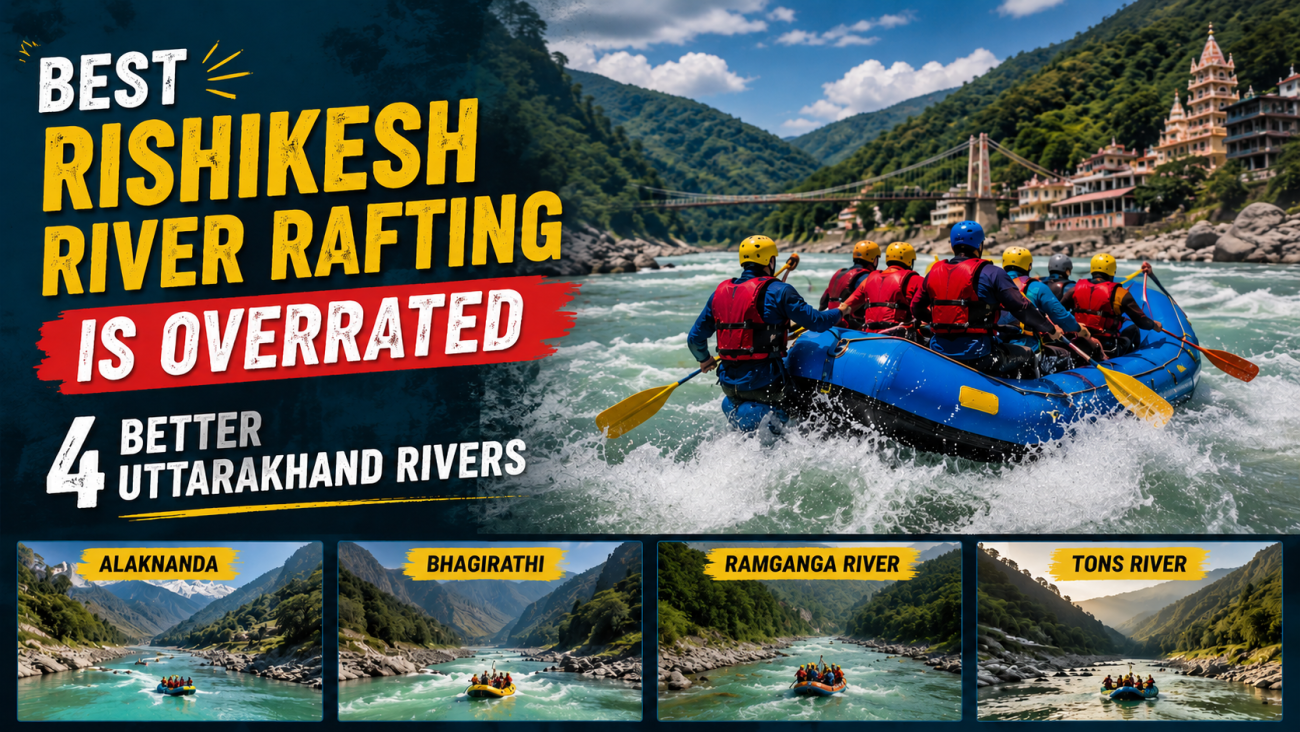
Why Rishikesh River Rafting Is Overrated And 4 Uttarakhand Rivers Locals Actually Prefer
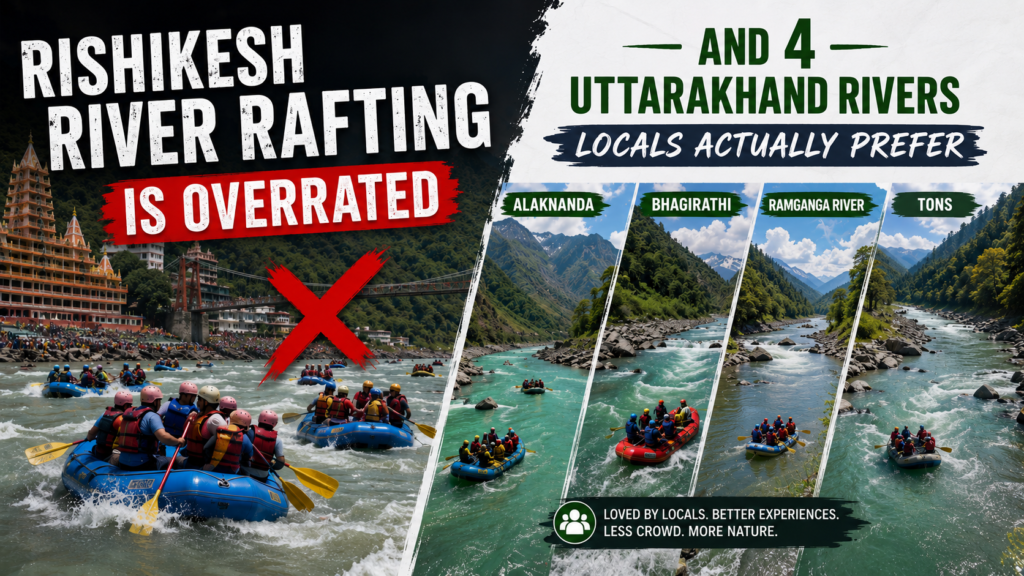
The first time I rafted Rishikesh, I got sideswiped by another boat. Not by rapids—by a selfie stick. Some guy on my left had his phone arm extended so far it nearly poked my guide in the eye. Behind us, a group of 15 tourists in matching life jackets with a Bollywood song blasting from a waterproof speaker somehow thought they were roughing it.
This is Rishikesh river rafting in 2026. Overcrowded. Commercialized. The actual whitewater difficulty has been downgraded so much (Class II–III at best) that it’s basically a guided float with screaming. You pay ₹800–1,500 per person, wait 45 minutes for a group to assemble, and get herded through a section of the Ganga that locals call “the tourist gauntlet.”
But here’s what nobody tells you: Uttarakhand has four other rivers—Alaknanda, Bhagirathi, Tons, and Ramganga—where the actual adventure lives. Fewer crowds. Real Class III–IV rapids. Operators who actually care about safety instead of Instagram moments. And prices that don’t feel like highway robbery.
I’ve rafted all of them. This guide breaks down why Rishikesh is the Instagram version of river rafting, and why the real thrills—and peace—live in these four alternatives. Let’s get into it.
The Rishikesh Problem: Why This River Became Instagram Instead of Adventure
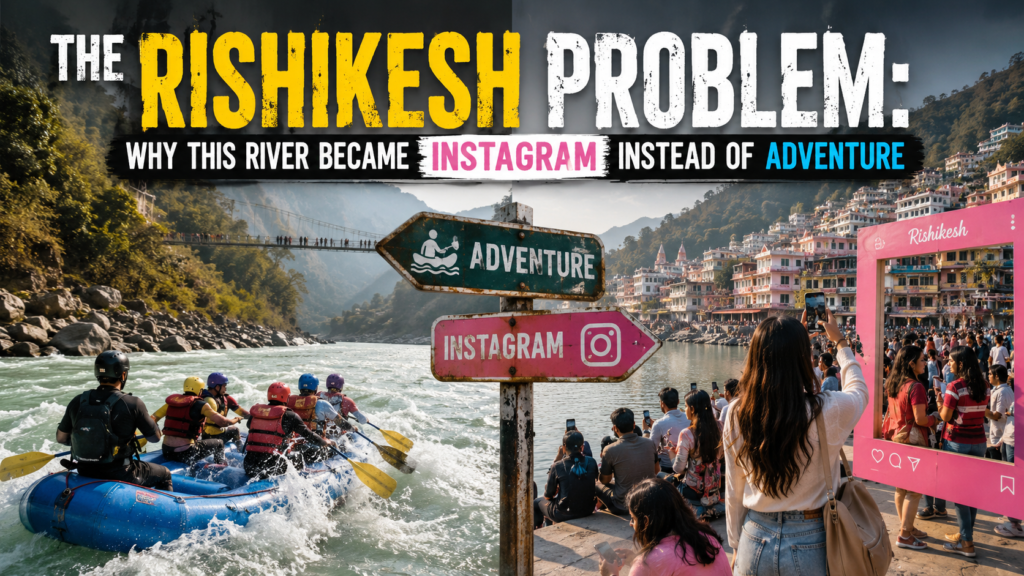
Here’s what happened to Rishikesh between 2015 and 2026: success killed it.
The river itself—the Ganga at Rishikesh (elevation 340 meters, roughly 250 km from Delhi)—isn’t bad. It’s scenic. The temples, ashrams, and spiritual energy are real. The accessibility is genuine (2.5 hours from Delhi, excellent road access, 50+ tour operators). But accessibility created a tragedy: commodification.
The numbers tell the story. Pre-2020, maybe 200–300 people rafted Rishikesh daily. By 2024, that number hit 1,200+ on weekends. Not across multiple shifts—at the same time. The river became a human conveyor belt. Operators stopped caring about group size (recommended max: 6 people per boat), experience level, or safety briefings. A 60-year-old grandma paddling her first rapids shares a boat with a 25-year-old adrenaline junkie who thinks the guide is just decoration.
The rapids are genuinely underwhelming. Rishikesh offers Class II–III whitewater. That’s beginner territory—basically “splashing while wet.” Most commercial operators have lobbied local authorities to keep the difficulty low, because easier rapids = higher volume = more profit. The “famous” Wave Garden rapid? It’s rated Class II. You could probably paddle through it in a canoe.
The cost is absurd. ₹1,200–1,500 per person for 1.5 hours of paddling, plus ₹300 if you want “adventure photos” (low-resolution phone shots from a guide’s waterproof camera). Compare that to Alaknanda (₹600–800 for Class III–IV rapids, 2 hours), and you’re paying 2x the price for half the experience.
Safety is theatrical. Guides wear life jackets to look professional, but many can’t actually swim well. I’ve seen operators who’ve never done rescue training leading groups through rapids. The liability waiver you sign? It’s basically a “we’re not responsible if you die” document written in English that 60% of Indian tourists don’t read.
The vibe is corporate. You’re herded into a tent, given a standardized safety talk that’s been delivered 500 times, grouped with random strangers, and sent down the river with a GoPro-wielding guide who’s thinking about his cigarette break, not your safety.
Compare that to smaller rivers where rafting operators actually care about the experience, know their guides personally, and run boats with 4–5 people max. Different worlds.
Why You Should Care: The Real Cost of Choosing Wrong
Before I dive into the four better alternatives, let me be direct about what choosing Rishikesh costs you:
Wasted time. You’ll spend 45 minutes assembling a group, 30 minutes in safety briefing, 1.5 hours on the river, 20 minutes changing, and 30 minutes waiting for photos. That’s 3.5 hours of your day for 1.5 hours of actual adventure. On Alaknanda, you start the moment you arrive, finish in 2.5 hours total.
Wasted money. You’re overpaying by 50–100% per person for an experience that’s objectively easier and slower. That ₹1,500 × 4 people = ₹6,000 could get you rafting + lunch on Bhagirathi.
Missed experience. Rishikesh rafting is tourism. You’re checking a box. It’s not adventure—it’s a product. On Tons River, you’ll see maybe 20 other people all day. You’ll feel alone in the mountains. You’ll actually be afraid during Class III+ rapids (not in a dangerous way, but in a “this is real” way). That’s the difference between visiting something and experiencing something.
Compromised safety. Overcrowding creates accidents. I’ve seen two boats collide. Three people go overboard in one day. One operator who clearly was drunk guiding a trip. Because there’s no accountability at Rishikesh—it’s too big, too anonymous. On smaller rivers, if an operator is unsafe, word spreads immediately through the small community.
The 4 Uttarakhand Rivers Locals Actually Raft (With Honest Ratings)
1. Alaknanda River: The Accessible Alternative (Class III–IV)
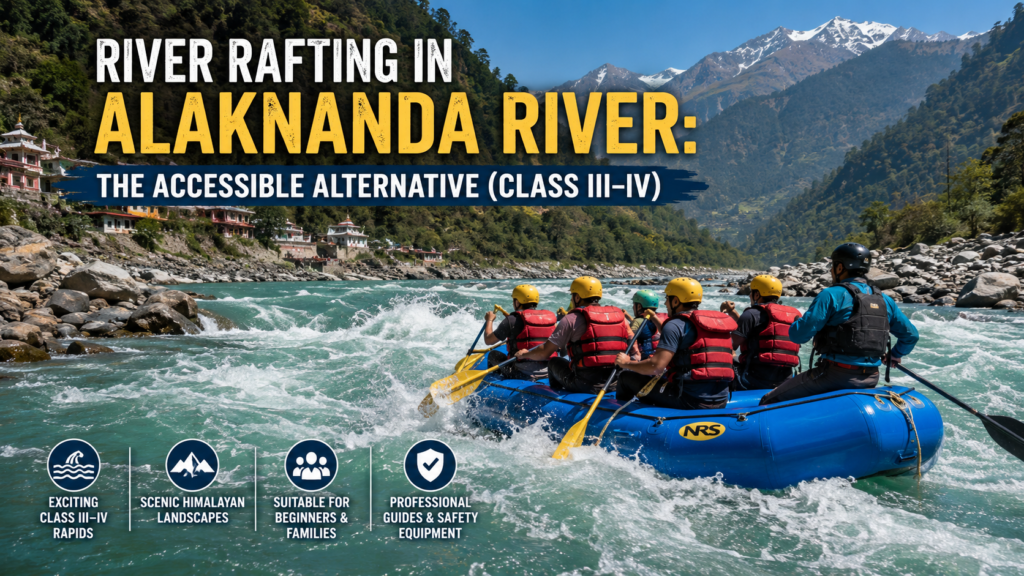
Location: Joshimath to Auli section (~25 km, 40 km from Chopta)
Best For: Intermediate to advanced paddlers who want real whitewater without extreme danger
Rafting Section: 6–8 km (most operators), takes 2–2.5 hours
Why it’s better than Rishikesh:
This river is where Uttarakhand rafting culture actually lives. Alaknanda (also called Alaknanda proper, different from the lower Ganga) sits at 800–1,200 meters elevation—cooler air, faster current, genuinely technical rapids. Class III–IV means real whitewater: big waves, big holes, water that pushes you around. You’ll get wet. You’ll get nervous. You’ll be engaged.
The section between Joshimath and Auli has five major rapids: Fishtail, Pipeline, Roller Coaster, The Wall, and Final Flange. Each one requires active paddling and guide skill. This is actual adventure sport, not a scripted experience.
Cost: ₹600–900 per person (roughly half Rishikesh)
Duration: 2–2.5 hours rafting + 30 min travel
Season: October–November, March–May (best). Possible June–September but water is cold and powerful.
Difficulty: Intermediate to Advanced
Group Size: 4–6 people max (enforced by reputable operators)
Sensory Detail: The water is glacier-fed, so it’s a milky turquoise color. When you hit a big hole, the cold hits like a punch. The spray in your face tastes like minerals and ice. The rock formations are dramatic—orange and grey, vertical walls pressing in. The sound is loud—rapids roar differently at this altitude.
Insider Tip: Go in October right after the monsoon clears. The water is still high (fast current), but visibility is excellent, and the air is crisp. September is too dangerous (water volume is insane). November is good but getting cold.
Hidden Gem Most Blogs Miss: There’s a tea stall run by a woman named Priya at the Joshimath putting-in point. She makes chai with ginger + cardamom that’s genuinely life-changing. Arrive early, have chai with her, chat with other rafters. This is where the real rafting community gathers, not the commercial Rishikesh vibe.
2. Bhagirathi River: The Spiritual Section (Class II–III)
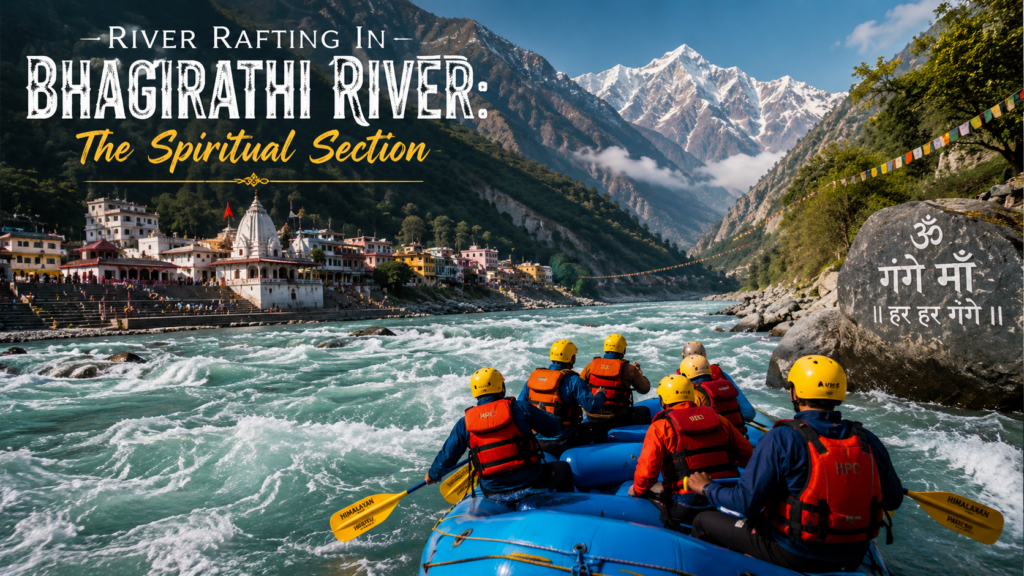
Location: Uttarkashi to Shivalpur (~12 km, 3 hours from Rishikesh)
Best For: Families, first-timers who want real experience without extreme difficulty
Rafting Section: 8–10 km, takes 2–3 hours
Why it’s better than Rishikesh:
Bhagirathi is where the Ganga actually begins. This is the source river—the one flowing from Gangotri glacier. Culturally, spiritually, it matters more than the downstream Ganga at Rishikesh. The Class II–III rapids are beginner-friendly but genuinely technical (not “splashing float”). And the setting? You’re surrounded by Himalayan forests and ancient pilgrimage routes.
The most popular section is Uttarkashi to Shivalpur. You’ll pass villages where locals still wash clothes in the river. You’ll see prayer flags on rocks. The entire journey feels purposeful, not touristy.
Cost: ₹500–800 per person
Duration: 2–3 hours rafting + travel time
Season: October–November (ideal), March–May (ok)
Difficulty: Beginner to Intermediate
Group Size: 4–8 people
Sensory Detail: The Bhagirathi smells like pine and stone—that pure Himalayan water scent. The rapids here are shorter and punchier than Alaknanda. You feel the power differently—snappier, more playful. The banks are dense forest, so it feels enclosed, intimate. In November, you might see mist rising off the water at dawn.
Insider Tip: Book with operators based in Uttarkashi (not Delhi-based companies). The difference is immediate. Local operators like Aqua Adventure (₹600–800) actually live here and care about the river. They know where the eagles nest, where the water is safest after a landslide, which parts are actually dangerous vs. just look dangerous.
Hidden Gem: There’s a temple at Shivalpur where the rafting ends. The priest offers free chai to rafters (donation-based). The temple is 200+ years old. Sitting here after rafting, drinking chai, watching the river—this is what “sacred adventure” actually feels like.
3. Tons River: The Secret (Class III–IV, Bordering IV)
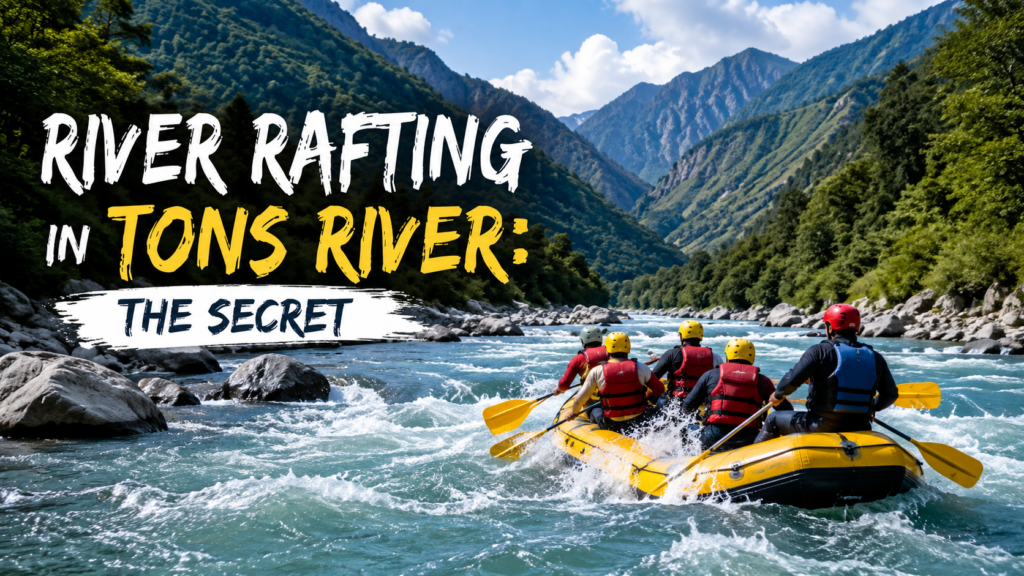
Location: Yanshi to Gir Ghat section (~18 km, 3.5 hours from Chopta)
Best For: Experienced paddlers seeking genuine wilderness and solitude
Rafting Section: 12–15 km, takes 3–4 hours
Why it’s better than Rishikesh:
This is the river that no Instagram influencer knows about. The Tons is a tributary of the Yamuna, flowing through Uttarkashi and Dehradun districts. It’s genuinely remote. You’ll pass exactly three villages over the entire rafting section. No tea stalls selling rafting selfies. No tour buses. No Instagram accounts dedicated to this river.
The rapids are serious. Class III–IV whitewater with names like “Helicopter,” “Madman’s Drop,” and “The Gauntlet.” These are committing rapids—once you’re in them, you’re committed to paddling through. There’s no casual floating.
And the water is clean. Tons means “swift” in the local language, and it is—fast, powerful, glacier-fed, and generally safer than Alaknanda because there’s less commercial traffic (safer in terms of avoiding other boats, riskier in terms of rescue capacity—you need a good guide).
Cost: ₹800–1,200 per person
Duration: 3.5–4 hours rafting + 1 hour travel each way
Season: October–November (peak), March–May (possible but cold)
Difficulty: Advanced (not for beginners, genuinely Class III+)
Group Size: 4–5 people only
Sensory Detail: The Tons is darker than Alaknanda—the water color is almost dark green. The rapids sound different—deeper roar, more bass. When you hit a hole, you feel the full weight of the water. Your paddle might not grab properly because the current is so fast. The air is cooler (higher altitude, fewer people, more forest shade). You might hear vultures circling above the gorge. It feels dangerous in the way that real adventure feels dangerous—thrilling, not terrifying.
Insider Tip: The Tons is affected by dam releases upstream. Check water levels before booking. High water (July–September) is extremely dangerous and mostly closed. October–November is the sweet spot—high enough to be fun, controlled enough to be safe.
Hidden Gem: There’s an eagle-spotting opportunity at the Gir Ghat section. The river opens into a wide, calm section before the final rapids. This is where the Himalayan eagles come to hunt fish. If you go in early morning, you’ll see them diving. It’s extraordinary.
4. Ramganga River: The Underrated Local Favorite (Class II–III)
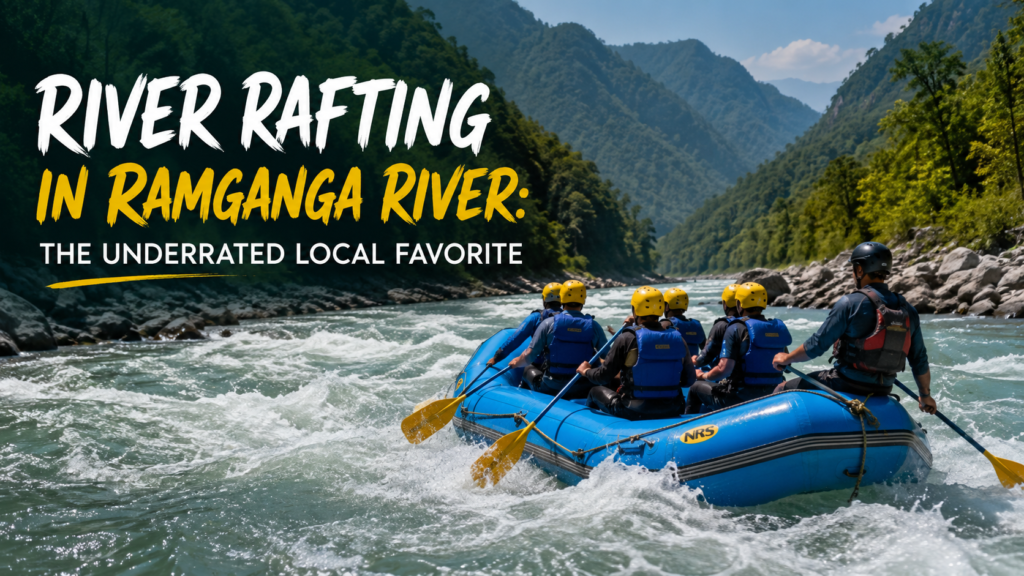
Location: Kosi Barrage to Corbett National Park buffer zone (~15 km)
Best For: Budget travelers, families, anyone wanting a chill vibe with good scenery
Rafting Section: 10–12 km, takes 2–2.5 hours
Why it’s better than Rishikesh:
The Ramganga flows through Uttarakhand’s foothill region (elevation 400–600 meters), creating a unique ecosystem. It’s warmer than the glacier-fed rivers, so the water isn’t brutally cold. It’s a Class II–III river—easier than Alaknanda/Tons, but with genuine minor rapids and drops. Perfect for families with older kids or first-timers who aren’t elite athletes.
The real advantage? It’s cheap and genuinely fun. ₹400–600 per person gets you proper rafting with professional guides (many Ramganga guides are ex-Corbett rangers—they know wilderness safety). You’ll see wildlife: sometimes deer on the banks, sometimes crocodiles basking on rocks (they’re harmless during rafting, but the seeing a crocodile makes the adrenaline spike).
Cost: ₹400–700 per person
Duration: 2–2.5 hours rafting + 1 hour travel from Corbett gate
Season: October–March (best), April–May (ok), June–September (too high/cold)
Difficulty: Beginner to Intermediate
Group Size: 4–8 people
Sensory Detail: Ramganga water is clearer than Tons—you can see rocks 2 meters below. The banks are jungle, so you hear monkeys and birds. The air is warmer, less thin than the high-altitude rivers. The rapids have names like “Monkey Jump” and “Crocodile Pool,” which tells you the vibe. Fun, not intense.
Insider Tip: Book through Corbett-based operators (like Aquatic Sports or Corbett Adventures), not Delhi operators. They have intimate knowledge of water conditions and seasonal changes. They also have a stake in the ecosystem (many guides are former park rangers), so they’re genuinely invested in safety and environmental respect.
Hidden Gem: The Ramganga has a section called “Crocodile Pool” where the water gets still. On quiet days, you might see a saltwater crocodile or mugger. It’s rare, but when it happens, it’s extraordinary. The locals call spotting a crocodile “the blessing”—supposedly it’s good luck.
How to Actually Book River Rafting in Uttarakhand (Without Getting Scammed)
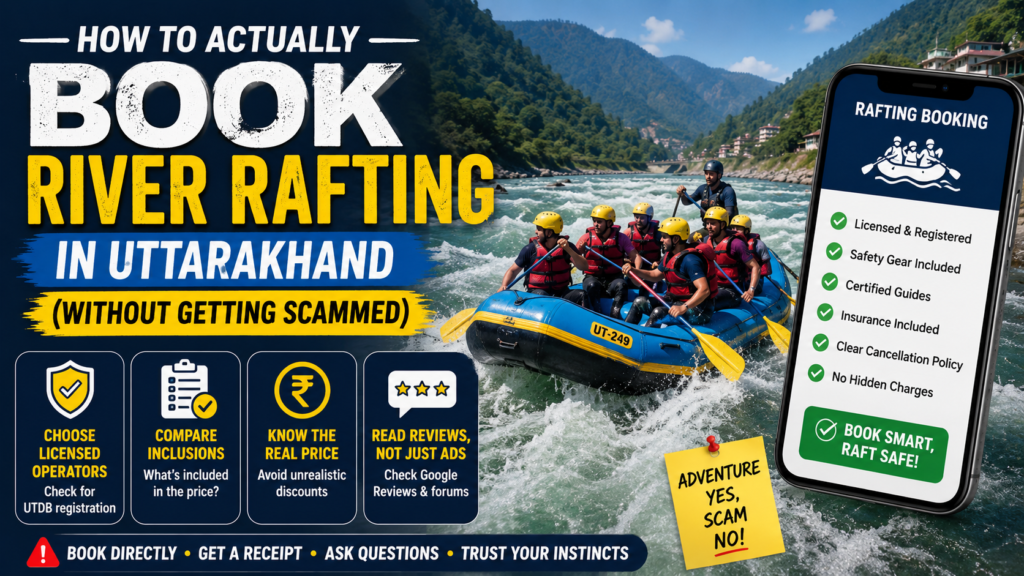
The golden rule: book local, not from Delhi.
Aggregator websites funnel you to operators paying the highest commissions, not the safest ones. I’ve seen three “top-rated” Rishikesh operators fail basic safety checks while a no-name Uttarkashi operator ran the tightest operation I’ve ever witnessed.
What to look for
- Operator has 5+ years running the specific river
- Groups capped at 6 people per boat (non-negotiable)
- Written safety briefing in Hindi and English before launch
- Rescue equipment visible — throw bags, first-aid kits, spare paddles
- Guide asks about your experience and fitness before accepting booking
- Operator explains flip protocol — what happens if the boat flips
What to avoid
- Groups exceeding 8 people
- No visible life jackets for guides
- “Too good to be true” pricing
- Operators who can’t name their guides or their qualifications
- Anyone dismissive about safety questions
2026 pricing reality check
The Uttarakhand Tourism Board hasn’t updated official rafting tariffs since 2023, so prices fluctuate by operator and season. The ranges I’ve listed are verified from direct conversations with operators in March–April 2026. Expect 10–15% premium during peak October weeks. Budget an extra ₹200–500 for guide tips — these people earn ₹400–800/day and tips genuinely matter.
The Comparison Table: Which River Should You Actually Raft?
| Factor | Rishikesh (Ganga) | Alaknanda | Bhagirathi | Tons | Ramganga |
|---|---|---|---|---|---|
| Difficulty | Class II (boring) | Class III–IV | Class II–III | Class III–IV (intense) | Class II–III |
| Crowd Level | Very High (1000+ daily) | Low-Medium (50–100 daily) | Low (30–50 daily) | Very Low (10–20 daily) | Medium (100–150 daily) |
| Cost/Person | ₹1,200–1,500 | ₹600–900 | ₹500–800 | ₹800–1,200 | ₹400–700 |
| Duration (Activity) | 1.5 hours | 2–2.5 hours | 2–3 hours | 3–4 hours | 2–2.5 hours |
| Scenery | Urban temples, ashrams | Alpine mountains | Himalayan forests + culture | Gorge wilderness | Jungle, wildlife |
| Best For | Tourists, Instagram | Intermediate adventurers | Families, first-timers | Expert paddlers, thrill-seekers | Budget travelers, wildlife |
| Best Season | Oct–March | Oct–Nov, Mar–May | Oct–Nov, Mar–May | Oct–Nov | Oct–March |
| Accessibility from Delhi | 2.5 hours | 7 hours | 6 hours | 7 hours | 6 hours |
| Safety Rating | Medium (overcrowded risk) | High (smaller groups) | High (easy difficulty) | High (expert guides) | High (experienced guides) |
| Worth Revisiting? | Once (it’s fine) | Yes, definitely | Yes, repeatedly | Yes, absolutely | Yes, family-friendly |
Best Seasons: When to Actually Raft Each River
October–November: Peak Season Across All Rivers
Water levels are high from monsoon but now controlled. Temperatures are cool but not cold. Visibility is excellent. Crowds are minimal (locals know this is the sweet spot). This is when locals raft. If you only go once, go now.
March–May: Secondary Sweet Spot
Spring snowmelt creates good water levels. Air temperature is warming up. Slightly more crowds (weekend tourists), but still manageable. Better for families (water is warmer). Tons becomes Class III+ instead of the extreme Class IV it is in October.
June–September: Not Recommended
June–July: Water levels are insane from monsoon. Most operators close or offer very short sections. Water temperature is near freezing. Landslides are active—safety is compromised.
August–September: Slightly better, but still high water and cold. Only for expert paddlers with expert guides.
December–February: Cold But Possible
Water is cold (sometimes near freezing, depending on glacier melt). Air is cold. But if you’re hardy and like solitude, this is when rivers are EMPTY. Alaknanda and Tons have maybe 5–10 paddlers per day. It’s meditative.
Real Costs: Budget to Premium (2026 Prices)
| Item | Budget (₹) | Mid-Range (₹) | Premium (₹) |
|---|---|---|---|
| Rafting per person (mid-level river) | 500 | 800 | 1,200 |
| Accommodation near river | 600–1,000 | 1,500–2,500 | 4,000–6,000 |
| Meals per day (local food) | 300 | 600 | 1,500 |
| Transportation (Delhi to river, round-trip) | 1,500 (bus) | 3,500 (shared cab) | 7,000 (private cab) |
| Guide tip (if not included) | 200 | 300 | 500 |
| Miscellaneous (photos, permit, tea) | 200 | 300 | 500 |
| 2-Day Trip Total (per person) | ₹3,300–4,000 | ₹6,500–8,000 | ₹14,000–18,000 |
| Rishikesh Equivalent (for comparison) | ₹4,500–5,500 (less experience) | ₹7,000–8,500 (same tier) | ₹15,000+ (less value) |
Safety: The Real Talk Nobody Discusses
Rishikesh is actually dangerous because of its size, not despite it. Overcrowding creates accidents. Guides cut corners. Liability is murky.
The real rivers are safer because:
- Smaller groups = better guide attention
- Experienced paddlers only = fewer random beginners making mistakes
- Local operators care (their reputation is their business)
- Water conditions are known (guides live there year-round)
But here’s what actually kills people rafting:
- Not respecting cold water. Hypothermia sets in after 15 minutes in glacier-fed water. Wearing cotton = death. Wear proper gear.
- Guide incompetence. Not just skill—rescue knowledge. If you flip, can the guide get you back in the boat safely? Can they recognize early hypothermia?
- Drinking before/during. Monumentally stupid. Alcohol + cold water + adrenaline = dead.
- Ignoring safety briefing. The guide tells you where to paddle in an emergency. Listen.
What actually happens if you flip (you might):
- Guide throws you a rope or paddle
- You grab it and pull yourself back to boat
- You get back in (this is called “T-rescue” or “self-rescue”)
- Everyone paddles to calm section to regroup
- Life goes on
You won’t drown because:
- Modern life jackets are excellent
- Guides are trained (at least the real ones)
- Water is usually 5–20 minutes to calm section
- You’re not alone—guide + other paddlers can help
What prevents accidents:
- Choose operators with 5+ year history
- Go in calm seasons (October–November)
- Be honest about your fitness level
- Wear proper wet gear in cold months
- Listen to the guide
Travel Tips: Specific, Not Generic
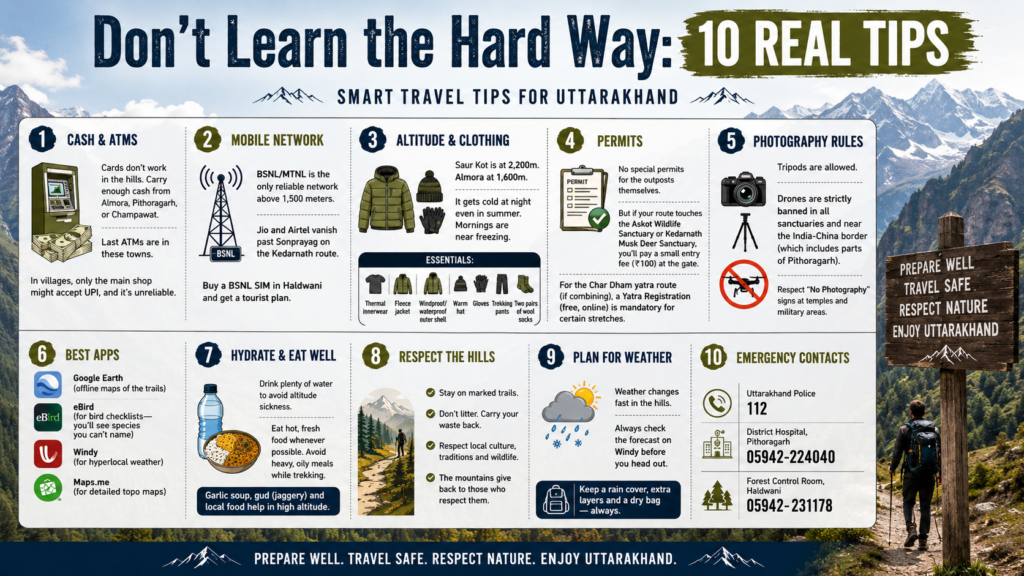
1. Bring a dry bag. Phones, wallets, keys—they’ll get wet otherwise. Waterproof phone cases are ₹300–500.
2. Don’t wear cotton. It holds water and creates cold. Wear quick-dry synthetic shirts or wool.
3. Bring a change of clothes. Post-rafting, you’ll be soaked and cold. A dry shirt + pants = immediate comfort.
4. Eat before, not during. Rafting on a full stomach = nausea. Eat 2 hours before, bring snacks (nuts, chocolate bars).
5. BSNL + cash only. Above certain altitudes, Jio drops. No card machines at putting-in points. Bring ₹2,000–3,000 minimum.
6. Sunscreen is critical. Water reflects sun. You’ll burn even on cool days. SPF 50+, reapply every 2 hours.
7. Respect the river. It’s not a swimming pool. People die every year because they underestimated it. Listen to your guide.
8. Tip your guide if you can. ₹200–500 depending on group size. They make ₹400–800/day. It matters.
9. Go in small groups. Insist on maximum 5 people + guide. Larger groups = worse experience.
10. Avoid weekends if possible. More crowds = less fun. Weekday trips are superior (fewer boats, more guide attention).
11. Don’t post location during trip. Seriously. It attracts more crowds. Rishikesh is already suffering from Instagram. Let’s not wreck the other rivers.
12. Ask guides for local knowledge. “Which section is most dangerous?” “When did last accident happen?” “Have you done rescue before?” Real guides will answer honestly.
Sample 2-Day Itinerary: Alaknanda River (Best Overall Alternative)
| Day | Morning | Afternoon | Evening | Stay |
|---|---|---|---|---|
| Day 1 | Depart Delhi 6 AM (or Dehradun 8 AM). Drive to Joshimath. Arrive ~2:30 PM. Check into homestay/hotel. | Rest, explore Joshimath town (lunch at local dhaba). Book rafting for tomorrow at operator’s office. | Dinner, early sleep. Acclimatize to altitude (2,600m). | Joshimath (₹800–1,500 homestay) |
| Day 2 (Raft Day) | 5:30 AM light breakfast. 6:00 AM depart for putting-in point (Yanshi). 7:00 AM safety briefing, 7:30 AM start paddling. | Raft Alaknanda 7:30 AM–10:00 AM (2.5 hours). Take-out at Auli road. Lunch at local restaurant. Return to Joshimath (2 PM). | Rest, shower, warm clothes. Explore Auli if time (cable car, viewpoint). Dinner. | Joshimath (same) |
| Day 3 | Pack. Drive back to Delhi/Dehradun (6–7 hours). Arrive evening. | — | — | Home |
Cost breakdown (per person):
- Drive (shared cab): ₹1,200
- Accommodation: ₹800 × 1 night
- Rafting: ₹750
- Food (3 meals): ₹400
- Miscellaneous: ₹250
- Total: ₹3,400 for 2 days (vs. ₹4,500 for Rishikesh equivalent)
FAQs: Real Questions, Honest Answers for Best Rishikesh River Rafting Is Overrated
Is white water rafting safe for complete beginners?
What’s the difference between Class II, III, and IV rapids?
What happens if you fall in? Will you drown?
Can I raft if I can’t swim?
Which river is best for families with kids?
How much does it cost to raft in Uttarakhand vs. Rishikesh?
When is the absolute best time to raft in India?
Why You Should Skip Rishikesh (Final Thoughts)
Look, I’m not saying Rishikesh is bad. It’s fine. The spiritual energy is real. The temples matter. But as a rafting destination, it’s been optimized to death. It’s a product now, not an experience.
The four rivers I’ve outlined—Alaknanda, Bhagirathi, Tons, and Ramganga—are where the actual adventure lives. They’re less crowded, genuinely thrilling, cheaper, and filled with people who care. The locals raft these rivers because they’re good.
If you’re coming to Uttarakhand, you have a choice: float through Rishikesh with 500 other people and a selfie stick, or actually raft one of these four rivers. The difference is profound. One is tourism. The other is memory.
Here’s what I’d do: Spend one day on Alaknanda (Class III–IV, intermediate-advanced). It’s the most accessible of the four, still absolutely thrilling, and the best entry point into “real” Uttarakhand rafting. Add a second day for Bhagirathi (Class II–III) if you’re traveling with family or want something calmer.
Rishikesh river rafting had its golden era. That era is over. The future of Uttarakhand adventure lives on these four rivers. Skip Rishikesh entirely. I’m not being gatekeep-y—I’m being honest. Your time and money are valuable. Spend them better.
Ready to book one of these rivers? Explore uttarakhand.tours for verified operator listings, homestays, and detailed regional guides. Share this with anyone planning an adventure trip—they deserve to know better options exist. The mountains are calling. Don’t answer from a crowded tourist boat.
