


Table of Contents
Stargazers Uttarakhand and Best Places to See the Night Sky
Stargazing in Uttarakhand, The modern world rarely sleeps. Our cities bask in an eternal twilight of streetlights and neon, billboards and glowing screens. For a lot of us, real darkness is a thing of the past; we see the Milky Way only in pictures in books. But high in the Himalayas, above the urban haze, the heavens still unabashedly rule.
And to think that Uttarakhand is not just all about spiritual salvation. It is a direct conduit to the cosmos. With its lofty altitude, thin air and lack of light pollution, the state in northern India is increasingly looking like a prime spot for astro-tourism. Because when the sun starts dipping behind those snow-capped mountains, other magic happens. And the sky turns into a dark velvet carpet sprinkled with diamonds, presenting a heavenly spectacle that enchants astronomers and everyday dreamers.
In this guide, we will cover the best locations for stargazing in Uttarakhand and give you tips to practically chase stars.
Why Uttarakhand is Ideal for Astro-Tourism and Stargazing in Uttarakhand
Three things are needed for Stargazing in Uttarakhand— darkness, altitude and clear air. Uttarakhand is blessed with big dollops of them all. The state has extensive protected forests and remote hill stations where artificial light is not abundant. That’s because higher up, there is literally less atmosphere between you and the stars, making for a much sharper and brighter view of distant objects.
Whether you’re on the hunt for the Andromeda Galaxy or just want to lay back and count shooting stars, these spots provide a front row seat.
Best Places to Visit Stargazing in Uttarakhand
Auli: Ski Slopes and Starry Nights!
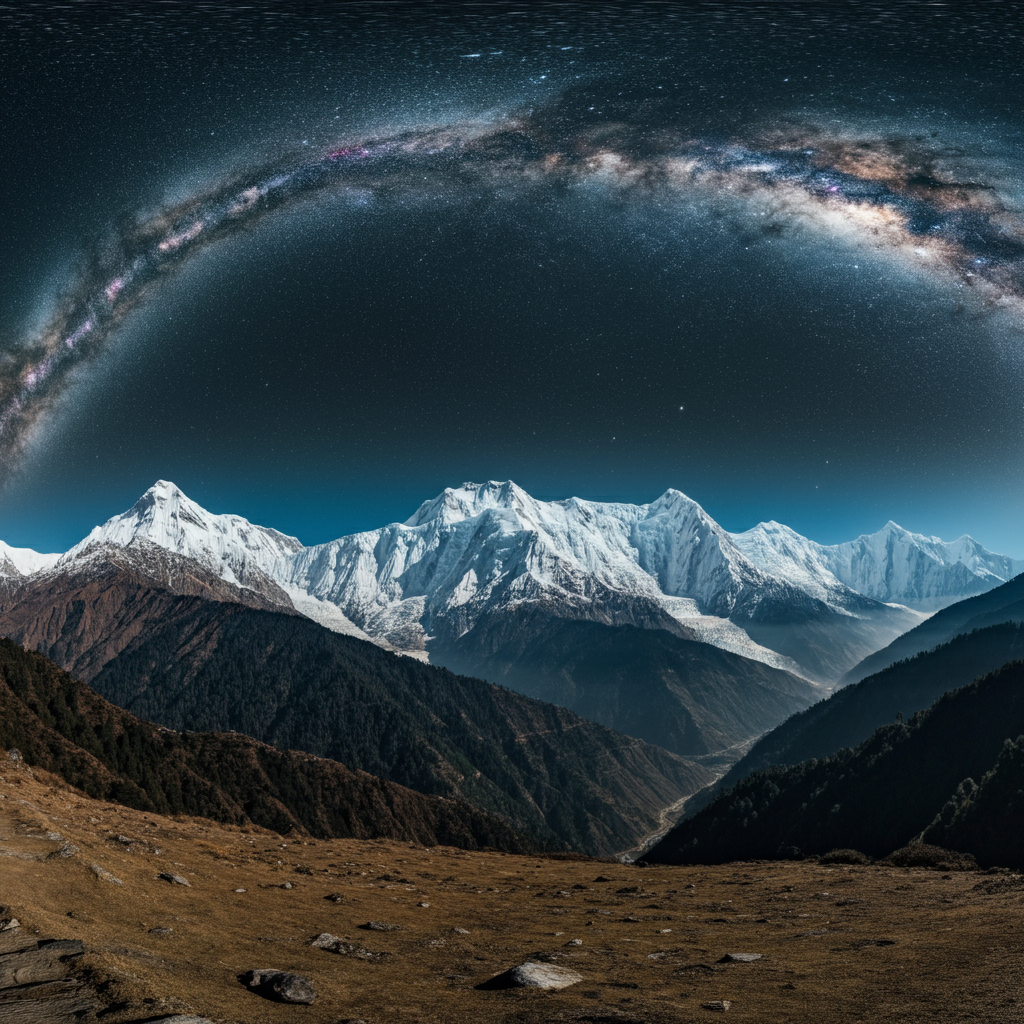
Well known for being the skiing capital of the country, Auli changes its colors once the snow covers and when at dark. At about 2,800 meters (9,000 feet), Auli has a panoramic view of the Nanda Devi range.
And with relatively little heavy commercialization here, light pollution is minimal. You can place a telescope near the artificial lake, or just get away from it all on these slopes. According to Spain’s tourism bureau, the fresh mountain air has such a high degree of transparency that constellations like Orion and Ursa Major are easy to see. Know more about Auli
Chopta: India’s Very Own Mini Switzerland
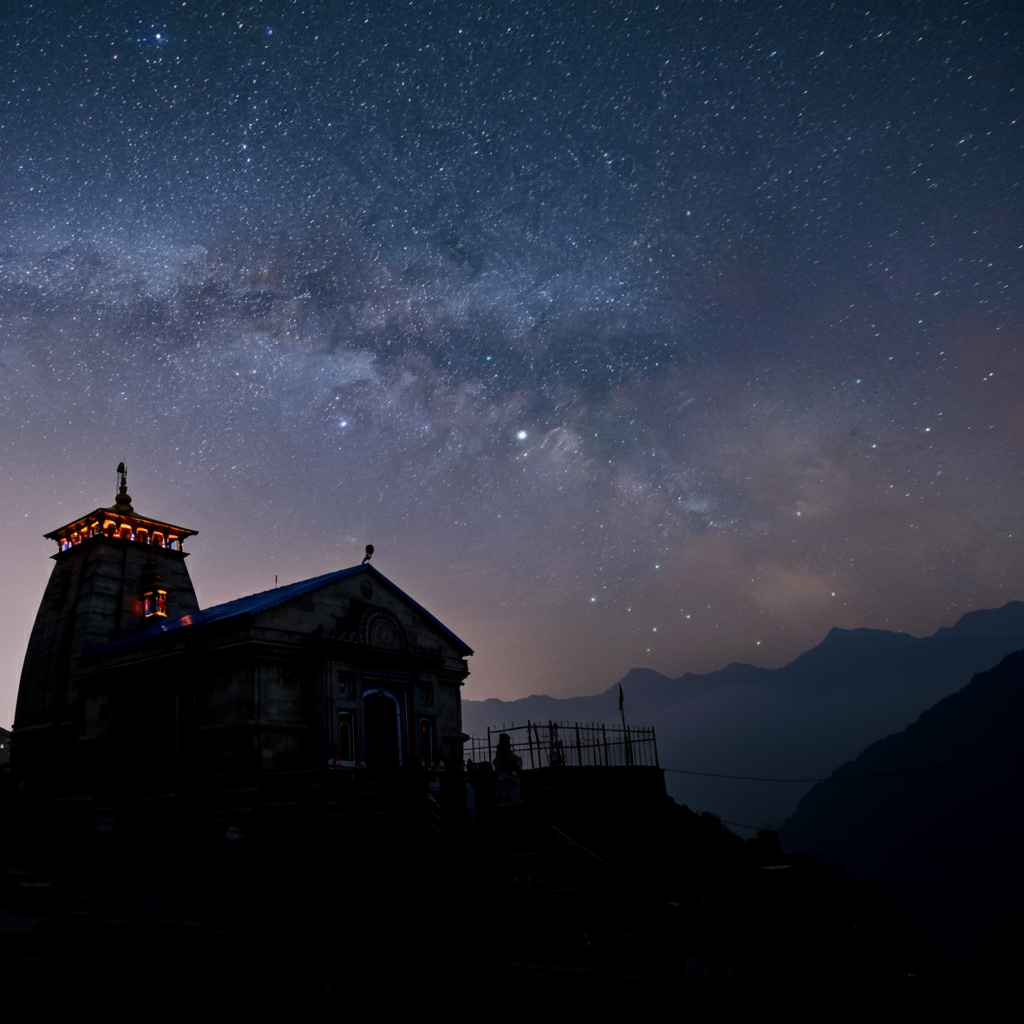
The trekk to Tungnath, the highest temple dedicated to lord Shiva is from Chopta. A off the grid, meadows-rich region. With no electricity in numerous camping sites, it provides some of the darkest skies in the state.
The experience of camping at Deoriatal near Chopta is out-of-this-world. Add the starlit sky to the equation and you have a photographers fantasy as the Chaukhamba peaks are reflected in the lake below. It is one of the best sites for astrophotography in India. Know more about Chopta
Kausani: A Peek Into the Universe
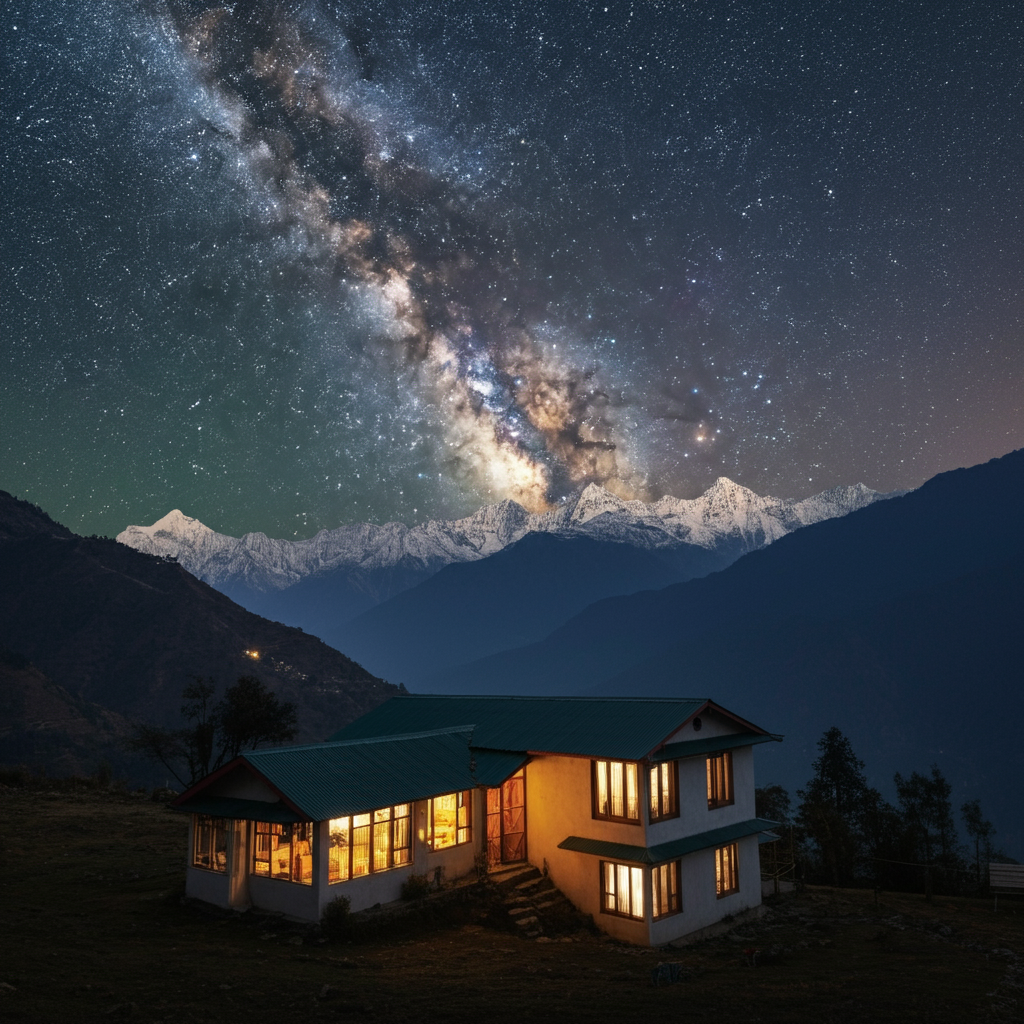
Kausani is known as the “Switzerland of India” for its mountains and scenic beauty, but it has an equally stunning night sky. In Bageshwar district is Kausani, which provides a scenic view of the Himalayas and its peaks such as Trishul and Nanda Devi.
Unlike the backcountry seclusion of Chopta, Kausani boasts comfortable hotels and resorts, so it’s a good destination for families that would like to stargaze without doing without. Nowadays a number of resorts are providing telescopes to enable their guests witness the night sky in Uttarakhand conveniently. Know more about Kausani
Munsiyari: The Land at the End of the World
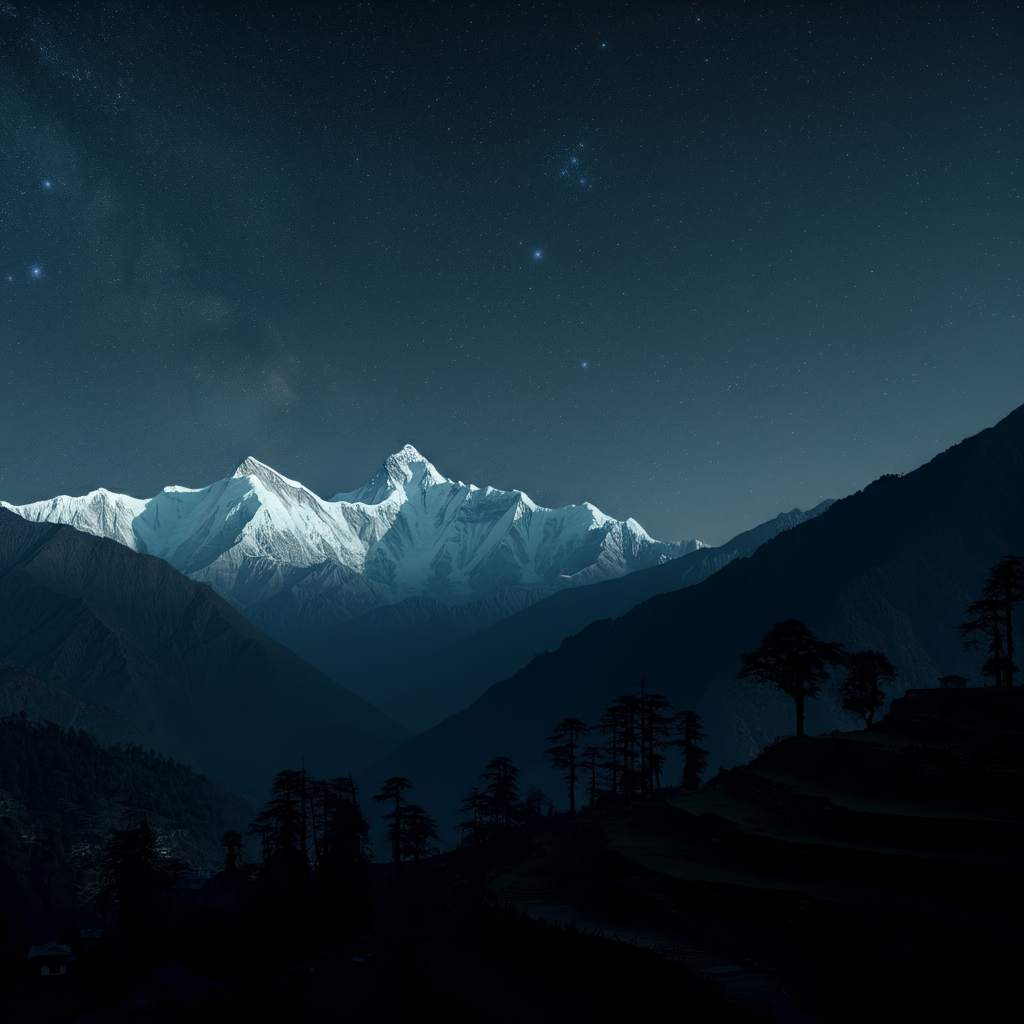
Hidden in the Pithoragarh district, Munsiyari is for the earnest stargazer. It is at the foot of the Panchachuli peaks and one feels this is the end of world. With this location in the middle of nowhere it is near complete lack of lightpollution.
Add to this the deafening silence of the valley, and you have a journey that’s hard to beat. But on a moonless night, the Milky Way can often be seen with the naked eye, arching across the horizon as if it were a river of glowing mist.
Benital: An Upcoming Astro-Village
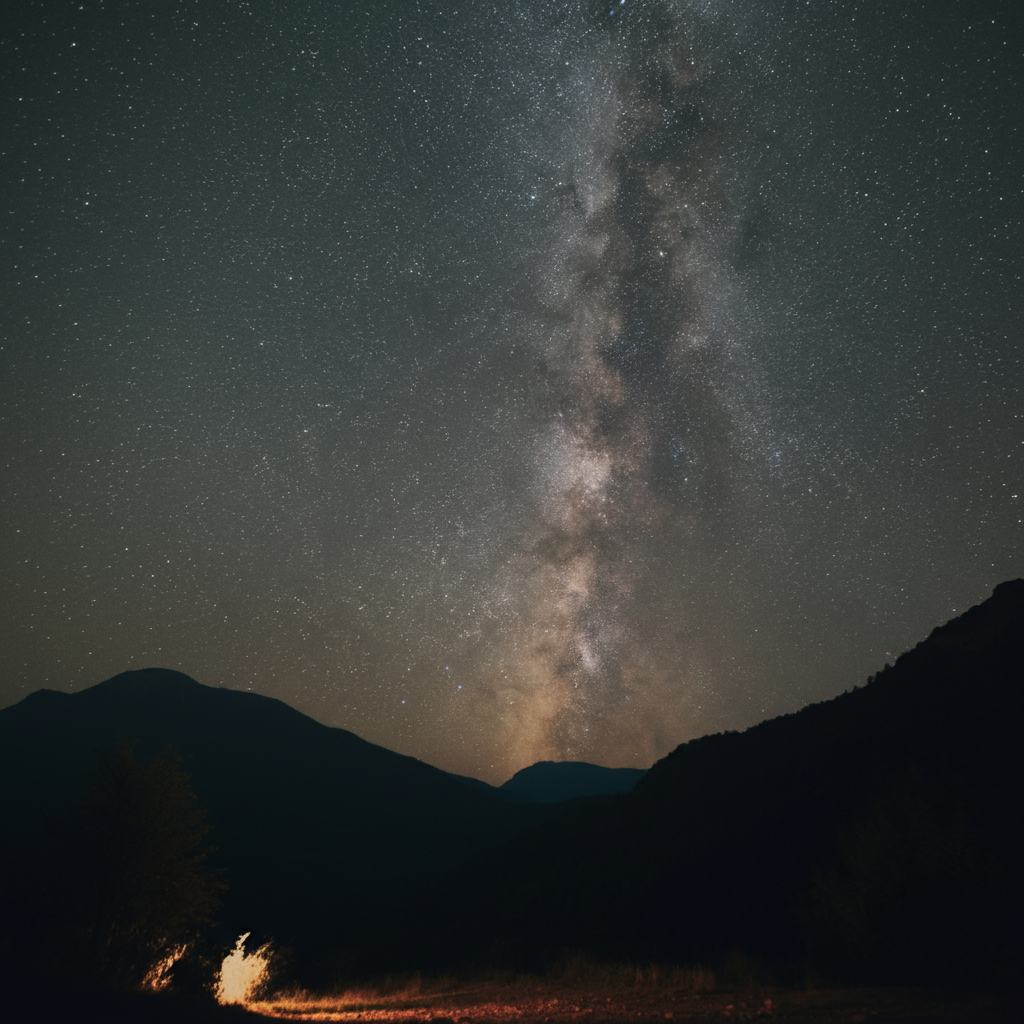
The Benital has been asserted by the said government to be an Astro-Village. This village in Chamoli district is being developed exclusively for star gazers. The local administration arranges street telescopes with expert guidance, besides camps to see stars. It also symbolizes what is to come in the organized astro-tourism business.
What to Know Before You Go Essentials for Your Stargazing in Uttarakhand Trip
When it comes to getting a glimpse of the cosmos, just showing up isn’t enough — you need some advance planning. Here’s how you can make sure to see it best.
The Best Time to Visit Stargazing in Uttarakhand
Timing is everything.
Phases of the Moon: You know to always refer to the lunar calendar. Stargazing in Uttarakhand is best at the New Moon, when there is no lunar interference. A bright full moon will wash out faint stars and the Milky Way.
Best Seasons: Best time in between of April to June and September to November. During monsoons (July-August) there is heavy cloud cover and one cannot see the stars at all. Winter offers the best clear skies, but bring enough warm clothes as temperatures can plummet.
Equipment to Pack
You don’t need costly equipment to see the night sky, but some items can make it easier:
Binoculars: A good, simple pair of 10×50 binoculars can show craters on the moon and moons around Jupiter.
Star Map App: Apps like Stellarium or Star Walk 2 do the work for you on your phone using its GPS to recognize constellations when you point at them.
Red Light Flashlight: White light will shatter your night vision. Red light allows you to still see at night without ruining your dark-adapted vision or that of other stargazers.
Tripod: If you want to take long-exposure photos, a tripod is a must.
Dealing with the Cold
Stargazing in Uttarakhand is a sedentary activity. You will get colder than you think standing still at high altitude in the middle of the night.
- Dress in layers. Thermal innerwear is a must.
- Bring a thick blanket or sleeping bag if you want to lie down.
- Bring a thermos of hot tea or coffee to warm you up.
- Avoiding Light Pollution
- Even in the middle of nowhere, a passing car or a campfire can spoil the shot.
- Travel at least 50 meters in any direction from a road.
- If camping, request fellow campers to keep fires low and refrain from shining flashlights into the sky.
- Allow your eyes to completely adjust to the dark for 20–30 min.
Frequently Asked Questions: Stargazing in Uttarakhand
Is it safe to observe the stars at night in these shores?
Yes, they’re generally safe, but you should take precautions. Go in a group or with a local guide, let someone know your plans and keep an eye on what’s going on around you. Always keep to the well-trodden track and don’t wander on foot through thick forest at night alone. Always choose a location that is free of steep edges or cliffs.Yes, they’re generally safe, but you should take precautions. Go in a group or with a local guide, let someone know your plans and keep an eye on what’s going on around you. Always keep to the well-trodden track and don’t wander on foot through thick forest at night alone. Always choose a location that is free of steep edges or cliffs.
Why is Uttarakhand a great place for observing the stars?
Uttarakhand is perfect for stargazing as it has higher altitude, clean air, clear mountain sky and least amount of artificial lights. This creates a clear and unimpeded view of the night sky, resulting in brighter and more focused appearing celestial objects than those observed from lower elevation areas with greater human population density.
When is the best time to go stargazing in Uttarakhand?
The best months to go stargazing are from April through June and September through November. During these times, the sky is mostly cloud free with no monsoon clouds. Winter provides the clearest views, but it can also be downright frigid, so dress accordingly.
Do I require a telescope to go stargazing in Uttarakhand?
You don’t have to see it through a telescope. Under a clear dark moonless sky at a dark-sky site like Chopta or Munsiyari, you can witness the Milky Way by your naked eye. But a pair of 10×50 binoculars can offer a tremendous boost to your viewing experience, showing you Jupiter’s moons or even craters on our Moon.
Which are the best places for stargazing in Uttarakhand?
The piece covers some great spots:
Auli: For its 360-degree Himalayan views and minimal light pollution.
Chopta: Some of the darkest skies, ideal for camping and astrophotography.
Kausani: Offers a comfortable stargazing experience with decent hotel options and panoramic peak views.
Munsiyari: A relatively secluded place that provide crystal clear light pollution free skies for serious observers.
Benital: A future “Astro-Village” that is designed for astro-tourism.
How crucial is the Moon phase for astronomy?
The Moon phase is critical. If you go For the most photogenic experience, arrange your visit for the time of a New Moon. This is when the sky is darkest, so you can easily see faint stars, nebulae and our Milky Way. A Full Moon is extremely bright and will overexpose a majority of celestial subjects.
What to take on a mountain stargazing in Uttarakhand trip?
In addition to whatever viewing gear you might want, packing for warmth and safety is also key:
Dress in layers: Thermal wear, a heavy jacket, hat and gloves.
Red Light Flashlight: Red lighting will help you remain undetected but still see where you need to go when it’s dark out there.
Comfort items: A blanket or sleeping bag for laying down, a thermal jug of something hot to drink.
Navigation: Use a star map app on your phone (such as Stellarium or Star Walk 2) to identify constellations.
Conclusion
Incredible sights when Stargazing in Uttarakhand The experience of stargazing in Uttarakhand is a soul shaking one. It helps us remember our small place in a big universe. Whether you are a hobbyist astronomer lugging up a massive telescope, or you’re on the road and simply seeking some peace, the Himalayan night sky offers a clarity of the universe one can’t find in cities.
So bundle up in your toastiest jacket, leave the city lights behind and head for the hills. There’s a universe waiting to say hello.



Pingback: Tracking the Milky Way: Auli’s Best Photography Spots in February