Finding Inner Peace: A 7-Day Yoga and Meditation Retreat Itinerary in Rishikesh
I still remember the first time I stepped off the train in Rishikesh. The air smelled of pine and incense, the Ganges roared just beyond the station, and for the first time in years, the constant buzz in my head quieted down. That trip changed everything for me. If you’re reading this, chances are you’re craving something similar—a break from deadlines, traffic, family WhatsApp groups, and that endless scroll.
A yoga and meditation retreat in Rishikesh isn’t just a holiday; it’s a gentle reset. Known as the Yoga Capital of the World, Rishikesh draws people from Delhi, Mumbai, Bengaluru, and beyond who want authentic spiritual growth without the commercial gloss. This 7-day itinerary is built for real transformation—slow mornings, deep practice, riverside silence, and evenings filled with aarti lights dancing on the water.
Whether you’re a beginner wondering if you can even touch your toes or someone who’s been practising for years, this plan works. I’ve stayed at several ashrams over multiple visits and have hand-picked the ones that feel genuine, clean, and deeply nourishing.
Why Rishikesh Remains the Best Place for a Yoga and Meditation Retreat in India
Rishikesh sits where the Ganges emerges from the Himalayas—pure, fast-flowing, and ice-cold. The energy here is different. You feel it the moment you cross the Ram Jhula or Laxman Jhula suspension bridges. Saints have meditated in these valleys for centuries, the Beatles came here in 1968, and today thousands of Indians return every year for the same reason: this place helps you hear your own thoughts again.
The best months for a yoga and meditation retreat in Rishikesh are March–May and September–November. Summers can be hot, monsoon brings landslides, and winter nights dip below 5°C. If you’re travelling from any Indian city, plan for 2026’s pleasant shoulder seasons.
Recommended Ashrams for Your 7-Day Retreat
I suggest three ashrams that balance tradition, comfort, and affordability:
- Parmarth Niketan – The most iconic. Riverside location, daily Ganga aarti, clean rooms, and excellent vegetarian food. Perfect if you want community energy.
- Sivananda Ashram – Strict, disciplined, and deeply authentic. Classical yoga and Vedanta teachings. Ideal for serious practitioners.
- Phool Chatti Ashram – Quiet, lesser-known, surrounded by forest. Smaller groups, personalised attention, and a peaceful vibe away from the main bustle.
All three offer 7-day residential programmes with yoga, meditation, satsang, and meals included. Prices range from ₹8,000–₹18,000 for the week depending on room type (2026 rates may vary slightly). Book directly through their official websites for authenticity.
Authoritative links:
- Official Parmarth Niketan website: https://www.parmarth.org
- Sivananda Yoga Vedanta Centre: https://sivananda.org.in/rishikesh/
- Uttarakhand Tourism official portal: https://uttarakhandtourism.gov.in
Preparing for Your Yoga and Meditation Retreat in Rishikesh
Pack light: comfortable cotton or linen clothes, a shawl for early mornings, reusable water bottle, journal, and an open mind. Most ashrams follow sattvic routines—no coffee, non-veg, alcohol, or loud phones. Silence hours are sacred.
From Delhi, the fastest way is the daily Shatabdi to Haridwar (4 hours) followed by a shared taxi (₹150–200). From Mumbai or Bengaluru, fly to Dehradun’s Jolly Grant Airport (direct flights available) and take a cab (₹1,200–1,500).
Register online if staying at Parmarth Niketan; others accept walk-ins but pre-booking is safer for 2026 peak seasons.
Your 7-Day Yoga and Meditation Retreat Itinerary in Rishikesh
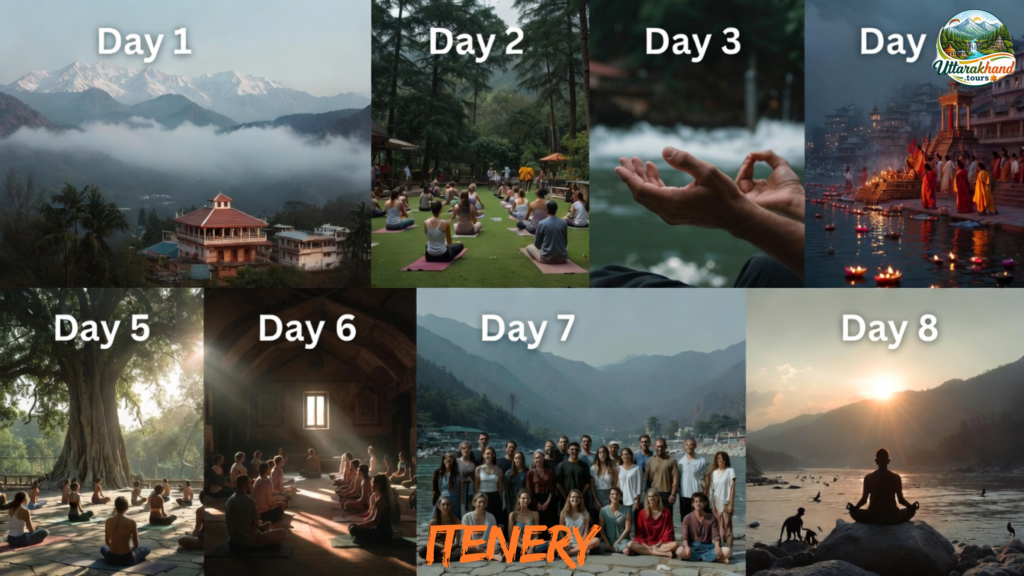
This schedule blends gentle Hatha, pranayama, meditation, and free time for reflection. Times are approximate—ashrams adjust slightly.
Day 1: Arrival and Gentle Landing
Arrive by afternoon. Check into your chosen ashram, unpack, and walk to the Ganges. Dip your feet in the freezing water—it shocks the system awake in the best way.
Evening schedule:
- 4:30 PM – Welcome orientation and herbal tea
- 5:30 PM – Gentle restorative yoga to release travel stiffness
- 7:00 PM – Ganga aarti at Parmarth Niketan (even if staying elsewhere, attend this—it’s magical)
- 8:00 PM – Light dinner (khichdi, vegetables, herbal infusion)
- 9:30 PM – Lights out
Mindfulness tip: Sit by the river after aarti. Watch the diyas float away and let one worry float with them.
Day 2: Establishing Rhythm
Wake-up bell at 5:30 AM. The mountain air is crisp, birds are loud, and the silence feels thick.
Daily schedule:
- 6:00 AM – Neti pot cleansing and herbal tea
- 6:30 AM – Morning meditation (guided or silent)
- 7:30 AM – Hatha yoga asana class (sun salutations, standing poses, gentle backbends)
- 9:30 AM – Sattvic breakfast (fruits, porridge, sprouts)
- 10:30 AM – Free time / optional walk to Laxman Jhula
- 12:00 PM – Yoga philosophy or chanting session
- 1:00 PM – Lunch (dal, rice, sabzi, salad)
- 2:00–4:00 PM – Rest or silent contemplation
- 4:30 PM – Afternoon yoga (hip openers, forward folds)
- 6:00 PM – Evening meditation
- 7:30 PM – Dinner
- 8:30 PM – Satsang (devotional singing)
Mindfulness tip: During walking meditation, feel each foot touching the earth. Notice thoughts without chasing them.
Day 3: Deepening Practice
By day three the body starts to soften and the mind quiets.
Schedule adds pranayama:
- 6:00 AM – Kapalabhati and Anulom Vilom
- 7:00 AM – Stronger asana practice (balancing poses, gentle inversions)
- 11:00 AM – Karma yoga (seva)—helping in the kitchen or garden. This is humbling and beautiful.
- Afternoon: Optional visit to Beatles Ashram (now Maharashtra government-run, ₹600 entry for foreigners, ₹150 Indians) for quiet graffiti-covered meditation halls.
Mindfulness tip: During seva, focus completely on the task—chopping vegetables becomes moving meditation.
Day 4: Turning Inward
Mid-week is when emotions often surface. Give them space.
Morning: Extended silent meditation (45 minutes).
Afternoon workshop on mindfulness or Yoga Nidra.
Evening: Mauna (noble silence) from dinner until after breakfast tomorrow—many find this day the most powerful.
Day 5: Integration and Joy
Silence breaks with laughter and sharing circles.
Schedule includes partner yoga or acro-yoga basics (gentle, trust-building).
Afternoon free for rafting (Grade I–II, calm stretches) or a forest walk to Neer Garh Waterfall (easy 30-minute trek).
Mindfulness tip: Practise gratitude meditation—name three things you’re thankful for from each day so far.
Day 6: Refinement and Celebration
Practice feels smoother now.
Morning class focuses on alignment and breath retention.
Evening: Special havan (fire ceremony) and extended kirtan. The chanting vibrates through your chest—pure bliss.
Day 7: Closing and Carrying Peace Home
Final morning:
- 6:00 AM – Sunrise meditation by the Ganges
- 7:30 AM – Gentle closing yoga practice
- 9:30 AM – Certificate presentation and group photo
- 10:30 AM – Brunch
- Afternoon departure
Before leaving, buy a small rudraksha mala or journal as a reminder.
Mindfulness tip: Create a 5-minute home practice—three rounds of sun salutations, five minutes of breath awareness, and one gratitude thought.
Daily Mindfulness Practices to Deepen Your Retreat
- Morning: 5 minutes of alternate nostril breathing upon waking.
- Meals: Eat slowly, chew 20 times per bite, no phone.
- Walking: Feel the ground, sync breath with steps.
- Evening: Journal three insights from the day.
- Before sleep: Body scan relaxation from toes to crown.
Final Thoughts: Bringing the Peace Home
Seven days in Rishikesh won’t solve everything, but they will give you tools that last. I still do my sunrise breathing every morning back in the city, and when stress creeps in, I close my eyes and hear the Ganges rushing past.
If you’re ready for your own reset, book that ticket. The river is waiting. For more spiritual travel ideas in Uttarakhand, check out our detailed guide to luxury stays in the Himalayas .

One thought on “7-Day Yoga and Meditation Retreat in Rishikesh | Itinerary”