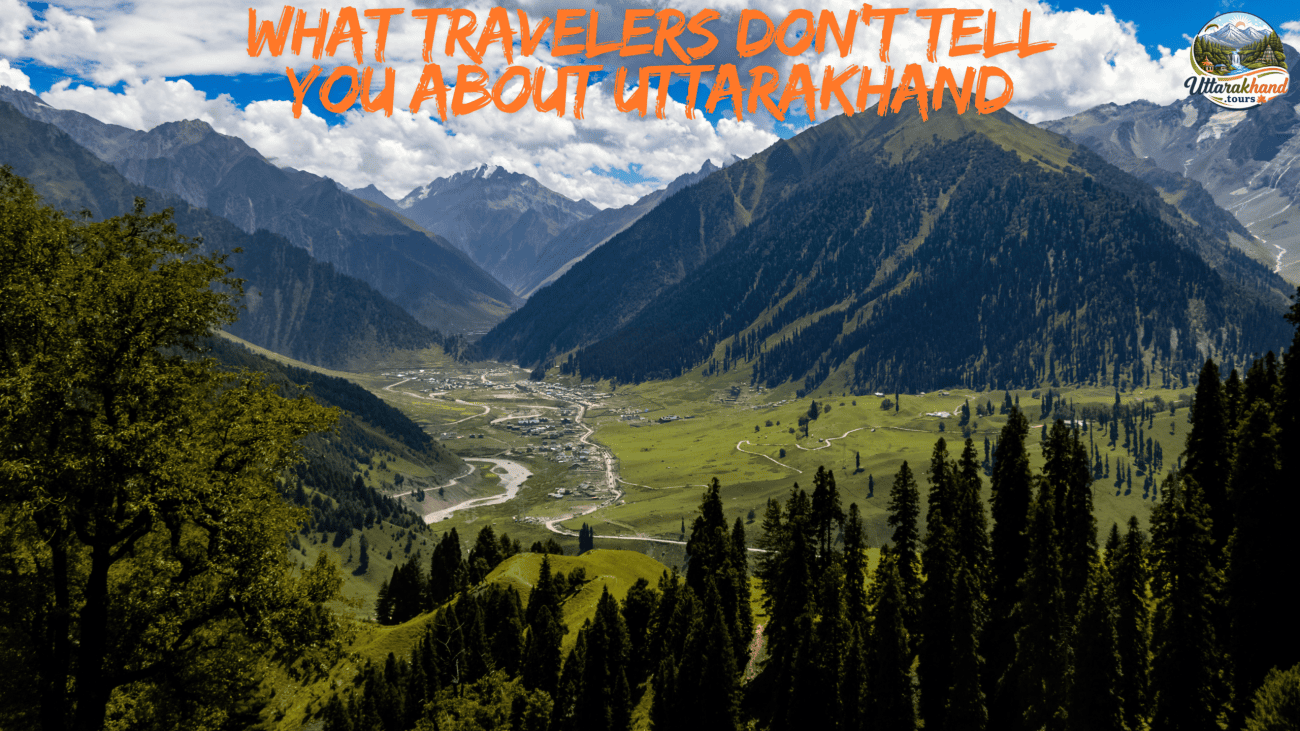
This Is What Travelers Don’t Tell You About Uttarakhand
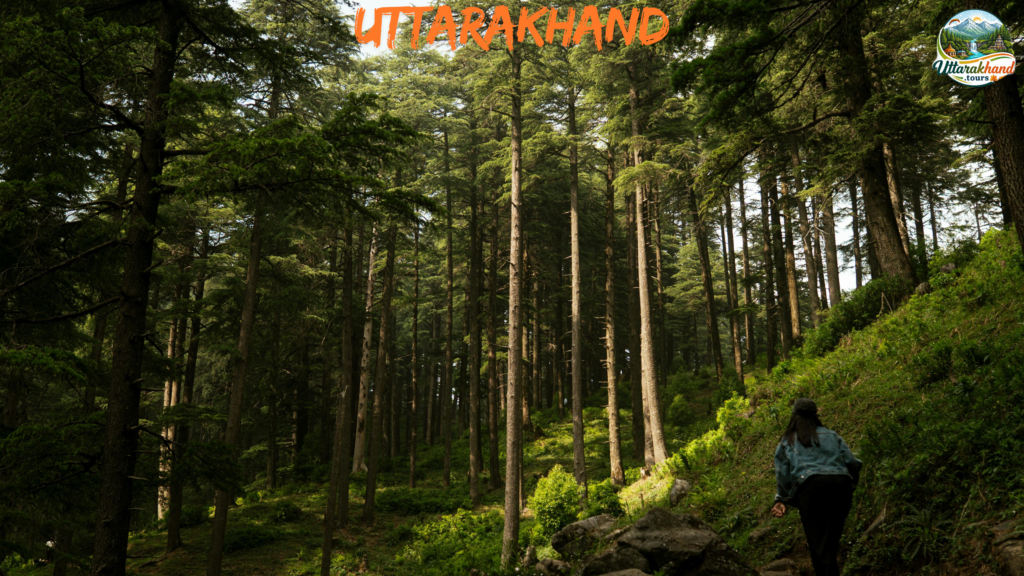
Uttarakhand is usually introduced as Devbhoomi—a sacred land of temples, snow-covered peaks, yoga retreats, and postcard-perfect hill stations. Social media shows misty mornings, empty mountain roads, glowing Ganga Aartis, and peaceful riverbanks where life looks slow and uncomplicated.
Travel blogs promise serenity, spirituality, and adventure—all wrapped neatly into one trip. But this is what travelers don’t tell you about Uttarakhand.
Not because anyone is lying. Mostly because some truths only show up after you arrive. After you miss a bus. After the weather changes without warning. After a conversation with a local chai seller lasts longer than planned. Or after you sit by a river and realize you don’t feel like moving.
This article isn’t a warning. It’s more like the conversation travelers have after they return home—when the photos are uploaded and the reality finally sinks in.
1. Uttarakhand Is Not Always Quiet—and That’s Okay
One of the biggest surprises for first-time visitors is the crowd reality.
Yes, Uttarakhand has silent forests, remote villages, and long stretches where you hear nothing but wind and birds. But popular places like Rishikesh, Haridwar, Mussoorie, Nainital, and especially the Char Dham routes can get overwhelmingly busy during peak months.
Weekends, festivals, school holidays, and pilgrimage season turn calm towns into moving crowds. Traffic jams in the hills are not rare. Parking becomes a daily puzzle. Hotel prices jump suddenly, sometimes overnight.
What travelers don’t usually tell you is this:
👉 Uttarakhand rewards patience more than speed.
People who slow down, travel mid-week, or explore lesser-known routes experience a completely different side of the state. That’s why detailed destination planning guides on sites like https://uttarakhand.tours matter—they help travelers avoid pressure zones and choose calmer alternatives instead of blindly following viral spots.
2. That Spiritual Pull? It Hits Deeper Than Expected
Everyone talks about yoga in Rishikesh and the Char Dham Yatra. And yes, it is spiritual. But what travelers don’t tell you about Uttarakhand is how intense that feeling can be.
I remember sitting by the Ganga during an evening Aarti. Nothing dramatic happened. No big realization. But suddenly, emotions came out of nowhere. No reason. No trigger. Just… weight.
This happens to many people. Some feel peace. Some feel restless. Others feel emotional without knowing why. The mix of altitude, ancient rituals, silence, and raw nature has a way of stirring things up.
Places like Kedarnath, Gangotri, or even quiet meditation sessions can feel overwhelming if you’re not prepared. That’s why structured retreats often work better than random drop-in classes. A well-planned experience like a 7-day yoga and meditation retreat in Rishikesh (https://uttarakhand.tours/7-day-yoga-and-meditation-retreat-in-rishikesh/) gives space to process what comes up—slowly, safely.
3. The Weather Changes Faster Than Your Plans
Another thing travelers rarely say openly:
Uttarakhand decides your itinerary. You don’t.
Clear mornings can turn foggy by afternoon. A sunny forecast may end in mountain rain. Landslides during monsoon season aren’t unusual—they’re part of Himalayan life.
Locals plan with flexibility. First-time tourists often don’t.
Experienced travelers keep buffer days, avoid packing too much into one schedule, and accept delays as part of the journey. Rushing in the mountains usually backfires.
For real-time weather alerts and warnings, locals often rely on updates from the India Meteorological Department (IMD):
https://mausam.imd.gov.in
Checking these updates can genuinely save a trip.
4. Spirituality Here Is Lived, Not Performed
Many visitors come to Uttarakhand seeking temples, yoga, or spiritual retreats. What travelers don’t tell you is how deeply spirituality is woven into daily life, not staged experiences.
In towns like Rudraprayag, Joshimath, Pauri, and even roadside dhabas, faith feels quiet and routine.
You’ll notice:
- Shopkeepers briefly closing for evening prayers
- Locals offering water to pilgrims without expecting anything
- Temple bells ringing even when no tourists are around
The Char Dham Yatra isn’t just a route—it’s an emotional and physical journey shaped by belief, endurance, and altitude. For official temple guidelines and pilgrimage updates, the Uttarakhand Tourism Development Board remains the most reliable source:
https://uttarakhandtourism.gov.in
5. Uttarakhand Food Is Simple—and That’s Exactly Why It Works
Travelers rarely hype the food in Uttarakhand. There’s no viral “must-eat” list, no overstyled café culture in most places, and very little drama on the plate.
But that’s the point.
Food here is shaped by altitude, weather, and survival—not trends. Dishes like mandua roti, jhangora, bhatt ki churkani, seasonal leafy greens, and plain pahadi dal aren’t meant to impress you. They’re meant to sustain you in cold, thin air after long walks and shorter days.
What travelers don’t tell you is how deeply comforting this food feels after a few days.
In homestays, meals follow daylight. Breakfasts are early. Dinners are simple and warm. You’ll notice milk is used carefully, spices are minimal, and ingredients change with the season. There’s a reason for that—your body responds differently in the mountains.
Many travelers realize later that the most memorable meal of their trip wasn’t in a restaurant, but at a family table where no one asked for a review.
6. The Most Beautiful Places Are Rarely Where the Road Ends
There’s an unspoken rule in Uttarakhand that seasoned travelers learn quickly:
If a place is crowded, the real beauty is still a little further.
The most peaceful forests, river bends, meadow trails, and viewpoints are often:
- 20 minutes beyond where taxis stop
- A quiet walk past the last tea stall
- Known by villagers, not search engines
What travelers don’t tell you is that Google Maps confidence drops sharply in Uttarakhand. Routes become suggestions. Distances feel longer than numbers suggest.
This is where asking locals matters. This is where hesitation often turns into discovery.
Guides and regional explorers on platforms like https://uttarakhand.tours often document these lesser-known pockets—places that don’t scale well for mass tourism and therefore stay authentic.
7. Uttarakhand Doesn’t Adjust Itself for You
This part is uncomfortable for some travelers, so it’s rarely said directly.
Uttarakhand doesn’t try to accommodate every travel style.
If you expect:
- Nightlife
- Tight schedules
- Instant services
- Fast checklists
You may feel frustrated. Not because people are rude—but because life here moves at a different rhythm.
But if you’re okay with:
- Long mornings
- Early sunsets
- Delays that turn into conversations
- Days without obvious “highlights”
Then the state slowly opens up.
What travelers don’t tell you is that Uttarakhand rewards presence, not productivity. You don’t conquer it. You align with it.
8. Respect Is a Currency Here—Not Ratings
In many tourist destinations, money solves friction. In Uttarakhand, respect does.
Locals notice:
- How you behave near temples
- Whether you litter on trails
- How you speak to elders
- If you listen more than you demand
Travelers who treat the mountains like a backdrop for content often feel subtle resistance. Not confrontation—just distance.
Those who slow down, ask questions, and follow local customs are welcomed quietly but warmly.
This sensitivity exists because the Himalayas are fragile—ecologically and culturally. Conservation guidelines from bodies like the Ministry of Environment, Forest and Climate Change (https://moef.gov.in) aren’t abstract policies here. They’re lived realities.
9. The Roads Will Test You—And That’s Part of the Journey
Mountain roads in Uttarakhand are stunning. They’re also exhausting.
Sharp bends. Narrow stretches. Sudden fog. Landslides in monsoon. Snow closures in winter. A journey that looks simple on a map can stretch far longer than expected.
What travelers don’t tell you is how common it is to spend hours waiting—sometimes just sitting quietly while machines clear debris, sipping chai from a roadside stall, watching clouds move.
And altitude doesn’t forgive impatience.
Rushing to high-altitude destinations like Badrinath, Hemkund Sahib, or Auli without acclimatization can leave you drained, dizzy, or worse. Locals take it slow for a reason.
For real-time road closures and advisories, the Uttarakhand Government Portal (https://uk.gov.in) is more reliable than any travel forum.
10. You Won’t Capture Everything—and That’s the Point
This is the truth most travelers only realize after leaving.
Uttarakhand doesn’t offer constant spectacle. Some days feel quiet. Some moments feel unfinished. Some views don’t photograph the way they feel.
Many travelers go home with:
- Fewer photos than expected
- Stronger memories than planned
- A strange calm that lingers
The most meaningful experiences here often happen when the phone stays in the pocket.
That’s why people who truly connect with Uttarakhand rarely overshare it. They return quietly. Again and again.
Final Reflection About This Is What Travelers Don’t Tell You About Uttarakhand
What travelers don’t tell you about Uttarakhand isn’t negative—it’s human.
This place doesn’t perform. It doesn’t rush. It doesn’t adapt itself to trends. It reveals itself slowly, sometimes inconveniently, often unexpectedly.
Those who arrive prepared—but open—leave changed in ways they can’t always explain.
Uttarakhand doesn’t ask for attention.
It asks for understanding.
And when it gets that, it gives far more than it promises.

One thought on “This Is What Travelers Don’t Tell You About Uttarakhand”